www.newstower.ng

IGP Appoints Seasoned Police Chief As PSO,Deploys CP Adenola To Oyo, CP Mamman To Enugu

Deploys CP Adenola To Oyo, CP Mamman To Enugu

By Ebinum Samuel

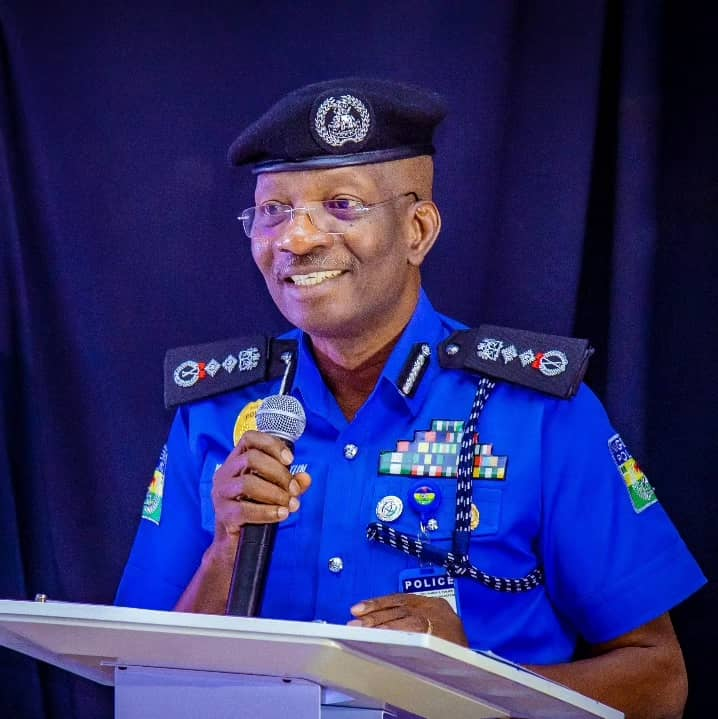
The Inspector-General of Police, IGP Kayode Adeolu Egbetokun, Ph.D., NPM., has approved the appointment of a new Principal Staff Officer (PSO) in the person of Deputy Commissioner of Police, DCP Ahmed Lateef. DCP Ahmed Lateef brings to the position a wealth of experience and a proven track record of leadership in various capacities within the Nigeria Police Force.

Prior to his current posting, DCP Ahmed served as the Police Operations and FPU Coordinator for the African Union Transition Mission in Somalia (ATMIS). He was the Personal Assistant to the former IGP, IGP MD Abubakar, and also a Zonal Head of Operations and lead cybercrime investigator with the Economic and Financial Crimes Commission (EFCC), having attended various courses both at home and abroad.

Consequently, the Inspector-General of Police, following the approval of the Police Service Commission, has deployed CP Johnson Adenola as the Commissioner of Police, Oyo State Command, having served diligently as the Principal Staff Officer (PSO) of the IGP, contributing significantly to the smooth running of the IGP’s office and the overall administration of the Force. CP Mamman Bitrus Giwa has also been deployed as the new CP Enugu State, following the promotion of AIG Uzuegbu Kanayo. CP Mamman once served as the AC PMF FHQ, DC PMF FHQ, and DC Ops Kaduna State Command.

According ACP Olumuyiwa Adejobi, Force spokesman,these strategic deployments are aimed at strengthening the leadership capacity of the Force and ensuring effective policing across the country.

The IGP has however charged the newly appointed officers to bring forth their wealth of experience in maintaining the core values and ethics of the force in their respective offices, which anchors on decency, transparency, and accountability.

Dr. Toromade Francis on keys to achieving food security in Nigeria

QUOTE

“On food security, we either pay the farmer now, or pay the pharma later. The choice is ours”
Dr. Toromade Francis ( DG Premier Agribusiness Academy)

One of the significant factors used to measure the economic development and stability of every nation is on food security status of the citizenry. According to the 1996 World Food Summit, food security is a situation in which “all the people at all times have physical and economic access to sufficient, safe and nutritious food that meets their dietary needs and food preferences for an active and healthy life”. But according to the World Food Program, WFP the last quarter of 2024 saw to a deteriorating food security paradigm shift with 25.1 million Nigerians- caught in the terrifying trap of food insecurity. Based on the research findings by the Cadre Harmonise with support from the federal government and partners the figure of the citizens to suffer from food insecurity will rise to 33.1 million.

Listed amongst the causative factors are the high inflation rate, climate change, and of course persisting insecurity, especially in the northern geo-political zones. But what matters most is how to provide sustainable solutions to this economic quagmire. That is where the thoughts of one erudite, resourceful and commited Nigerian advocate of food security comes in handy. He is none other than Dr. Toromade Francis Olugbenga, the Director General Premier Agribusiness Academy as well as that of the Feed Industry Practitioners Association of Nigeria
( FIPAN). With Ph.D in Business Management and over 30 years experience across the West African agribusiness landscape his views on food security in Nigeria should be taken with all the seriousness it deserves.

His views on agribusiness sustainability, challenges and opportunities available to them should serve as food -:for – thought to individuals who engage in productive activities related to the field as well as the policy makers and those who implement them. For instance, sustainability is the ability to maintain profitable food production while minimizing environmental impact and ensuring social responsibility. This integrates the significant element of economic stability.

As for the challenges they include climate change, soil degradation, water scarcity, high production costs and fluctuating market demands. All these cumulatively threaten long-term food security and should be tackled. And that should be done by all the stakeholders making the best use of the opportunities in the vast agricultural landscape.

Such opportunities exist in precision farming, alternative feed sources, renewable energy and technologically -driven solutions such as smart monitoring and automation. Also, strengthening the supply chain, promoting sustainable farming practices and investment in research can enhance productivity and reduce waste. In addition, it would ensure stable food systems and ensure global food security. But there is a note of warning to all concerned across the food security value chain. But what could that be?

The bitter truth is that while ones plans may be ideal the realities on the field of farming present the ordeal. According to Maslow’s hierarchy of needs at the bottom of the pyramid are physiological needs such as food, water, warmth and of course, rest. Up above that are safety needs such as security and safety. Next come belongingness and love needs encapsulating intimate relationships and friendship. Above these are esteem needs including prestige and feeling of accomplishments. But on top of the pyramid of Maslow’s hierarchy of needs is self actualization when achieved deploying one’s full potentials and creative activities.

To succeed in the agribusiness spectrum, with the aim of achieving economic sustainability, Dr. Francis emphasizes the use of business analysis techniques based on mission, objective, strategy and tactics. But while strategy equals to effectiveness and efficiency, tactics equates to efficiency that is internal. That brings forth the measurement of efficiency rate where same for same and same for less equals to 100 but more for same and much more for same equals to 250. But for the average agripreneur to understand the nitty gritty of all these administrative nuggets the power of well honed skills come into full play.

To have a grasp of this mentality imagine the word, skills without ‘s’ which leaves us with ‘kills’. And without ‘sk’ gives ‘ills’. So, an entrepreneur is either killed or falls ill without skills. Ingenious, is it not? Yes, of course, it is. What it boils down to is that though you may have the dream and vision, all the raw materials, with bankable proposal and the capital to jump start your agribusiness, without skills all would amount to nothing! Skills acquisition through training and retraining is therefore, a sine qua non to achieving your goals. But also there has to be the enabling macro business environment to succeed.

Amongst these important elements are the right political, economic, socio – cultural as well as the legal / legislative environment with practicable regulations to act as catalysts for the businesses to thrive and survive. Not left out of the variables that come into play are the Porter’s five forces of supplies, substitutes, customers beginning at the point of entry but playing their parts within the rivalry matrix.

To the agripreneur the combined words of “opportunityisnowhere ” can either be interpreted as “opportunity is nowhere” or “opportunity is now here”. The choice is yours to make.

It is therefore, advisable to capitalize on one’s strengths, take opportunities and maximize them while overcoming weaknesses and threats. Note that sometimes the chains that prevent us from being free are more mental than physical. And that always plays out in the service triangle from the company to the customers as well as systems and employees.

In the final analysis, every agripreneur wanting to contribute his part to the nation’s food security should be capable of matching the 9 Ps with the 9 Cs. These include products, price, place, people, and promotion. Others are process, physical evidence, personal selling and partnerships. The 9Cs are strongly anchored on customer/ consumer, cost, convenience, caring and communication. Others include coordination, confirmation, convincing and continuity.

All said, achieving food security in Nigeria and globally demands a holistic and well articulated approach. We all need to have access to food that is affordable, yet adequate and nutritious. As Francis has rightly asked in his recent brilliant lecture ” we either pay the farmer, or be ready to pay the pharma”. The choice is ours!

Opinion: All-inclusive Policing, Internal Security, And National Development; IGP Egbetokun’s Perspective

By Olumuyiwa Adejobi

In a world where security threats are constantly evolving and societal complexities continue to rise, the demand for innovative and inclusive policing strategies has never been more urgent. National security challenges, social disruptions, and other multi-facetted hindrances in Nigeria require solutions that are both proactive and transformative.

In the field of political science, peace and security studies, and humanitarian studies, scholars have alluded to the nexus between these key concepts and national development in all areas, particularly economic growth. In the words of Ban Ki-Moon, former Secretary General of the UN, “Security and Development are two sides of the same coin. Economic stability fosters peace, and National Security creates the environment for economic prosperity.”
John F. kennedy also posited that “Economic strength and National security are inextricably linked; one cannot thrive without the other.”

Recognizing this need, the Nigeria Police Force, the lead security agency constitutionally saddled with the responsibility of maintaining the internal security of the country, is championing an all-inclusive policing approach that prioritizes full community engagement, inter-agency collaboration, and advanced technology utilization, to promote sectoral equilibrium in effective policing. This aligns seamlessly with the leadership vision of the Inspector-General of Police Kayode Adeolu Egbetokun, Ph.D., NPM, who is committed to building a professional, service-driven, rule-of-law-compliant, and people-friendly police force in Nigeria. IGP Egbetokun doesn’t not limit his vision for all-inclusive policing to Nigeria alone. He has also extended same vision to the west African sub-region and African continent in his capacity as the Chairman of the West African Police Chiefs Committee (WAPCCO). His aim is to ensure that policing not only reinforces internal security but also contributes to national economic recovery, social cohesion, and political stability in line with the renewed hope agenda of the present administration in Nigeria.

Under IGP Egbetokun’s strategic leadership, the Nigeria Police Force has embarked on several bold policy initiatives aimed at strengthening internal security and accelerating national development. It is crystal clear that Nigeria Police efforts in managing herders/famers crises, communal disputes, settling labour disputes across all strata, and promoting social norms and values in Nigeria are far reaching and paying off, in the security architecture and economic growth in Nigeria.

In addition, the individual and institutional capability building strategies of the police force have occasioned a paradigm shift towards enhanced policing via training and retraining of officers in areas of professional conduct and science-driven policing.

One wonders how the IGP has continually snowballed his ideas in this regard to hosting conference and retreat for strategic managers and leadership of the Force, and refresher courses for other senior officers and rank and files, respectively to improve their effectiveness and efficiency in all areas of Policing. These efforts built upon the mindset of the IGP to host the 4th Annual Conference and Retreat for Senior Police Officers which held in Imo State in October 2023 with the theme; Fostering economic prosperity, social integration, and political development through enhanced internal security mechanisms. Continuing this trajectory, the IGP recently hosted the 5th Annual Conference and Retreat for senior Police Officer, held from February 24th to 26th, 2025, in Abeokuta, Ogun State, with the theme; Improving Nigeria’s Internal Security and Economic Prosperity through Inclusive Policing

This landmark event, CARSPO 2025, brought together over 170 high-ranking security professionals, including senior Police Officers from the rank of Commissioner of Police and above, representatives from sister security agencies and distinguished international guests, such as CG Felix Namuhoranye of the Rwanda National Police and IGP Douglas Kanja Kirocho of the Kenyan Police. Over the course of three days, participants engaged in intensive deliberations on pressing issues in modern policing, intelligence sharing, and capacity building for law enforcement agencies. The conference culminated in a series of actionable resolutions designed to enhance the effectiveness and professionalism of the Nigeria Police Force. Some of the key takeaways include strengthening international collaboration with our counterparts from other African countries to combat cross-border crimes; implementing a comprehensive mental health policy backed by research to support officers facing psychological challenges; revamping the Counseling Unit with qualified professionals to address mental health concerns within the force; expanding inclusive recruitment and training programs to ensure a more diverse and well-equipped police force; introducing flexible policy reforms that adapt to emerging security challenges; establishing anti-crime clubs in schools to foster early crime prevention and youth engagement; encouraging officers to embrace risk management strategies that promote safety and resilience in policing; and enhancing specialization and professional development through continuous training tailored to modern security demands.

At the conclusion of the conference, IGP Egbetokun presented certificates of attendance to all participants, including guest speaker CG Felix Namuhoranye of the Rwanda National Police, in recognition of their contributions to the success of the event. IGP Adeolu Egbetokun Ph.D.,NPM reaffirmed the Nigeria Police Force’s firm commitment to leveraging inclusive policing, cutting-edge technology, and international partnerships to improve Nigeria’s internal security and economic well-being. The resolutions adopted at the conference will serve as a roadmap for strengthening law enforcement, fostering public trust, and creating a safer Nigeria.

As the Nigeria Police Force continues to refine and implement forward-thinking policing strategies, Nigeria can look ahead to a future where security is not just a government responsibility but a collective effort that bridges the gap between law enforcement and the communities they serve. Through innovative policies, strategic collaborations, and a commitment to professionalism, the Nigeria Police Force is poised to reshape the country’s security landscape and drive sustainable national development.

The regime of IGP Egbetokun marks the first to have foreign IGPs and security diplomats across the world attend and participate fully in the conference and retreat and engagements of the Nigeria Police Force.His determination in bringing global collaboration, integration, and togetherness in fostering improved security in Nigeria and the African continent as a whole can never be overemphasized. The saying, “putting the right peg in the right hole” is ascertained by the appointment of IGP Kayode Adeolu Egbetokun, a scholar, philosopher, perfectionist and holder of a Ph.D in Peace and Security Studies, a great blessing to policing structure and national values in Nigeria.

Prince Muyiwa Adejobi, a Public Relations and law enforcement experts, Federal Capital Territory, Abuja, Nigeria
Princemoye@gmail.com
5th March, 2025.

IBB: A CRITIQUE OF ‘A JOURNEY IN SERVICE’

Abdulrasheed Ibrahim

As a writer and a student of history, I do not like seeing anyone in whatever form trying to take people for a ride. It is not in my character to look the other way. Some of us were not babies when IBB ruled this country as an unelected President. When General Ibrahim Badamosi Babangida (IBB) gave the hint that he was coming up with his autobiography , I told some colleagues that the IBB’s book would surely generate a lot of controversies particularly among many Nigerians that were of age when he ruled as a military leader. Speaking from experience as the author of the book titled “MY COMMAND”, Chief Olusegun Obasanjo (OBJ), a former Head of State and later an elected President, during the public presentation of the IBB’s “JOURNEY IN SERVICE” told him what to expect from the people.

So far,IBB’s book seems to have received more condemnations than commendations. The families and friends of those indicted or mentioned by IBB in his book like that of Abacha, Abiola and Vatsa have not kept mute on Babangida’s story.Mr. Richard Akinola, a friend of Mr. Dele Giwa , a journalist that fell victim of IBB regime has done a rebuttal to IBB’s position on the death of the renowned journalist who co-founded the now rested Newswatch Magazine.

One must admit from inception that this space may not be sufficient to do a comprehensive critique of IBB’s autobiography, this is just a short attempt to x-ray some of the points raised by the IBB in his autobiography that one finds it difficult to agree with. There is no doubt that IBB took active part in the military coup that saw to the demise of Second Republic presided over by the late Alhaji Shehu Shagari and brought in Muhammadu Buhari and Tunde Idiagbon as the Head of State and the Chief of General Staff Supreme Headquarters respectively while Ibrahim Babangida occupied the position of the Chief of Army Staff. The situation in the country at the time Shagari regime was sent packing was not pleasant as the politicians at that time had turned the country upside down as the level of indiscipline and corruption had become very unbearable. This actually paved the way for the success of the military coup without any resistance or protest from the Nigerian people.

The period of 20 months that followed under what has come to be known in history as Buhari/Idiagbon regime was under the slogan of War Against Indiscipline (WAI) which was a rescue mission said to be the brain child of Tunde Idiagbon, a great soldier that had no business with laughing but which IBB later gave in abundance when he took over power in a palace coup when Idiagbon, the most active Second-in-Command was far away in the Saudi Arabia. According to IBB on page 118 of his book:

“My predecessor in office, Major General Muhammadu Buhari, and his deputy, Brigadier Tunde Idiagbon, had separated themselves from the mainstream of the armed forces by personalising what was initially a collective leadership. They both posited a ‘holier than thou’ attitude, antagonising the civil populace against the military. Fundamental rights and freedoms were being routinely infringed upon and abused. As military administration, we were now presiding over a society that was primarily frightened of us. We were supposed to improve their lives and imbue the people with hope for a better future. Instead, we ruled the nation with a series of draconian decrees. An administration intended to reflect the collective will of the armed forces as a national institution came to be seen as the private personal autocracy of a stubborn few.”

With what decrees did IBB rule? His above assertion that prompted the overthrow of his predecessor has actual confirmed the long held view by some of us that Buhari and Idiagbon probably unknown to both of them were only used by IBB to test the ground for the acceptance of military rule in the country at that time .The Nigerians that lived through and witnessed Buhari/Idiagbon’s regime of 20 months and IBB’s regime of 8 years are till day in better position to spot the difference between the two regimes. The IBB coup was a clear manifestation of that slogan “hidden agenda” invented during the IBB regime.

Did IBB immune himself or did he do anything different from what he accused his predecessor in office of? With the collapse of the Buhari/Idiagbon regime within 20 months courtesy of IBB, in what way was his 8 years reign better than that of his predecessor he overthrew? Most Nigerians were later to realize that Buhari/Idiagbon regime meant well for the country as far as the concept of patriotism was concerned .It was that thought and the happenings during that Buhari/Idiagbon’s 20 months period in power as military leaders that actually and greatly assisted Buhari in getting the mandate of Nigerians as a civilian President during the 2015 elections but one thing that later became apparent to the Nigerians was that whatever success recorded by Buhari as a military Head of State particularly in the war against indiscipline and corruption was attributable to the late Tunde Idiagbon who was then his Second-in-Command.

It was a notorious fact that IBB during his reign embarked on a very prolong transition program to the civil rule during which the hand over date earlier promised was postponed as it was done by Gowon when he was in power ,a mistake IBB said he would avoid. He eventually decreed two parties i.e National Republican Convention (NRC) and Social Democratic Party (SDP) into existence under which elections were gradually conducted into the Local Government level with the emergence of the Councillors and the Chairmen followed by that at the State level with the emergence Governors and members of the State Houses of Assemblies and then that of the National Assembly members under what was tagged “Option A4”.

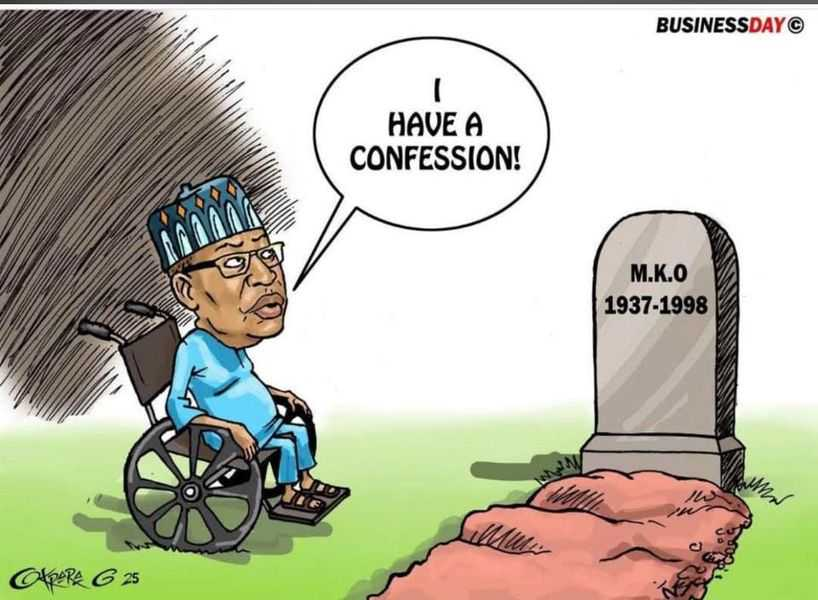
Thereafter came the Presidential election fixed for June 12, 1993 that was freely and peacefully conducted throughout country and won by Chief M.K.O Abiola of the SDP. That election considered to be the most free and fair in the history of the Nigeria was unfortunately annulled by IBB. On the page 275 of his book, he said:

“…But the annulment was only a component of a series of other options. But to suddenly have an announcement made without my authority was, to put it mildly, alarming .I remember saying: ‘These nefarious ‘inside’ forces opposed to the elections have outflanked me!’ I would later find out that the ‘forces’ led by General Sani Abacha annulled the elections. There and then , I knew I was caught between ‘the devil and the deep blue sea’! From then on , the June 12 elections took on a painful twist for which , as I will show later , I regrettably take responsibility.”

Who should take responsibility in the first place?Was IBB truly a daring General committed to his promise to return the country to the civil rule? What the above assertion had gone to prove was that IBB for eight years was leading a set of military officers that were not completely interested in the transition of power to the civil rule unlike those led by OBJ, that IBB considered to be very hasty in 1979. IBB when in power said to have spent about 50 Billion Naira then on the transition program that was not really meant to be or pursued with all sense of seriousness and patriotism. If I am wrong in this my view, I will appreciate your rebuttal. On page 278 of the book, IBB went further:

“Without question, one of my biggest headaches at this time was Sani Abacha. I knew that Abacha was ambivalent about a return to civil rule .But I thought, in retrospect now, naively, that he would support our transition to civil rule programme. As I said earlier, Abacha and I had come a long way. We were good friends, and he had indeed been nice to me. As I have said elsewhere, he saved my life once and also risked his life to ensure that I took over in 1985. I could never forget those details .But it’s also correct that he was a complex character. He was capable of bottling up a lot inside without giving a hint of where he was. And then suddenly, the bottle bursts, and we begin to see a different person. I obviously didn’t know everything about him! For instance, I was alarmed to discover that he and a handful of others mobilised negative opinions against me within the military, portraying me as the problem. That campaign was geared towards a violent military coup to remove me as President forcefully.”

IBB admitted on page 278 of his book that a “General could not lead an army in disarray”, but I submit that a General that worths his salt knows how better to put his disarray army to order. I was not convinced that IBB was a daring General from his above assertion about Sani Abacha.IBB was not capable of checkmating Abacha. During the transition programme some decrees were rolled out to criminalise or deal with any attempt to obstruct or undermine the transition to the civil rule programme.There were many glaring instances that the decrees were violated but IBB deliberately refused to act probably for his own personal interest as it later became apparent that IBB was forced to step aside reluctantly when he had seen the hand writing on the wall that his comrades had portrayed him as the problem by his own confession.

As to Abacha being his good friend, IBB admitted that Abacha had been very nice to him and saved his life,but IBB’s refusal to act against Abacha and leaving him behind after stepping aside was deliberate as having known Abacha for what he was,why making Abacha to be part of the unnecessary Interim National Government (ING) when the true winner of the June 12 ,1993 elections, Chief M.KO. Abiola was on the ground? I want assert and very strongly that IBB’s decision to leave Abacha behind was a conspiracy between them against the Nigerian people.

At a stage IBB revealed in his book that he attempted making Abiola , the head of the Interim Government but Abiola declined. How and why did IBB expect Abiola to accept the headship of the Interim Government having got the mandate of the Nigerians as an elected President? What eventually happened to Chief Shonekan that accepted the headship of the Interim Government?

Despite IBB’s claim during his reign that his military regime would be the last one, he left his good friend, Abacha behind as part of the ING to eventually have his turn as another Military Head of State, having already made Abacha , a co-Army General during his (IBB) regime. Many of us as historians and political observers at that time knew that Abacha would strike and that truly came to past and the rest was history.Leaving Abacha behind in the Shonekan’s ING was like leaving a cock among the cockroaches. A very reasonable person should know that cockroaches no matter how many they are cannot survive the battle against the cock.

It was the revelation of IBB on page 270 of his book that his friendship with Chief M.K.O. Abiola was dated back to 1974 when he was sent then by Brigadier Muritala Muhammed, as the Minister of Communications to Abiola “to evaluate the British Recal radio systems that Abiola wanted to sell to the military”. It is on record that before Abiola began his campaign and took part in the June 12, 1993 elections ,he met IBB to get his assurance whether he was really committed to returning the country to the civil rule and IBB’s response was said to be in the affirmative. Abiola took part in the race and won but unfortunately died in the process of trying to actualise the mandate given to him by the majority of Nigerians.IBB has now confirmed in his book that Abiola won the 1993 Presidential election. But that his same friend of close to two decades denied him that victory .

The winner of the 1993 Presidential election died in the hands of those who were not truly patriotic or committed to the true spirit of democracy. Can IBB till day exonerate himself from the death of Abiola? Was IBB’s annulment not a disservice to the nation? Was the way Abiola died the best way to die in the hands of those that claimed to be his friends? If that Presidential election had not been annulled ,would the country have had found itself in the situation that followed the annulment? On June 26, 1993, IBB in his address to the nation said :

“I address you today with deep sense of world history and particularly of the history of our great country. In the aftermath of the recently annulled Presidential election, I feel, as I believe you yourself feel , a profound sense of disappointment at the outcome of our efforts at laying the foundation of a viable democratic system of government in Nigeria. I therefore wish, on behalf of myself and members of the National Defence and Security Council and indeed of my entire administration, to feel with my fellow countrymen and women for the cancellation of the election. It was a rather disappointing experience in the course of carrying through the last election of the transition to the civil rule programme…Nigeria has come a long way since this administration assumed power and leadership about eight years ago. In the attempt to grapple with the critical and monumental problems and challenges of National existence and social progress, this administration inaugurated and pursued sound and justifiable policies and programmes of reform…”

Did IBB succeed in laying the foundation for a viable democratic system ? Did he actually learn any lesson from history or from the mistakes of Gowon and Obasanjo regimes he made reference to on page 252 of his book for that period of about eight years that he supervised the transition to the civil rule? Did he fulfill the promise he made to the Nigerian people? According to him :

“As I stated in the previous chapter , on our first day in office in 1985, we decided that an agreed upon date for the handover to a democratically elected government would be our top priority .General Gowon’s perceived error of judgment when he changed an agreed-upon handover date to civil rule in 1975 was etched in our memory . We were determined to learn from the mistakes of the past. However , we were also determined to learn from the mistakes of 1979, when many of us believed that the Obasanjo administration abruptly handed power over to a civilian. In our determination to ensure that we got things right , we were convinced as a new administration that we needed to restructured the political terrain in its entirety before handing it over to a politically elected civilian government.”

If by IBB’s assertion above , OBJ was in haste and abruptly hand over in 1979 to keep the promise made by Murtala Muhammed, the people’s General in 1975 when he came to power after the overthrow of General Yakubu Gowon, then IBB must be asked whether that eight years was not long enough for him to do the right ? How many years must it take a truly patriotic leader to run a successful transition programme to the civil rule? Whenever IBB in his book says : “Our first day in office”; “We were determined” ; “We were convinced” ; “Our and Our” as well as “Abacha was ambivalent about a return to civil rule .But I thought, in retrospect now, naively, that he would support our transition to civil rule programme”, then one begins to wonder and ask : Were IBB and Abacha not in the same ship of navigating the country toward the return to the civil rule for that period of 8 years?

IBB and Abacha’s about 13 years in power was another dark period in the history of this country. One does not need to be a historian or a student of history to agree with this fact. Their regimes were even worse than that of Shagari on the one side and that of the Buhari/Idiagbon) they overthrew on the other side. It was the dislike and hatred of IBB and Abacha for the War Against Indiscipline (WAI) introduced by Tunde Idiagbon that prompted their coup against the Buhari/Idiagbon regime as according to IBB : “They (Buhari/Idiagbon) both posited a ‘holier than thou’ attitude” . Has history not proved or established the fact that Buhari and Idiagbon for that period of 20 months as military leaders were truly holier than IBB and Abacha? They deliberately awaited the exit of Idiagbon, (the power house of his government) from the country before they could carry out their palace coup. If Buhari and Idiagbon actually had skeleton in their cupboards as portrayed by IBB in his book, why did he refuse to expose them by probing them? Idiagbon despite the fact that his government was overthrow, he proved to be a brave and daring soldier by returning to the country immediately after the coup.Buhari may be a honest leader but he is very weak which was the reason why he was easily overthrown and captured despite the fact that he got the intelligence report that IBB was planning a coup against him. He further demonstrated the same weakness when he was elected as a civilian President and ruled for eight years.

With the forced exit of IBB from power and the installation of the Interim National Government (ING) headed by Chief Earnest Shonekan and which Abacha was part of, as expected Abacha turned round to overthrow the ING and dismantled all the political structures built by IBB for eight years to start his own child of necessity for almost about five years directed towards Abacha’s self-succession before the angel of death came in 1998. If Abacha had succeeded in his self-succession bid, probably the country would have witnessed another form of sit-tight dictatorship common with some African countries like Egypt and Uganda, but man proposes God disposes. With the death of Abacha , General Abubakar Abdulsalami came in and within a very short period of time, he did what IBB and Abacha refused to do for almost about 13 years by returning the country to the democratically elected government on May 29, 1999 with the return of OBJ to power.

The annulment of the June 12 Presidential election was indeed IBB’s greatest disservice to this country as far as democratic system of government was concerned and that has been major the root cause of most of the problems being faced by the country today. Nigerians spoke on June 12 ,1993 but IBB thought otherwise and disrespected the verdict of the Nigerian people claiming that his colleagues in the government he presided over were planning to kill him. A military General who because of his fear of death refused to act appropriately by standing up and insisting on what was right for his country. IBB’s autobiography is nothing but another attempt to take unsuspecting Nigerians for a ride. It is a good thing that IBB has told his own story in his own words. Since Abacha is dead, it will be very interesting to hear from the likes of Major El-Mustaph who was a very close aide to Abacha when he was alive and in government. Just like the way OBJ’s “My Command” and “My Watch” forced and turned some people to accidental writers of their memoirs, one hopes some of those indicted by IBB that are still alive will also speak out or pick up their pens to correct the narrative where it was inappropriate for the sake of prosperity. Will former President Muhammadu Buhari also speak out or write about the “Buhari/Idiagbon’s ‘holier than thou’ attitude and stubbornness” as alleged by IBB? This is a big question that will be answered by the passage of time but for now I rest my case!

NOTE: Anyone is at liberty to disagree with my above submissions as I will surely appreciate a balanced, fair and objective rebuttal.

08055476823, 08164683735

abdurasheedibrahim362@gmail.com

6th March 2025

How companies can protect their employees from cyber theft.

By Adeyemi A. Adesola

In today’s digital age, cyber theft is a major threat for businesses, affecting personnel at all levels. As businesses increasingly rely on digital platforms for communication, transactions, and data storage, hackers continue to exploit vulnerabilities via phishing, malware, credential theft, and social engineering attacks. Protecting employees from cyber theft entails not just securing personal information but also guaranteeing the company’s overall security. When employees become victims of cyber-attacks, businesses suffer financial losses, reputational damage, and operational difficulties. To mitigate these hazards, businesses must take proactive measures to ensure a safe working environment.
Increasing cybersecurity awareness is one of the best strategies to shield staff members from cyber theft. Employees lack of knowledge of the strategies employed by malicious actors contributes to the success of many cyber thefts today. In order to teach staff members how to spot phishing emails, fake websites, and social engineering scams, organizations should regularly provide cybersecurity training. Workers should be instructed to avoid clicking on links or downloading unauthorized files, as well as to confirm unusual requests for sensitive information.

To keep staff members updated on the most recent cyber threats, security training ought to be a continuous process rather than a one-time event.
In addition to raising awareness, putting in place robust access controls is essential to stopping cyber theft. Employers should make sure that workers only have access to the data required for their jobs by enforcing the principle of least privilege.

An additional layer of protection is added by using multi-factor authentication (MFA) for logins, which lowers the possibility of unwanted access even if credentials are compromised. Businesses should also set up safe password policies that mandate that staff members create strong, unique passwords and change them on a regular basis.
Securing communication channels is a key part of safeguarding staff members. Companies should promote the usage of encrypted communication platforms and make sure that emails containing sensitive information are encrypted. Employees should also exercise caution when exchanging information over the phone, particularly when dealing with unfamiliar individuals claiming to be corporate officials, IT personnel, or financial institutions.


Endpoint security measures such as firewall protection, antivirus software, and automatic software upgrades should be implemented on all work-related devices. Companies should also create device management rules, which enable IT workers to

PSC RECEIVES PETITION AGAINST POLICE ZONE 13 HEADQUARTERS THREATENS TO DEAL WITH OFFICERS ENGAGED IN LAND MATTERS

The Police Service Commission has warned that it will no longer tolerate the prevailing notoriety in the conduct of Officers and Men of the Zone 13 Police Headquarters in Ukpo, Anambra state.

The Commission is disturbed that the Zone has continued to engage in Police misconduct even in the face of several warnings that Police Officers should stay away from civil matters such as land, marital and rent disputes.

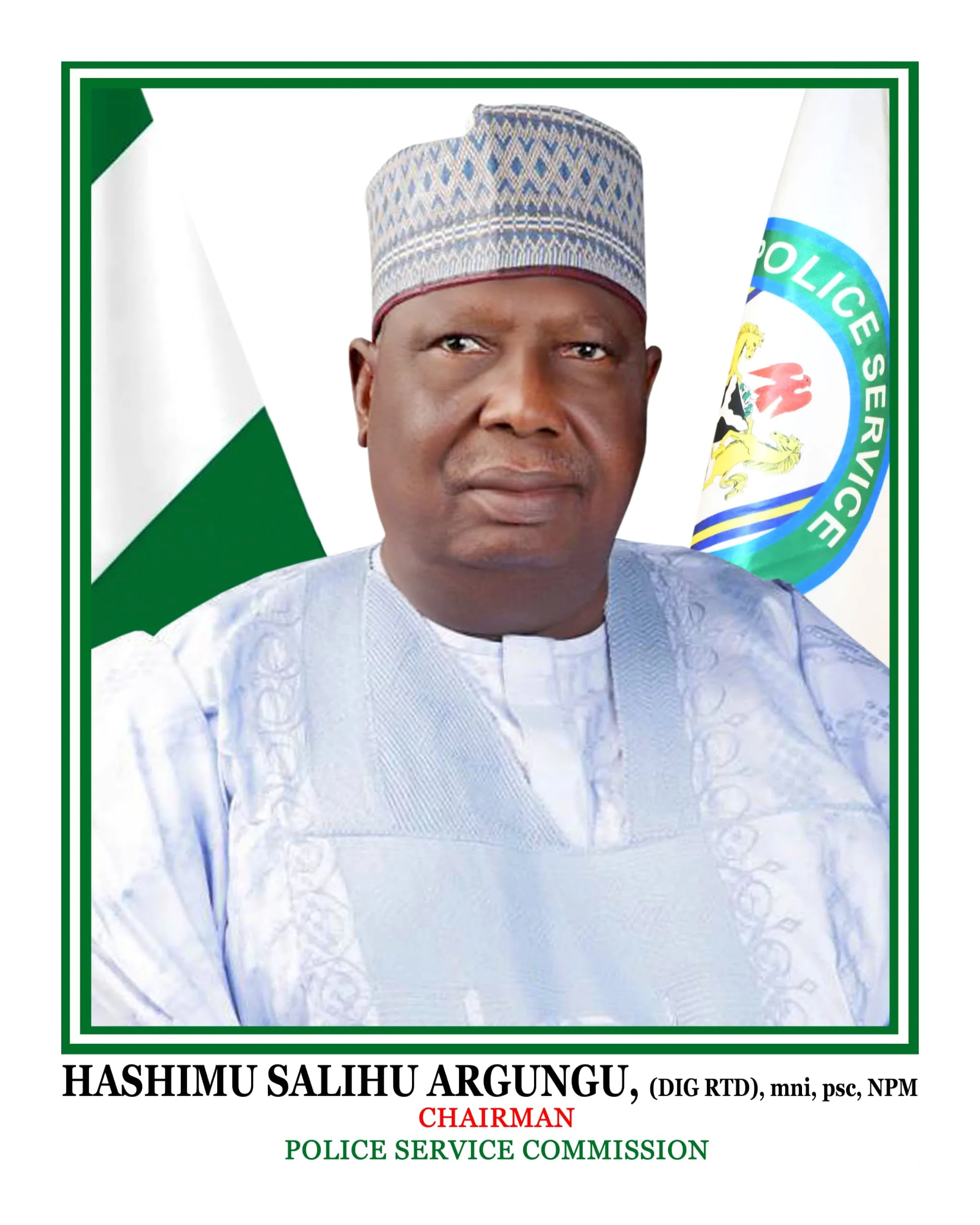
The Commission is in receipt of a petition addressed to its Chairman, DIG Hashimu Argungu rtd mni, captioned “Complaints of Disregard to Judicial Process: Abuse of Power; Intimidation and Harrasment against Inspector James of Zone13, Nigeria Police Force, Ukpo Command by the Members of Umu Ukwueze Family, Umudikwu, Ihe Nsukka from from Agbo & Agbo & Associates and signed by C.S Agbo Esq of Divine Chambers .

The Petitioner said one Mr. Jude Onah broke into a part of their family land and started erecting a perimeter fence using brick layers and other labourers. He noted that all efforts to get the said intruder to hands off the land proved abortive but surprisingly his clients and owners of the property were whisked away to Zone 13 Ukpo without the knowledge of family members.

“When our clients saw the handwriting on the wall, they instructed us to challenge their arrest in the first place as it became clear to them that the whole game is meant to persecute them” “We then filed motion for the enforcement of the fundamental rights of our clients….the said motion was promptly served on the respondents. The lawyer in the Petition said despite the service of the motion for fundamental rights on Inspector James and subsequent arrest of Mr. Amaechi Ezeugwu, the said Inspector continued with threats on our clients for more arrests. ” We filed a motion for injunction to restrain the Police for further harassing our clients pending the hearing and determination of the main motion.”

He said the most worrisome aspect “is that about three days ago the same Inspector James started calling the lawyer we sent to secure our clients bail asking him to ensure that our clients come to his office……threatening to come down to Nsukka and carryout massive arrest “

The lawyer complained that during this period his clients had been extorted to the tune of N200,000 and N150,000 respectively.”

The Commission spokesman, Ikechukwu Ani disclosed that the Commission finds this development shameful and notes that all the Officers involved in this serious act of misconduct would face the Commission’s disciplinary action.

The Chairman of the Commission, DIG Hashimu Argungu rtd mni, said he would not rest until he purges the South East of human rights abuses especially in the illegal handling of civil matters especially land disputes.

He warned that the Police should stay away from this and allow the courts to do their job.

We Were Not Sacked Over Corruption, Falsification Of Age — Retired Police Chiefs

By Ebinum Samuel

No fewer than 15 police officers recently retired by the Police Service Commission, PSC, over “date of appointment” have debunked some misleading media reports alleging that they were sacked over corruption and falsification of age.
Rising from a meeting held at the nation’s capital, Abuja, some of the affected police officers retired compulsorily last month by PSC said the issue the authority claimed to have retired them for is strictly on their date of appointment.


One of the aggrieved retirees who pleaded anonymity, said: “The truth about our case ( Courses 18,19 and 20) is all about when we ought to be due for retirement from the Force as Force Entrants. It has nothing to do with corruption or falsification of age!”
Speaking further, he disclosed that their grievances are all about Policy somersault by the same PSC that in 2017 ordered the Inspector-General of Police, IGP, to implement an Appeal Court ruling on the case of date of appointment.


“To our dismay, some reporters, in their unverified reports have tarnished our image by alleging that we were sacked over corruption,” said the retiree.
Speaking in a similar vein, a retired Chief Superintendent of Police (CSP), who also pleaded anonymity, enjoined reporters to cross-check facts before rushing to publish their stories.
According to him, such unverified reports have done a lot of damage to several families.
He stressed: “The issue we had with PSC has been clarified by the Appeal Court in 2017. We believe that PSC is not the Supreme Court of Nigeria.”

EFCC arrests nine suspected internet fraudsters in Abuja

The Economic and Financial Crimes Commission has arrested nine individuals suspected of engaging in internet fraud in the Federal Capital Territory, Abuja.

According to a statement released on Tuesday by the EFCC’s Head of Media and Publicity, Dele Oyewale, the arrests were made at two locations — Sunnyville Estate in Lokogoma and Open Heaven Estate, in Dawaki.

During the operation, law enforcement officers seized several items, including four luxury cars, laptop computers, iPads, and mobile phones, which are believed to have been used in fraudulent activities.Related News

    “EFCC, have arrested nine suspected internet fraudsters in the Federal Capital Territory, Abuja.

    “They were arrested on Tuesday, March 4, 2025, at Sunnyville Estate in Lokogoma and Open Heaven Estate in Dawaki areas of the Federal Capital Territory, FCT.

    “Items recovered from them include four high-end cars, laptop computers, iPads, and phones. They will be charged to court as soon as investigations are concluded,” the statement said.

    PSC APPROVES APPOINTMENT OF 6 DIGs, PROMOTES ONE CP TO AIG, APPOINTS CPs FOR ENUGU AND OYO STATE COMMANDS

    By Ebinum Samuel


    The Police Service Commission has approved the appointment of six Deputy Inspectors General of Police and the promotion of the Commissioner of Police Enugu State Command, Uzuegbu Kanayo to the next rank of Assistant Inspector General of Police.The new Deputy Inspectors General of Police are Sadiq Idiris Abubakar, Commandant Police Academy , Wudil, Kano. He was former Commissioner of Police, Federal Capital Territory; CP Peace keeping Operations and Coordinator, Police Special Forces; Benjamin Nebolisa Okolo, former AIG, Zone 16, Yenagoa and presently AIG Department of Information Communication Technology, Force Headquarters Abuja and Williams Adebowale, Commandant, Police Staff College Jos.Others are Bzigu Yakubu Kwazi Bali, AIG FCID, Annex Enugu; Idegwu Basil Ukuoma, AIG Zone 14, Katsina and Adebola Ayinde Hamzat, AIG Zone 16 Yenagoa and former Commissioner of Police, Oyo State Command.

    He was also a former CP Border Patrol, Force Headquarters, CP Crime Prevention and Community safety; Deputy Force Secretary and currently AIG in charge of NPF Counter Terrorism Unit, CTU, Force Headquarters Abuja.CP Kanayo Uzuegbu Commissioner of Police Enugu State Command promoted to the next rank of Assistant Inspector General of Police was a former Assistant Commissioner Operations Zone 9, Umuahia; Area Commander, Owerri; Area Commander Karu, Nasarawa state; Commander Switch Operation Switch, Portharcourt; Deputy Commissioner Finance and Admin Edo State Command, DCP, state CID, Osun State and Commissioner of Police Operations, Communication, Force Headquarters, Abuja.

    The Commission also approved the appointment of Commissioners of Police for Oyo and Enugu State Commands. CP Adenola Johnson, Principal Staff Officer to the Inspector General of Police was appointed CP Oyo State. He was also a former Deputy Commissioner of Police Delta State Command. CP Mamman Bitrus Giwa was appointed CP, Enugu State to take over from newly promoted AIG Kanayo Uzuegbu. CP Giwa was former DCP Operations Kaduna and Imo State Commands; ACP Police Mobile Force, Force Headquarters Abuja; and CSP A, Commissioner of Police Mobile Force, Force Headquarters among other postings in the Police Mobile Force.According to Ikechukwu Ani, the Head, Press And Public Relations, the Commission also approved the promotion of eight Chief Superintendents of Police to the next rank of Assistant Commissioners of Police. They are Abdullahi Kamba Usman; Sani Abdu; Ifeanyi Owo; Vincent Orole; Elisha Atikinkpan and Margaret Okonkwo. Others are Alhasan Aliyu Guga and Imo Owinizi Ezekiel.

    The newly promoted senior Police Officers were subjected to Written examinations and interactive oral interview. The Chairman of the Commission, DIG Hashimu Argungu rtd mni, presided over the sessions with Justice Paul Adamu Galumje, Justice of the Supreme Court rtd and Honourable Commissioner representing the Judiciary in the Commission; DIG Taiwo Lakanu rtd fdc, Honourable Commissioner representing the Police and Chief Onyemuchi Nnamani, Secretary to the Commission in attendance. DIG Argungu charged the new DIGs to give the Inspector-General of Police the required support and cooperation to ensure that the Nigeria Police Force would be in a good position to secure the Nigerian space and ensure that law and order are maintained.

    Nigeria’s Political Legacy: A Reflection on Leadership, Betrayal, and Accountability

    By Halima Abdulazeez

    Nigeria has been gripped by a series of revelations and events in recent times,  that have brought her political history and leadership under intense scrutiny. One such phenomenon making headlines is the publication and launching of an autobiography that seeks to exonerate Nigeria’s former head of state, General Ibrahim Babangida Badamasi, from the annulment of the June 12, 1993, presidential election—a watershed moment in Nigeria’s democratic journey. This autobiography, coupled with the chilling revelations surrounding the late General Sanni Abacha, has reignited debates about accountability, betrayal, and the moral bankruptcy of Nigeria’s political elite.

    The June 12 election, widely regarded as the freest and fairest in Nigeria’s history, was won by Chief Moshood Kashimawo Olawale (MKO) Abiola, a businessman and philanthropist. However, the election was annulled by the Babangida regime, plunging the nation into political turmoil. For decades, the question of who was truly responsible for this annulment has lingered. In a twist of fate, General Babangida’s autobiography attempts to shift the blame onto his late colleague and ally, General Sanni Abacha, who succeeded him as head of state. According to Babangida, it was Abacha who orchestrated the cancellation of the election. This revelation has sparked outrage and disbelief, as many Nigerians view it as an attempt to rewrite history and absolve oneself of guilt.

    The irony is palpable. General Abacha, who passed away in 1998, is no longer here to defend himself. Babangida’s attempt to “wash his hands” of any wrongdoing and cast the blame on a dead man has been met with skepticism and condemnation. It raises the question: can the dead truly bear the sins of the living? As Nigerians grapple with this revelation, one cannot help but wonder what the angels must be thinking as they witness this final duel between the victim, Abiola, and the alleged perpetrator, Abacha. The annulment of June 12 remains a dark chapter in Nigeria’s history, and the quest for justice and closure continues.

    It is important to beam the light on the speech of General Mamman Vasta, a celebrated poet, astute writer, and close confidant of General Babangida. His speech is adding another layer of complexity to the current narrative. Vasta, who was executed during the Babangida regime, delivered a chilling final speech that continues to haunt the collective consciousness of Nigerians. His words were not just a plea for mercy but a profound reflection on the nature of power, betrayal, and the human condition.

    In his speech, Vasta said: “However, I shall remain my witness before your judgment, and the testimony before its justice. Before you pass your sentence on me, I’ll request you to see all sides of everything before you decide. And while you do, I will like you to keep the lessons in view still yet. I believe the sentence shall not be my final hour. I have God’s promise on that. May I appeal to you to also take note that I am a married man with a family. I have other dependents that I have the obligation of looking after. I will hate to think that by the time you finish with me, my children shall be so scared of the system that they shall never come near it, for a lean liberty is better than fat slavery.”

    These words, dripping with both defiance and vulnerability, offer a glimpse into the mindset of a man facing his mortality. Was it bravery that fueled his speech, or was it fear? Perhaps it was a combination of both—a marriage of convenience between courage and despair. His plea for his family and his warning about the systemic rot in Nigeria’s political landscape remain eerily relevant today. His execution underscores the treacherous nature of political power in Nigeria. A reminder that in the quest for power, loyalty is often sacrificed at the altar of self-preservation.

    Years after his death, Vasta’s words continue to resonate with Nigerians who are disillusioned with their leaders. His execution, seen by many as a betrayal of the highest order, serves as a metaphor for the broader betrayal of the Nigerian people by their political elite. Today, as General Babangida attempts to rewrite history and absolve himself of guilt, one cannot help but wonder what Vasta would say if he were alive. Perhaps he would be sitting among the angels, watching in dismay as Nigeria’s leaders continue to enmesh the nation in chaos and corruption.

    The tragedy of Nigeria’s political leadership is not confined to the past; it is very much a present reality. The National Assembly, which ought to be a bastion of democracy and accountability, has become a theater of absurdity. Recent allegations against the Senate President, who is accused of using his position to harass women, have further eroded public trust in the institution. Of the 109 senators, only four are women, highlighting the glaring gender disparity in Nigerian politics. Among these women is Senator Natasha Akpoti Uduaghan, representing Kogi Central, who has alleged frequent victimization and harassment in the Senate. Her ordeal has been likened to that of a student who refuses the advances of her lecturer, an analogy that underscores the abuse of power and the vulnerability of women in Nigerian politics.

    This is not the first time the Senate President has been accused of such misconduct. The recurrence of these allegations raises serious questions about the moral integrity of Nigeria’s political leaders. If those entrusted with the responsibility of governing the nation cannot uphold basic ethical standards, what hope is there for the average Nigerian? The fear is that by the time these leaders are done ruining the country, the younger generation will be so disillusioned and afraid that they will steer clear of politics altogether. Already, there is a growing sense of apathy and despair among Nigerians, with many opting to migrate in search of greener pastures where they are presented with equal opportunities and a chance at a better life.

    The exodus of young Nigerians to other countries is a damning indictment of the failure of leadership in Nigeria. The political and elite class must take urgent steps to address the systemic issues plaguing the nation. Corruption, nepotism, and a lack of accountability have become entrenched in the fabric of Nigerian society, and the consequences are dire. The world is watching as Nigeria, a nation with immense potential, teeters on the brink. It is time for the leaders to put their heads together and rescue the nation from complete ruin.

    In conclusion, the revelations surrounding General Babangida’s autobiography, the chilling speech of General Vasta, and the ongoing scandals in the National Assembly are a microcosm of the broader challenges facing Nigeria. They underscore the need for ethical leadership.

    The annulment of the June 12 election, the betrayal of allies, and the harassment of women in politics are all symptoms of a deeper malaise—a failure of leadership and a betrayal of the people’s trust. As Nigerians, we must demand better from our leaders and hold them accountable for their actions.

    Nigeria’s political and elite classes have a moral obligation to craft a new narrative – one defined by hope, opportunity, and justice. The world is watching, and the future of Nigeria’s children hinges on their ability to learn from past mistakes and build a brighter tomorrow. The time for decisive action is now.

    ©Halima Abdulazeez

    Halima Abdulazeez is a poet and a writer of the poetry collection “Soul Rants” A Journey from Within. She is the treasurer, of PEN International, Nigerian Center, and resides in Lagos, Nigeria. +234-8034816865 umuhfaisal@gmail.com