www.newstower.ng

How companies can protect their employees from cyber theft.

By Adeyemi A. Adesola

In today’s digital age, cyber theft is a major threat for businesses, affecting personnel at all levels. As businesses increasingly rely on digital platforms for communication, transactions, and data storage, hackers continue to exploit vulnerabilities via phishing, malware, credential theft, and social engineering attacks. Protecting employees from cyber theft entails not just securing personal information but also guaranteeing the company’s overall security. When employees become victims of cyber-attacks, businesses suffer financial losses, reputational damage, and operational difficulties. To mitigate these hazards, businesses must take proactive measures to ensure a safe working environment.
Increasing cybersecurity awareness is one of the best strategies to shield staff members from cyber theft. Employees lack of knowledge of the strategies employed by malicious actors contributes to the success of many cyber thefts today. In order to teach staff members how to spot phishing emails, fake websites, and social engineering scams, organizations should regularly provide cybersecurity training. Workers should be instructed to avoid clicking on links or downloading unauthorized files, as well as to confirm unusual requests for sensitive information.

To keep staff members updated on the most recent cyber threats, security training ought to be a continuous process rather than a one-time event.
In addition to raising awareness, putting in place robust access controls is essential to stopping cyber theft. Employers should make sure that workers only have access to the data required for their jobs by enforcing the principle of least privilege.

An additional layer of protection is added by using multi-factor authentication (MFA) for logins, which lowers the possibility of unwanted access even if credentials are compromised. Businesses should also set up safe password policies that mandate that staff members create strong, unique passwords and change them on a regular basis.
Securing communication channels is a key part of safeguarding staff members. Companies should promote the usage of encrypted communication platforms and make sure that emails containing sensitive information are encrypted. Employees should also exercise caution when exchanging information over the phone, particularly when dealing with unfamiliar individuals claiming to be corporate officials, IT personnel, or financial institutions.


Endpoint security measures such as firewall protection, antivirus software, and automatic software upgrades should be implemented on all work-related devices. Companies should also create device management rules, which enable IT workers to


Anambra seals church over ritual practices

The Anambra State Government has sealed a popular church known as “Children of the Light Anointing Ministry” run by Pastor Onyebuchi Okocha, also known as “Onye Eze Jesus”, over alleged involvement in controversial “Oke-ite” traditional practice.

The church located in Amafor village, Nkpor in Idemili North Local Government Area of the state was sealed by operatives of the state security outfit, “Agunechemba” during their visit to the premises on Sunday.

During the visit to the site, some substances including containers and other items were found at the premises.

This was disclosed in a post on the Anambra State government X handle on Sunday.

This development, it was gathered marked the third high-profile crackdown on “quick riches” spiritualists in Anambra, following the crackdown and arrests of popular native doctors and individuals engaged in “Oke-ite” practices.

The state authorities also sealed some of their shrines for engaging in such activities.

It was gathered that “Oke Ite” is a concoction made from human parts, animals, and herbs mixed in a mud pot and used for money rituals and the state authorities have identified it as a fraudulent scheme used by native doctors to deceive unsuspecting victims.Related News

Ken Emeakayi, the Special Adviser to the Anambra State governor, Chukwuma Soludo, on Community Security, also announced the closure of the church while leading members of “Operation Udo Ga-Achi” to the site.

Emeakayi stated that the action was taken in response to public complaints and a video where the pastor allegedly admitted to practising “Oke Ite” and other dubious rituals.

He said, “The state government will conduct forensic tests on liquid substances found at the ministry. While the state government does not oppose any religious practice, it will not tolerate those that promote a ‘get-rich-quick’ mentality.

“Additionally, forensic experts will analyse samples from River Bethsaida, where the spiritualist, also known as ‘Aka na Asa Uchu’, is said to conduct baths for individuals.

“The investigation aims to determine any potential health hazards associated with the practice. The Anambra State government remains committed to curbing fraudulent religious and ritualistic practices in the state.”

The spiritualist was said to have gained popularity for his style of taking followers to a river in Nkpor.

Ikenna Obianeri

Old, new naira notes remain legal tender – CBN

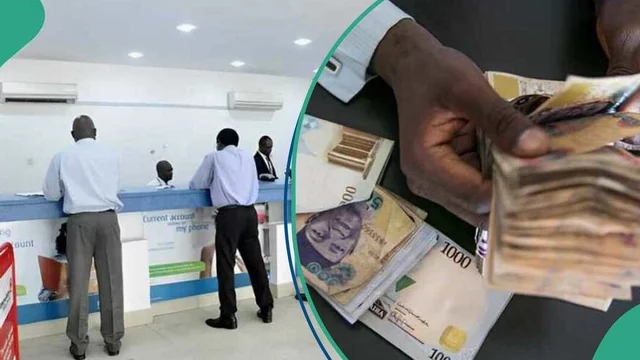
The Central Bank of Nigeria (CBN) says all denominations of Naira banknotes currently in circulation remain indefinitely valid as legal tender and cannot expire or be phased out.A statement on Friday by CBN’s Acting Director, Corporate Communications, Mrs Sidi Ali Hakama, said all banknotes, including the old and new designs of N1,000, N500, and N200, were valid.

Hakama urged the public to disregard misinformation regarding the validity of the old notes.

“In

line with the bank’s previous clarifications and to offer further assurance, the CBN wishes to reiterate that the subsisting Supreme Court ruling granted on November 29, 2023, permits the concurrent circulation of all versions of the N1,000, N500, and N200 denominations of the Naira indefinitely.

“For the avoidance of doubt, all versions of the Naira, including the old and new designs of N1000, N500, and 4200 denominations, as well as the commemorative and previous designs of the 100 denomination, remain valid and continue to be legal tender without any deadline.

“We, therefore, advise the public to disregard any claims that the old series of the aforementioned banknotes will cease to be legal tender on December 31, 2024.

“We urge Nigerians to continue accepting all Naira banknotes (both old and redesigned) for their daily transactions and to handle them with care to ensure their longevity,” she said.

The director encouraged the general public to embrace alternative modes of payment, such as e-channels, to reduce pressure on using physical cash. (NAN)

Folake Ani-Mumuney Bows Out Of FirstBank Service

“On a personal note, I am particularly delighted that the 130th anniversary year of our Bank has been a milestone year for me on many fronts and it is therefore fitting that I draw the curtain with flourish, in thanksgiving, as I ask you to ‘come and join me sing hallelujah, Jehovah Jireh has done me well’. Do raise a glass in toast to …finishing well!”

Truth be told, the amazing Amazon has built and impacted careers. Many of her former subordinates at First Bank during her tenure have become leaders in their own rights , but yet remains ever grateful proteges of this renowned progeny.

As the corporate Amazon steps out of FirstBank to seek out more opportunities, may her career path be paved with gold and the best that the universe has to offer.

List of Top 8 Nigerian Banks With Highest Customer Deposits in 2024

Customer deposits in eight commercial banks hit N85.58 trillion in the third quarter of 2024, representing a 12.2% increase from the N76.26 trillion recorded in the corresponding period in 2023.The information is contained in the banks’ unaudited interim financials for the period ended September 30, which they filed with the Nigerian Exchange Limited (NGX).

Customer deposit is the money a customer pays into a bank to secure goods or services or to make an advance payment on an order or project.Zenith Bank recorded the highest customer deposits at N21.57 trillion in the review period, from the N13.38 trillion recorded in Q3 2023.The figure is a 61% increase driven by demand deposits, which rose from N7 trillion to N8 trillion.Access Holdings followed next with N22.28 trillion in customer deposits compared to N15.32 trillion in Q3 2023, representing a 46% yearly increase.The bank’s demand deposits stood at N9.36 trillion from N6,83 trillion in 2023.

First Bank increased to N16.72 trillion in the review period from N10.66 trillion in the same period in 2023, showing a 57% increase.The bank’s demand deposits rose to N3.87 trillion, savings deposits reached N4.12 trillion, and term deposits spiked to N8.72 trillion.Guaranty Trust Bank reported an N10.68 trillion increase in customer deposits under review from N7.41 trillion in the same period in 2023.Term deposits of the bank rose from N846.09 billion to N1.46 trillion, while savings deposits rose from N3.29 trillion to N4.21 trillion.

Fidelity Bank recorded N6.08 trillion in customer deposits in the review period, relative to N4.01 trillion recorded in Q3 2023, representing a 52% increase, while term deposits rose from N75.99 billion to N309.80 billion.Sterling Bank recorded customer deposits of N2.46 trillion in the period under review, up from the N1.84 trillion it recorded in the corresponding period in 2023.The bank’s savings deposits rose from N1.10 trillion to N1.50 trillion, and term deposits stood at N1.23 trillion from N742.12 billion.Its savings deposits rose from N1.10 trillion to N1.50 trillion, and term deposits increased from N742.12 to N1.23 trillion. Stanbic IBTC’s deposits swelled to N2.46 trillion from N1.84 trillion in 2023, representing a 34% increase.

The growth was driven by current accounts, which spiked from N1.04 trillion to N1.33 trillion, and savings accounts rose from N337.25 billion to N478.22 billion.Wema Bank experienced a 23% yearly increase in customer deposits, from N1.86 trillion in 2023 to N2.29 trillion in 2023.Punch reports that the value of customers’ bank deposits rose to N136 trillion as of March 2024.Total bank deposits rose by 63%, from N70.5 trillion in 2022 to N115 trillion in 2023, hitting N136 trillion in March 2024, an 18.26% increase in three months.The bank disclosed that all conversions must be fully disclosed and reported as part of the bank’s exchange rate requirements.

Access Bank PLC Completes Acquisition of Standard Chartered Bank Angola S.A. and Standard Chartered Bank (Sierra Leone) Limited

Further to our July 14, 2023 announcement regarding the above subject, Access Holdings PLC (‘Access Holdings’ or ‘the Company’) is pleased to announce that its flagship subsidiary, Access Bank PLC (‘Access Bank’ or ‘the Bank’) has completed the acquisition of Standard Chartered Bank Angola S.A and Standard Chartered Bank (Sierra Leone] Limited (‘the Acquisitions’).Commenting on the completion milestone, Roosevelt Ogbonna, the MD/CEO of Access Bank PLC and CEO of the Banking Group said:‘We are pleased to have successfully concluded 2 important acquisitions in Angola and Sierra Leone, affording us synergies to strengthen the quality of our earnings from both countries by significantly growing our share of the Corporate and SME banking in the two markets. The combinations represent another significant step towards our broader vision of becoming the Worlds Most Respected African Bank.’The parties are working on the completion of transactions that would see Access Bank acquire Standard Chartered Bank’s subsidiaries in Cameroon, the Gambia and its Consumer, Private and Business Banking business in Tanzania.Access Holdings shall continue to make disclosures as and when required.

Access Holdings shall continue to make disclosures as and when required.

SUNDAY EKWOCHI

COMPANY SECRETARY

About Access Holdings PLC

Access Holdings PLC (‘the Company’) operates through a network of more than 700 branches and service outlets, spanning three continents, 23 countries and over 60 million customers. The Company serves its various markets through four subsidiaries across the banking, payment, pension administration and insurance sectors through four operating companies, viz: Access Bank PLC, Hydrogen Payment Services Company Limited, Access Pensions Limited, and Access Insurance Brokers Limited.Access Bank PLC serves its various markets through three business segments- Corporate and Investment, Commercial and Retail and has enjoyed what is Africa’s most successful banking growth trajectory in the last twenty-two years. Following its merger with Diamond Bank in March 2019, Access Bank Plc became one of Africa’s largest retail banks by customer base and the Nigeria’s largest bank by total assets.

Hydrogen Payment Services Company Limited, the payment company, leverages the strong suite of the Bank’s existing assets and customer base, creating a super fintech that will be Africa’s most powerful business services network. Hydrogen being a company of African heritage has a clear understanding of the unique payment challenges across the continent and is positioned to address these challenges with its offerings. Its range of products and services, such as InstantPay, Payment gateway, POS services, Card and Switch processing are gaining traction in the marketplace and addressing the unique needs of customers.Access ARM Pensions Limited, formerly Access Pensions Limited, is one of Nigeria’s largest Pension Funds Administrator (‘PFA’) by customer base and Assets Under Management, with nearly ₦3 trillion in assets under management and serving over 2 million Retirement Savings Account holders.Access ARM Pensions Limited is the product of several separate entities. The erstwhile Access Pensions Limited first became a subsidiary of Access Holdings following the acquisitions of the former First Guarantee Pension Limited and Sigma Pensions Limited and their subsequent merger. Subsequently, Access Pensions Limited merged with ARM Pensions Managers Limited to then form Access ARM Pensions Limited. As one of Nigeria’s leading PFAs, Access ARM Pensions Limited will leverage key relationships and Access’ growing ecosystem across Africa to unlock greater opportunities for customers.

Access Insurance Brokers Limited is a company licensed by the National Insurance Commission that provides intelligent solutions that mitigate the unique risks faced by individuals and business in an ever-changing world using leading risk management tools and governance standards.The Company strives to invest in businesses that are committed to sustainable practices and have a positive impact on the environment.

For media inquiries, please contact:Olakunle Aderinokun

Head, Media Relations

Access Holdings PLC

+2348033204315

aderinokuno@theaccesscorporation.com

How N12bn Fraud Rocked First Bank-Ex Bank Staff

In the last six months, First Bank of Nigeria FBN, had consistently been in the news for the wrong reasons.Recall that NATIONAL WAVES reported how the bank sacked over 100 employees and how a former manager of the operations team, diverted ₦40 billion.A couple of weeks back another former staff, Adesuwa Ezenwa, a relationship manager revealed jaw dropping details about how a former chairman of the bank, Oba Otudeko defrauded the bank to the tune of N12 billion.Ezenwa revealed to the National Industrial Court, NIC, Lagos division that loans worth billions of naira were transferred to companies related to Otudeko even though they were granted in the name of other firms.Ezenwa is claiming unfair dismissal by FBN on October 5, 2016, on fraudulent loan disbursements without any explanation as to her culpability.

After her sack, she was invited to appear before a credit disciplinary committee reviewing facilities granted to a firm known as Supply and Services Ltd, a subsidiary of Royal Ceramics Group, a major customer of the bank.Although the committee cleared her of having any interest in the loans disbursed, Ezenwa said she was admonished during the disciplinary proceedings for not whistleblowing on some of the transactions approved by her group head, a certain Mr Olatunji and the Executive Vice President, a Mrs. Cecilia Majekodunmi.She said the admonition was most unfair and unwarranted as she was in no position to whistle blow on her superiors, though some of the loan facilities reviewed were unsecured facilities granted to companies in which the chairman of the bank, Otudeko and the erstwhile Managing Director, Bisi Onasanya, had substantial investments.

“The persons to whom these reports would have been made were the very persons who were the perpetrators of the misdeeds,” her statement to the court reads.“The impugned facilities were approved and disbursed under the direction and authority of her Group head and executive vice president and camouflaged as loans granted by some other unsuspecting customers.”In one scenario, according to her, unsecured facilities, that is loan granted without collateral, worth about N12 billion were granted to a company in which Oba Otudeko has substantial investment.

However, the loan was camouflaged as loans granted to the Stallion Group of Companies, which at a point in time discovered this false entry in its statement of account and protested same.In another instance, she said, an unsecured facility of N2 billion was granted in 2012 to Broadwaters Resources Company Nigeria Ltd, which she said turned out to be a mere conduit pipe employed by Majekodunmi and Onasanya for siphoning monies from the bank.The loan, according to the court filing, was never repaid.“Out of the N12 billion camouflaged as lending to the Stallion Group, N8.21 billion was transferred through various accounts to a final destination account belonging to a company known as V TECH LTD which belongs to the Chairman of FBN Holdings, Oba Otudeko while the sum of N4.45 billion out of the same fictitious facility was transferred to Ontario Oil and Gas.

The facility remains unpaid to date,” the document reads.“These were not the only acts of malfeasance by the top management of the bank, but several other transactions were undertaken by other top management staff for which the Plaintiff is being punished.“Apart from funds camouflaged as loans granted to the Stallion Groups, similar loans were granted over the years by Olatunji who was the Branch Manager and Majekodumi, to other customers of the Bank amongst which are SUPPLIES AND SERVICES LTD.

Supplies and Services Ltd is a subsidiary of ROYAL CERAMICS GROUP OF COMPANIES and several loan approvals were initiated and authored by Olatunji and Majekodunmi.“The facilities granted to Supplies and Services Ltd was subsequently sublet and disbursed in smaller bits to several customers on more profitable terms to both officers and these customers include Swap Technologies and Telecomms Plc, NetConstruct Nigeria Ltd, Orbit Cargo, High Performance Distributions Ltd etc.“Some of the transactions undertaken by the Bank are already being investigated by the Economic and Financial Crimes Commission, EFCC.

Their investigations/Report will be relied on at the trial.”Ezenwa said given the size of the loans, the board of the bank cannot but be complicit in the lendings, which were above the limits of the executive directors, vice-president and managing director of the bank.Otudeko is no stranger to bank deals that end up becoming controversial.Some FBN Holdings shareholders protested after Otudeko purchased 4,770,269,843 units of FBN Holdings’ shares through his Honeywell Group. The purchase brought the stake held by the company in the premier bank to 13.3 percent.However, a few days after the purchase, Ecobank wrote a letter to FBN Holdings, asking the bank to reject Otudeko’s bid to become its largest shareholder.In July, the Securities and Exchange Commission, SEC said it was investigating the acquisition of 4.77 billion shares of FBN Holdings by Otudeko.

CBN declares Old Naira Notes valid indefinitely, dismisses December 2024 expiry rumours

The Central Bank of Nigeria (CBN) has announced that the old N200, N500, and N1,000 naira notes will remain valid indefinitely, refuting claims that these denominations would cease to be legal tender by December 31, 2024.   In a statement issued on Thursday by the acting Director of Corporate Communications, Sidi Hakama, the CBN clarified that reports suggesting the discontinuation of the old notes by the end of 2024 are false and aimed at creating confusion within Nigeria’s payment system.   “The attention of the Central Bank of Nigeria has been drawn to discussions suggesting that the old series of the N200, N500, and N1,000 banknotes will cease to be legal tender on December 31, 2024. We categorically state that such claims are untrue and meant to disrupt the country’s payment system,” the statement said.

The CBN further emphasized that the Supreme Court’s November 29, 2023, order extending the use of old naira banknotes indefinitely remains in effect. This ruling came after the Attorney-General of the Federation sought legal clarification on the continued validity of the old naira notes.   The bank reassured Nigerians that all denominations of the old and redesigned naira notes will continue to be issued and accepted across the country. “The CBN’s directive to all its branches to continue issuing and accepting all denominations of Nigerian banknotes remains valid,” the statement added.   Additionally, the CBN called on the public to ignore false reports regarding the old notes’ expiration and to continue using both old and redesigned notes for transactions. The bank also advised citizens to treat naira notes with care to maintain their quality and longevity.  

This announcement comes amidst earlier media speculation over the future of the old naira notes and discussions in the House of Representatives about their gradual withdrawal. Despite calls from some lawmakers to phase out the old notes, the CBN’s position remains that the old notes will remain in circulation alongside the new designs.

When a get-up-and-go banker is at the saddle

By Folorunsho Atta

Really, there are no failures in the world, but there are men and women who doesn’t know how to succeed. Success, in all ramifications is built or resilience, hard work and perseverance.
To Habeeb Yusuf, the dynamic and proactive MD/CEO of Nigeria most patronized microfinance bank, Nigeria Police Force Micro Finance Bank( NPF MFB), it’s dint of hard work and resilience that earned him the bank top job . Never relenting in hard work and improving on his leadership skills everytime, Habeeb’s colleagues at the bank will confirm to anyone who cares to listen that the banker with over 26 years of banking experience, would not rest on his oars until, unless the job is excellently done.
Appointed three months ago, the 1995 Banking and Finance graduate of the Kwara State Polytechnic in Ilorin, has demonstrated his ability and capability in this short period by hitting the ground running with his transformation agenda.


Not giving room to an atom of procrastination or indecision, Hebeeb was to respond swiftly over the Borno flood that ravaged the bank branch in the state. Rising to the occasion , he moved from Lagos with a few staff to address that issue.
As a good listener, his contemporaries disclosed that when it comes to banking principles, economics, adaptability, confidence in self, investment strategies and human relations, Habeeb thrives.
Now at the helm of affairs of African leading micro finance bank, his proactive measures have been reported to be his principles right from his days as the bank Head of Credit and operations, Branch manager, Head of administration and Regional Head before his elevation as the bank chief executive officer.


A team player who inspires others, the bank is expected, any moment, to attract more customers; increase the asset base and meet the international standards under the leadership of Habeeb Yusuf.
To Customers, Shareholders, Staff, Management Team and the Board of Directors, the actions of Habeeb in this past few months, underscores better days ahead.

The $200 billion club has only 3 members: Elon Musk, Jeff Bezos, and…

Of the nearly 8 billion people in the world, only 2,781 are billionaires. Among them, only three people are part of the exclusive $200 billion club: Tesla CEO and the richest person in the world Elon Musk, Amazon founder Jeff Bezos, and the recent joiner Meta CEO Mark Zuckerberg.

According to Bloomberg billionaire’s index, Musk has a net worth of $270 billion, Bezos is worth $215 billion, and Zuckerberg stands at $202 billion, as of September 26. This puts the Facebook co-founder ahead of other major tech executives including Oracle co-founder Larry Ellison — who is also fighting for a spot in the club — and former Microsoft CEOs Bill Gates and Steve Ballmer.

Zuckerberg not only broke into the $200 billion club recently, but he has also been the biggest winner on the list having accumulated dozens of billions in wealth in 2024, Fortune reported. The 40-year-old’s wealth has ballooned by an incredible $71.8 billion this year, as per the Bloomberg Billionaires Index. The majority of his fortune is derived from a stake of about 13 percent in Meta Platforms which amounts to about 345.5 million shares, based on Meta’s April proxy statement quoted by Fortune.

The billionaire also famously takes $1 as his salary since he makes up for it in “other compensation” and his massive stake in Meta. He took home $24.4 million in “other compensation” this year, the publication reported.

When his wife Priscilla Chan gave birth to a baby girl in December 2015, the same day, he announced plans to give away 99 percent of his stock in Meta to advance philanthropic causes. Moreover, in September 2010, he donated $100 million of Facebook shares to the Newark, New Jersey, public school system. He has also donated 36 million shares to the Silicon Valley Community Foundation, Bloomberg reported. Zuckerberg and Chan are also spending $3 billion in an attempt to end, cure or manage all disease by the year 2100.