www.newstower.ng

THE SELF-IMMOLATION OF NYESOM WIKE


By Tunde Olusunle


One of the most intriguing volumes of poetry written by the globally respected poet, scholar, essayist and dramatist, Niyi Osundare is titled The Word Is An Egg. At the last count, Osundare had published nearly 20 collections of verse, establishing himself as one of the world’s most formidable and most notable bards of all time. I have been a career researcher into Osundare’s oeuvre in the past four decades and also inspired in my writing career as a member of the generation immediately succeeding his. I have also been most fascinated by The Word Is An Egg which derives from the intricate depths of Yoruba lore. It establishes a congruence between the reality of the irretrievability of the spoken word, and the unsalvageability of a broken raw egg, once both have left the confines of their various enclosures. At that point, they become unguardable and unstoppable tumbling boulders.

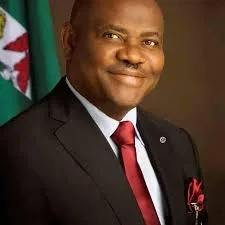
Nyesom Ezenwo Wike, the “batman” of Rivers State politics is famous for his affliction by loggorhoea. He is perennially obsessed by both the microphone and the lectern. What he lacks in perseverance for paperwork, he has aplenty in often needless garrulity and grandiloquence. At the height of his endless attrition with his political godson and successor as Rivers State Governor, Siminalayi Fubara, Wike in August 2024, threatened to “put fire in the states of governors supporting Fubara” against him. Wike spoke in reaction to a solidarity message by the Forum of Governors of the Peoples’ Democratic Party, (PDP), which met in Jalingo, Taraba State at the time, to the troubled Fubara.

Wike who lost the presidential ticket of the PDP to former Vice President Atiku Abubakar at the May 2022 primary and was overlooked as running mate ahead the February 25, 2023 presidential election, has been on a singular mission to “put fire” in the PDP ever since. Apart from working against the party to secure a foothold in the post-election governance structure of the opposing All Progressives Congress, (APC), Wike has superintended over the decapitation and interment of the party which brought him to political prominence 27 years ago. From a hitherto virile and robust opposition party of over a dozen governors, the PDP has shrunken to just about half that number, its offices at the local government, state and national levels under lock in most places, arising from litigations and counter-rulings.

In recent weeks, however, Wike’s invocation of fire on the house under which roof he grew into adulthood, has transmogrified into self-immolation. And he has been told so in unmistakable terms by those on whose behalf he incinerated his father’s house. Following the defection of Siminalayi Fubara to the APC and his official designation as leader of the party in the state, Wike suffered an initial bout of insomnia. For the avoidance of doubt, the APC National Chairman, Yilwatda Nentawe, a Professor, said in the immediate aftermath of Fubara’s switch to the APC, that he is henceforth the party’s Numero Uno in the state. He admonished him to demonstrate accommodating leadership and earn popular trust to win the gubernatorial primary which will presage his return to office.

Wike, who postures as the sole proprietor and indisputable emperor of Rivers State, promptly countered by saying Fubara will not be returned to Brick House, Port Harcourt, the original name of Government House in the Rivers State capital, under his watch, come 2027. According to Wike, he will not allow the state “to repeat the mistake of 2023,” the emergence of an non-pliable Fubara being the error under reference. Ajibola Bashiru, an academic, rugged activist and National Secretary of the APC, buttressed the position of the party Chairman when he noted subsequently that even members of the National Working Committee, (NWC), of the APC must defer to sitting governors as party leaders in their various states. A perennially paranoid Wike shot back cautioning Bashiru to steer clear of the politics of Rivers State, warning not to get his hands “burnt.” Wike is obviously totally enamoured by the concept of infernos and conflagration as it were. But he got more than he bargained for from Bashiru an erstwhile Senator.

Bashiru told Wike unequivocally that the last time he, Bashiru checked, Wike was a member of the PDP and not the APC. To that extent, Wike could not be a rottweiler and alsatian at the same time, guarding two separate gate houses! In Yoruba, Bashiru would probably have told Wike the proverb about the fact that gluttony is not tolerated in the homestead of Alade, a folkloric figure who availed farmers and country folk refuge beneath the roof of his thatched hut during the rain, and something to snack on. Bashiru further told Wike that if he is so psychotic about the politics of Rivers State, he could well resign his job as Minister of the Federal Capital Territory Administration, (FCTA), and relocate to full time local politicking in Rivers State! Bashiru cannot be any correct. At no time since the return of democracy in 1999 has the FCT been any dirtier and unsafe as it has been in recent months under Wike’s supervision, as he continues to distract himself with the concurrent political overlordship of Rivers State.

In parts of the capital city, its been several months since garbage was last evacuated, a situation which bears very grave epidemic prospects. Wike who prides himself as the best thing that ever happened to the FCT, has not been able to rout bovinae and similar animals from the streets and thoroughfares of Abuja in over two years of riding around the FCT in obscene motorcades, complete with outriders. Criminals are having a field day abducting unsuspecting residents in places and sending innocents to untimely deaths. All of these, while Wike trades with the politics of Rivers State. Most surpringly, Wike’s tongue which characteristically engages before rigorous rumination, has not found an answer to Bashiru’s pungent tirade, especially the bit about quitting his ministerial job, to assume the full, functional role of Amanyanabo of Rivers State politics. It would seem Fela Anikulapo-Kuti’s Overtake Don Overtake Overtake, (ODOO), is at play in the current uneasy ceasefire.

Wike may attempt to make light of his situation next time he mounts the campaign dais on his self-serving “thank you tour” of Rivers State. He may display and dramatise buffoonery in the name of attempting to work his motley audience. Beneath Wike’s regalia, however, is a man traumatised by the burns and blisters of self-immolation on his torso. As it stands today, Wike has no political “house.” He has since “put fire” on his “paternal family house,” the PDP, the rubbles still smouldering in the dry season wind. This PDP made Wike Two-term Council Chairman; Chief of Staff; Minister of State and Two-term Governor. The critical core of the opposition, led by Atiku Abubakar who long saw through his chicanery and shenanigans have since energised the African Democratic Congress, (ADC).

For his award-winning success as the ultimate undertaker of the PDP, Wike is very largely viewed with suspicion and resentment in the ruling party, much as he construes himself as one of the “star boys” of the incumbent administration. He cuts the image of a controversial, divisive, disruptive, even destructive jobber in the eyes of the APC. He is unguarded in his utterances and was quoted to have once said he invested a whopping “N50Billion in the installation of President Bola Tinubu in 2023 and will not be dumped just like that.” Tinubu was effusive in his adulation of Wike as one of the standout performers in his government in the congratulatory message he sent to him last December. Wike is ever present at the Nnamdi Azikiwe International Airport, Abuja on Tinubu’s travels and returns, his genuflections non-typical for the political tigritude he professes.

Wike is staking a claim for a place in the Guinness Book of Records. After making history as the single individual who has served in five different executive positions since the dawn of democracy in 1999, he wants to be seen as the first politician to “amalgamate” two parties in support of the President’s reelection. But the people of Rivers State have seen through him, he’s in for a bumpy ride henceforth. Wike is severely loathed by his people for appropriating the political capital of Rivers State for his personal aggrandisement. He gave himself away recently when he said the reelection of Siminalayi Fubara will culminate in his political extinction in Rivers State. Simply put, the state has been Wike’s article of trade on the nation’s political stock market. And he has been the sole collector of accruing dividends, bonuses and royalties.

Whether Wike will field an aspirant to upstage Fubara in the APC gubernatorial primary when it is eventually scheduled, will yet be seen. Whether he will be sponsoring a candidate on the “rainbow political movement” he claims to have just established in Rivers State, to run against Fubara in the governorship election of March 2027, in the event that Fubara gets the APC ticket, will be some spectacle. Wike’s principal, Tinubu, whose reelection he claims to be prioritising will also be running on the APC superstructure. Indeed, the platform on which Wike will hawk his wares in the run up to 2027 for a man who has set himself up for systematic self-destruct, is yet to be seen. Hopefully, Wike’s several foibles on his political trajectory will remind him in a sober moment that the “word,” is very truly as fragile as the egg.

Tunde Olusunle, PhD, Fellow of the Association of Nigerian Authors, (FANA), teaches Creative Writing at the University of Abuja
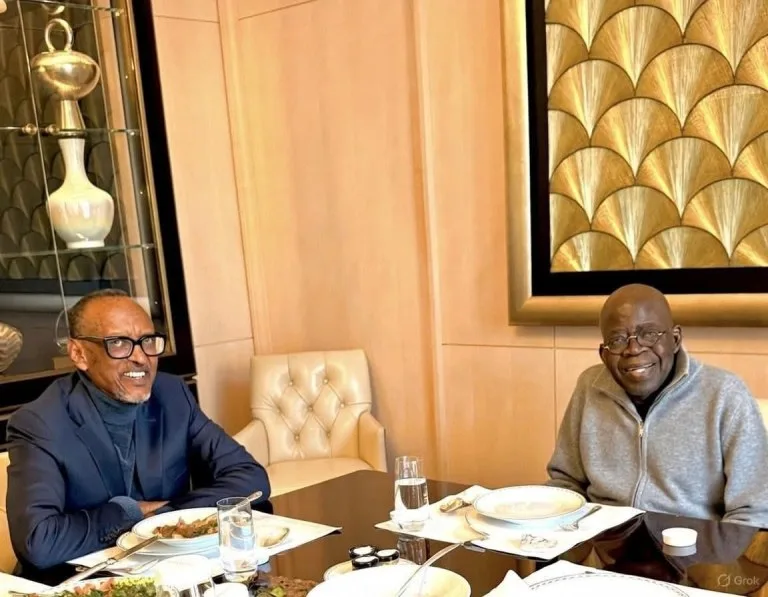
Nigerians need leadership, not Paris optics — Atiku aide slams Presidency


Aide to ex–Vice President Atiku Abubakar, Mr. Phrank Shaibu, has criticised the Presidency over what he described as misplaced priorities amid Nigeria’s worsening economic and security challenges.


In a press release disclosed on Facebook by Paul O. Ibe, Media Adviser to Atiku Abubakar, Shaibu faulted the Presidency for issuing what he called a “Stop Press” focused on the President’s lunch engagements in Paris, rather than addressing pressing national issues.


According to Shaibu, the briefing came at a time when many Nigerians are grappling with hunger, insecurity, business closures and a severe cost-of-living crisis. He described the emphasis on dining companions, photographs and image quality as “tone-deafness in power,” arguing that Nigerians are demanding leadership, not explanations about meals abroad.


He further questioned the Presidency’s response to public skepticism over claims of photo manipulation or artificial intelligence, stating that an administration previously linked to controversies over questionable documents should not be surprised by public doubt.


“When credibility is eroded, doubt follows naturally,” Shaibu said, adding that instead of rebuilding trust, the Presidency had resorted to lecturing citizens and attacking the media.


The former presidential spokesperson argued that the real issue was not a photograph but what he termed a distortion of leadership priorities, insisting that while parts of the country face insecurity and economic hardship, the focus of government communication appeared misplaced.


Shaibu called on the Presidency to move away from what he described as public relations theatrics and to urgently confront Nigeria’s challenges, including hunger, insecurity and economic decline.


He said this was the minimum expectation of Nigerians from those in power.

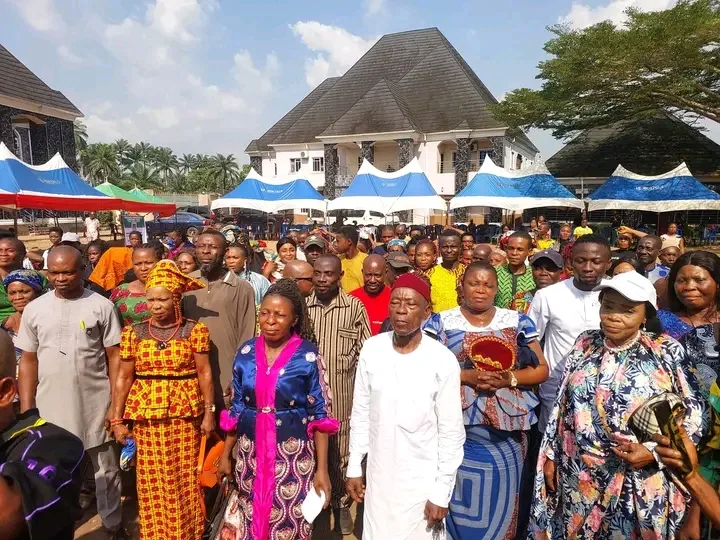
ADC welcomes 5,000 new members in Abia following Peter Obi’s defection


The African Democratic Congress (ADC) has recorded a major boost in Abia State, with about 5,000 new members joining the party barely a week after former Labour Party presidential candidate, Mr. Peter Obi, announced his move to the ADC.


The mass defection was led on Sunday by the 2023 Accord Party governorship candidate in the state, Bishop Emeka Nwankpa, at his hometown of Umuaku, Ntigha, in Isiala Ngwa North Local Government Area.


Addressing the gathering, supporters who defected alongside Nwankpa said they resigned from their former political parties and structures, including the South East Mandate for Good Governance, before collectively pitching their tent with the ADC.


Explaining his decision, Nwankpa said his choice of the ADC was driven by conviction, noting that the party’s manifesto closely reflects his political beliefs. He said his ideology is rooted in people-focused governance, social justice and sustainable development.


He described the ADC as a credible and forward-looking platform capable of delivering inclusive and people-centred leadership, adding that the party represents a fresh chance to restore public confidence in Nigeria’s political system.


The defectors were formally received into the party by the Abia State Chairman of the ADC, Don Norman Obinna, who said recent developments indicate that the nation’s political momentum is gradually shifting in favour of the ADC.

From Indigenous Apprenticeship to Formalized Professional Practice: The Igbo Business System and Omniversity Imperial College’s Competency-Based Evaluation Framework


Professor Tokunbo Akeredolu-Ale PhD


The Igbo apprenticeship system stands as one of Africa’s most coherent indigenous models of professional formation, enterprise succession, and competency validation. Its logic is not academic credentialism but verified capability, ethical conduct, economic relevance, and social trust.


Apprenticeship within the Igbo system is governed by clearly understood norms: learning occurs through immersion, assessment is continuous and observational, recognition is earned through demonstrable mastery, and progression culminates in formal settlement that confers independent professional standing. These principles align directly, not symbolically but structurally, with the professional practice education, evaluation, and qualification architecture of Omniversity Imperial College.


Omniversity Imperial College Lagos Nigeria is positioned deliberately as a professional practice education, executive development, and competency validation institution. Its institutional logic mirrors the Igbo apprenticeship philosophy by operating exclusively within Accreditation of Prior Experiential Learning, Competency Based Education, Structured Recognition, and ISO aligned governance frameworks. Just as the Igbo system does not rely on classroom examinations to determine readiness, Omniversity does not operate within Nigeria’s statutory university degree framework and does not award NUC regulated academic degrees. Its awards are explicitly professional, practice based, competency validated, and industry aligned, reflecting the same distinction the Igbo system has always maintained between learning and formal academic schooling.


In the Igbo apprenticeship model, the master practitioner functions as both mentor and assessor, continuously evaluating the apprentice’s technical competence, judgment, reliability, and ethical comportment.


Omniversity Imperial College institutionalizes this role through qualified assessors, professional panels, and evidence based evaluation processes. Assessment is grounded in portfolios, documented experience, applied projects, interviews, and competency mapping rather than abstract theory. This approach formalizes what has historically been informal but rigorous in Igbo commercial culture: the validation of real capability through sustained performance under supervision.


The settlement phase of the Igbo apprenticeship is the system’s ultimate validation mechanism. It represents recognition that the apprentice has achieved professional independence and is worthy of trust within the commercial ecosystem.


Omniversity’s *practice qualifications* perform an equivalent function within modern professional governance structures.


The *Bachelor of Practice* recognizes foundational competence and readiness for workforce participation.


The *Master of Practice* validates advanced applied mastery and leadership capability.


The *Doctor of Practice* confirms terminal professional authority grounded in industry impact and governance competence.


Each award is explicitly non academic, legally distinct from university degrees, and transparently positioned as a professional recognition of demonstrated capability.


This mirrors the Igbo principle that recognition follows proof, not aspiration.


The *Professor of Practice* designation at Omniversity further reflects indigenous recognition traditions.


In Igbo society, elders and master traders who have demonstrated sustained excellence, mentorship, and community impact are accorded elevated status and authority.


The *Professor of Practice* title similarly recognizes distinguished professionals with verifiable industry leadership and societal contribution. It is not an academic professorial rank and is not governed by statutory university rules. Instead, it aligns with global Professor of Practice norms that emphasize lived expertise, governance maturity, and professional legacy.

Regulatory clarity is a central strength of Omniversity Imperial College Lagos Nigeria’s framework and resonates with the Igbo system’s respect for defined roles and boundaries.


Under Nigerian law, universities are statutory degree awarding bodies, while professional institutes operate under corporate and professional governance.


Omniversity functions lawfully as a professional education provider, a practice qualification awarding institution, and a competency assessment body. It does not require NUC accreditation because it does not claim degree awarding university status. This clear separation mirrors the Igbo distinction between traditional trade mastery and formal Western education, each respected but not conflated.

Professional governance affiliations with bodies such as NITAD and CILRM further reinforce institutional legitimacy without misrepresenting academic authority. These affiliations support ethical standards, leadership development, and professional practice validation while explicitly not conferring academic accreditation. This governance model is consistent with the Igbo apprenticeship tradition, where legitimacy derives from peer recognition, guild like accountability, and reputation rather than state certification.


Omniversity’s integrated professional pathway reflects the structured progression embedded in the Igbo apprenticeship system. Advancement is sequential, competency driven, and evidence based. No level is honorary or automatic. Each stage demands verifiable performance, ethical alignment, and industry relevance. Certificates and transcripts carry explicit legends clarifying their professional, non academic nature, ensuring transparency for employers, partners, and regulators. This mirrors the Igbo emphasis on clear social signaling, where one’s status is understood through demonstrated role and function within the community.


Honorary distinctions at Omniversity Imperial College further parallel traditional Igbo recognition practices. In Igbo society, exceptional contributors to commerce, leadership, education, and community development are publicly honored based on merit, impact, and character. Omniversity’s honorary framework follows the same logic, awarding recognition strictly on demonstrated societal, educational, business, organizational, and leadership impact. These conferments are not earned through coursework and do not substitute for professional practice qualifications, reinforcing the integrity of both earned and honorary recognition.


In synthesizing indigenous African practice with globally intelligible professional frameworks, Omniversity Imperial College does not imitate tradition but formalizes it. The Igbo apprenticeship system provides historical proof that competency based, practice driven education produces resilient professionals and sustainable economic ecosystems. Omniversity Imperial College translates this proven logic into a structured, legally compliant, and internationally legible model of professional evaluation and recognition. In doing so, it affirms that Africa’s indigenous knowledge systems are not inferior precursors to modern education but foundational architectures upon which credible contemporary professional institutions can be built.


*Professor Tokunbo Akeredolu-Ale* _PhD_ President Chairman BOT GC Omniversity Imperial College Missouri USA and Lagos Nigeria

www.omvic.us

+2348185000488

+2347068431124

KARIMI: NASS WILL BACK TINUBU ON TRILLIONS OF NAIRA STOLEN LG FUNDS

By Ebinum Samuel


Chairman of the Senate Committee on Services and Senator Representing Kogi West Zone, Sunday Steve Karimi, says the National Assembly fully backs President Bola Tinubu’s admonition on practical and unfettered financial autonomy for the local government tier of government. He said the parliament will enact relevant laws to compel strict adherence to the Supreme Court judgment on fiscal autonomy for the third tier of government.


Karimi who spoke when he hosted his constituents during the yuletide break, recalled the landmark ruling of the Supreme Court of Nigeria of July 25, 2024, which directed seamless federal allocation of funds to the 774 councils. He quoted the judgement to have said that “state governors’ control over local government resources as unconstitutional, while also voiding caretaker committees as illegal.” Senator Karimi observed that the judgement aimed to “strengthen grassroots democracy and governance by ensuring that allocations go directly to elected officials, without state interference.” He recalled that the overall aim of the ruling is also to improve service delivery at the critical local government level of the governance pyramid.


Despite this very clear, explicit and unambiguous declaration by the highest court in the land, however, Karimi observed that some states have continued to disregard and disrespect the ruling. According to Karimi, “cognisant of the errant conduct of some state governors on the issue, President Tinubu warned at the recent National Executive Committee meeting of the All Progressives Congress, (APC) a fortnight ago, that he may be compelled to issue an Executive Order to whip defaulting governors into line.” The President, Senator Karimi observed, had exercised restraint for so long with non-conformists, despite the fact that he has the powers to impose on them to do what is right.


Said Karimi: “The National Assembly will prioritise the matter of the non-adherence of certain governors across the broad spectrum, to the subsisting Supreme Court ruling on local government financial autonomy. We will back the President with relevant laws which will be retroactively effective. The laws will track the kleptomania and squandermania of governors who have been looting the commonwealth of the people of Nigeria. They will be prosecuted, compelled to make returns and punished for undermining the wellbeing of the generality of the people, by wilfully stealing what rightly belongs to them.”


Speaking further, Karimi said that trillions of naira had been pilfered from the resources of Nigerians by gluttonous governors. His words: “There is general consensus that no administration in contemporary history has made as much resources available to states and local government areas as the Tinubu government, but the people are barely feeling the impact in many places. During the screening of service chiefs recently, the chief of Defence staff noted that not allowing LGAs to function has contributed to insecurity in the country, creating lots of ungoverned space in the country. Some governors, their godfathers and members of their cabals, put a knife on local government funds every month, as their own “dessert” after meals.”


This, the Kogi West Senator noted, “is why the local government system is dysfunctional and incapable of rendering the most basic services to their constituents. It is the reason many parts of the country have become dangerous ungoverned spaces and operational bases for terrorists. Governors who have been wilfully denying the people the resources for development, their aiders and abetters, and their rabid defenders in the media will meet their comeuppance when the parliament enables the appropriate legislations.”


According to Senator Karimi, in some states of the federation, what is being done is outright stealing of LGAs allocation. While local government funds are transferred to the LGAs bank accounts, the state then operates voucher racketeering schemes, where documents are processed for fictitious jobs that are never executed, while the relevant supervisory councillors and chairmen are compelled to sign and approve such fraudulent vouchers which run into billions of naira monthly. No jobs are carried out, while funds are looted steadily and regularly. Chairmen dare not complain for the fear of their lives because the ruling gangs in some states are deadly.This type of fraud shouldn’t be happening in the 21st century in Nigeria.

WHITHER KOGI GOVERNMENT IN THE SECURITY FLARES IN KOGI WEST?

By Tunde Olusunle


Frequent invasion of unsuspecting communities; random abductions-for-ransom and killings in Kogi West Senatorial Zone compel the question: Exactly what role is the administration of Governor Ahmed Usman Ododo playing in the mitigation of insecurity in the district? In the age of the internet, information processing and dissemination is real-time. Happenings in Sokoto in the North West; Borno in the North East; Kwara in the North Central; Oyo in the South West; Edo in the South South and Enugu in the South East are relayed via terrestrial channels, instantaneously and the world is aware and abreast by the minute. Responsive governments swing into action immediately tracking the criminals and dialoguing with them with the aim of securing the safe release of victims.


Apart from their well-earned prominence in the media owing to their positive, productive and impactful service to their constituents, Governors Baba Gana Zulum of Borno; Umaru Bago of Niger, and Abdulrahman Abdulrasaq of Kwara states have been seen on several occasions, receiving freed abductees. The victims of the gunmen attack on the Christ Apostolic Church, (CAC), Eruku, Kwara State, November 19, 2025, were released to Governor Abdulrasaq Sunday November 23, 2025. It is a measure of the direct involvement of the Kebbi State Government in the management of the kidnapping on November 19, 2025, of 25 students from the Government Girls Comprehensive Secondary School, (GGCSS), in Maga, Kebbi State, that Governor Nasir Idris frontally challenged the security sector for ignoring the actionable intelligence which he provided well ahead of the invasion of the school.


The victims of the abduction were released November 26, 2025, following the direct intervention of President Bola Tinubu who dispatched the Minister of State for Defence, Bello Matawalle to Kebbi State immediately after the incident, to lead the rescue operation. The 315 schoolchildren who were taken by hoodlums from St Mary’s Catholic School, Papiri, Niger State, Friday November 21, 2025, were released in batches to Governor Umaru Bago, with the last group gaining their freedom on Monday December 29, 2025. All of these attest to the genuine concern of the leaderships of the states under reference and the federal government, for safety of their citizens, where the guarantee of the safety and security of the citizenry is the foremost responsibility of leadership.


It is common knowledge that Kogi West has been the unfortunate hotbed of a motley of criminal activities. The wilful invasion of settlements and communities by vagrants; the audacious blockage of roads and highways in the district; attacks and kidnappings from homes, farms and churches, have become dangerously recurrent. Monday June 16, 2025, 72-year old farmer and Chairman of the Kogi State Poultry Farmers Association, Samuel Ajayi Bello, was kidnapped from his farm in Ponyan, Yagba East local government area. Chief Ajayi a diabetic, who was released several weeks after upon the payment of a hefty ransom, was denied access to his medications while in extended captivity. Sadly, he had one of his legs amputated after the horrific incident, no thanks to gangrenous infection. Tuesday October 21, 2025, Moses Tuesday Omokore, younger brother of the business mogul, Jide Omokore and his wife were abducted from their home in Idofin, Isanlu, Yagba East council area and a N100million placed on them.


Weeks after the Eruku incident, terrorists attacked the Cherubim and Seraphim Church in Ejiba, Yagba West local government area Sunday November 30, 2025, and took with them the Pastor, his wife and some parishioners. Sunday December 14, 2025, armed men on motorcycles violated the Evangelical Church Winning All, (ECWA) in Aiyetoro-Kiri community in Kabba-Bunu council area and took at least 30 residents of the sleepy settlement with them. Videos of the victims of the Aiyetoro-Kiri incident were made by their captors who kept them under very inhuman conditions. The hoodlums initially pursued the hard-line that they would only negotiate the release of their victims with the state government. The trademark insensitivity and nonchalance of the Kogi State Government, however, compelled the kidnappers to negotiate with community representatives. Out of “magnanimity,” they have dropped their demands to N20million. The Bunu Development Association, (BDA), recently told newsmen in Lokoja the Kogi State capital, that 21 villages in Bunuland had been sacked by marauders; 30 residents killed and 50 people still in captivity, following accentuated terrorism in recent months.


In all of these incidents, the response of the Kogi State Government has been at best tepid, if not totally unavailable. True, Ododo paid a fleeting visit to Isanlu-Esa in Yagba West on Monday October 6, 2025 following the sacking of Okunran, Okoloke and Isanlu-Esa communities by kidnappers and killers. He was indeed pictured in a military camouflage even as he promised that his administration would be ruthless with criminals. That so much evil, so much trepidation, sorrow, tears and blood have been visited on Kogi West in the aftermath of Ododo’s whistle-stop in Yagbaland attests to the ineffectuality of the battle-cry issued by Governor Ododo on that visit, three months ago now. The people have been practically left helpless and hapless, a situation which continues to task the resources of elected representatives of the zone and well-meaning, well to do individuals.


Following the abductions of the traditional ruler of Okoloke in Yagba West, Oba Dada Ogunyanda, Thursday May 15, 2025, and Chief Ajayi Bello, weeks later, Sunday Karimi, Senator representing Kogi West Senatorial Zone, and Leke Abejide, Member Representing Yagba federal constituency in the House of Representatives, were among those contacted to crowd-fund the ransom demands. Oba Ogunyanda for example was only released upon the payment of a N20million ransom, Karimi and Abejide being substantial contributors to the effort. Karimi and Duro Meseko, Deputy National Publicity Secretary of the All Progressives Congress, (APC), who is from Bunuland in Kabba-Bunu council area, have been contacted to support efforts being polled for the release of the Aiyetoro-Kiri captives.


As Member Representing Kabba-Bunu/Ijumu federal constituency in the House of Representatives years ago, Tajudeen Yusuf it was who paid the bulk of the ransom demanded by the abductors of the man who would later succeed him, Salman Idris. Yahaya Bello was the sitting governor of Kogi State and was reportedly nonplussed and totally unconcerned by the incident. The pattern has remained the same as bloodhounds continue to cash in on the vulnerability of local communities, bleeding the resources of the public-spirited. Criminality has become a thriving enterprise in the traditionally clement and welcoming Kogi West.


With so much fiscal exertion repeatedly devolving on private individuals and the personal resources of a handful of public officers, it becomes imperative to interrogate the depth of the commitment of the Kogi State Government to mitigating insecurity in Kogi West. Recent media reports have indeed pointedly accused a former governor of the state as being the precipitator of insecurity in Kogi West, arising from his involvement in illegal mining activities in the mineral-rich zone. The incumbent governor is said to be incapable of any security containment strategy for the troubled senatorial district because he is a pliant, whimpering beneficiary of his predecessor who is incapable of dissent in any way. Except for the visible initiatives of Karimi, Abejide and specific communities, there seems to be no visible plan, no discernible strategy to restore order and sanity to the troubled Kogi West.


Karimi in October 2024, completed the development of a Forward Operating Base, (FOB), domiciled in Egbe, Yagba West, capable of accommodating 100 troops, and provided operational vehicles. The complex was commissioned by a representative of the erstwhile Chief of Army Staff, the late Lt. Gen Taoreed Lagbaja. Abejide recently launched an *Operation No Mercy* which is made up of trained vigilantes who will complement the efforts of existing security outfits. Their area of responsibility, (AOR), is Yagbaland, made up of Mopamuro, Yagba East and Yagba West councils. Clearly, these lawmakers are doing beyond their briefs to make up for lacunas precipitated by chronic state failure.


With so much resources accruing to the Kogi State Government from the federation account as statutory allocation; value added tax, (VAT); ecological funds; excess crude and indeed 13 percent derivation for oil producing state, governance ineptitude in the state is inexplicable. It is a total shame if a state which has produced a Chief of Defence Staff, (CDS); three Chiefs of Army Staff, (COAS), including the incumbent; two Chiefs of Air Staff, (CAS); one Chief of Naval Staff, (CNS); one Inspector-General of Police, (IGP) and two Chiefs of Defence Intelligence, (CDI), cannot develop a template to manage seething insecurity in one of its districts. It is evidence of glaring lack of capacity and sheer incompetence. The people of Kogi West may be inclined to believe the conspiracy theory in the security unsettledness in the zone as defined by the state government’s continuing inertia. Except the government acts swiftly to take charge of the drift.


*Tunde Olusunle, PhD, Fellow of the Association of Nigerian Authors, (FANA), teaches Creative Writing at the University of Abuja*

2026: A YEAR OF RENEWED EXPECTATIONS


Senator Sunday Steve Karimi 

My Dear People of Kogi West Senatorial Zone, I send you greetings for the new year 2026. As a district in Kogi State, the previous year threw up peculiar challenges for us. Most worrying was the security unsettledness which upset the historical calm and serenity for which our district is reputed. Vagrants infiltrated our communities, abducted some of our loved ones and in instances, took some away before their time. May the souls of the departed rest in peace.


As your elected representative in the upper chambers of the federal legislature, permit me to assure you that this new year holds positive promise for our people on many fronts. Of common concern to us all is the condition of the Abaji-Lokoja; the Kabba-Isanlu-Egbe and the Kabba-Iyara-Omuo Ekiti roads which are at the core of day-to-day movement and socioeconomic activities for our people. We are unrelenting in our engagements with the federal government and I can assure you that there will be noticeable improvements in the new year. Please take this to the bank.


The disturbing security situation is equally receiving necessary attention. We have all seen an abatement in insecurity across the country in recent days. The *Forest Guards,* an amalgam of trained local hunters and vigilantes put in place by the administration of President Bola Tinubu, GCFR, are being deployed to various states to support ongoing security management efforts. Terrorist activities are calming in the aftermath of Nigeria’s collaboration with the United States of America, (USA), to hit the strongholds of evil in parts of the country.


The Nigerian military has also revved up synchronised air and land clearances of cells and camps of bandits across the country. Kogi State and Kogi West will not be left out of this gradual security sweep. Gradually and assuredly, we shall be able to sleep with our eyes closed in times to come.


Mr President has shown faith in Kogi West in the area of appointments and recognitions for our people since the inception of his administration. The appointments of Prof Joash Ojo Amupitan, SAN, as the Chairman of the Independent National Electoral Commission, (INEC), and Prof Gbenga Solomon Ibileye as Vice-Chancellor of the Federal University Lokoja, (FUL), in recent weeks, is evidence of President Tinubu’s continuing confidence in the quality of human capital available to Nigeria from Kogi West.


Political activities will be on the ascendancy in the new year with the formal release of the 2027 electoral calendar by INEC. It behoves us in our district, to rally support for President Bola Tinubu, GCFR, whose *Renewed Hope Agenda* continues to impact the country in positive ways. We stand to benefit more with the continuity of a leader who has done as much for us as President within his initial two and half years in office. He will indeed do more.


I conclude by admonishing our people to keep hope alive and glowing. Better days beckon.


I thank you for your attention and wish you a most eventful and prosperous 2026.


*Senator Sunday Steve Karimi*

*Senator Representing Kogi West Senatorial Zone*

*Chairman, Senate Committee on Services*

LITERARY LUMINARY, TUNDE OLUSUNLE, BESTOWED PRESTIGIOUS OGO OKUN AWARD 2025

By Ebinum Samuel


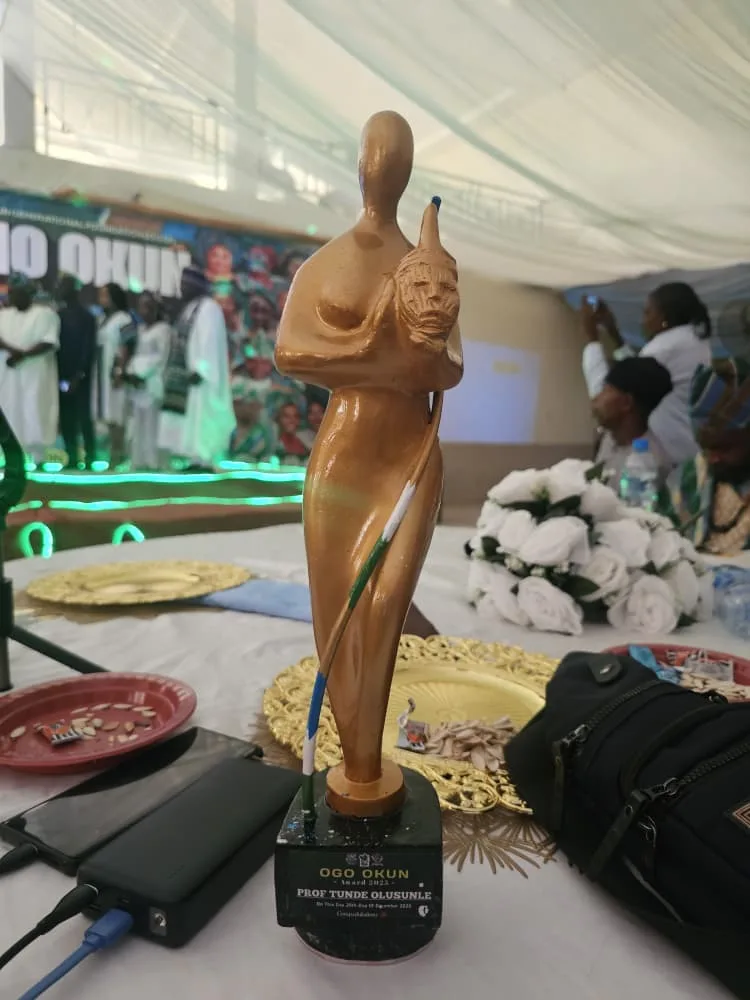
The prestigious Ogo Okun Award 2025 was yesterday conferred upon the distinguished poet, journalist, scholar, and author, Dr Tunde Olusunle by the *Yeye Oge Ti Ile Okun/Initiator, Ile’Ya Omo Okun Generational Foundation (IOOGF)* in Kabba, Kogi State. He was ably represented by Dr. Stephen Adewumi of the Federal University Lokoja.


Olusunle, a former presidential aide, Fellow of the Association of Nigerian Authors (FANA) and respected teacher of Creative Writing at the University of Abuja, was honoured for his immense contributions to Nigerian literature, journalism, academia, and community development.


His prolific career, spanning decades, has seen the publication of powerful poetry collections, incisive journalistic commentary, seminal scholarly works, commitment to community services in Okun land and the world over, all of which have cemented his place as a vital voice in the national and Pan-African literary landscape.

Senator Abdulfatai Buhari, PhD, (second right), Chairman, Senate Committee on Aviation with fellow inductees at their installation today, as Fellows of the Chartered Institute of Local Government and Public Administration of Nigeria, (FCPA), at the auditorium of The Polytechnic, Ibadan. The ceremony was presided over by FCPA Registrar, Dr Uche Okereke

Illegal Mining Fuels Insecurity in Kogi West, As Indigenous Lands Are Seized by Force


Beneath the rich soil of Kogi West, vast deposits of gold, lithium, and other rich mineral deposits promise prosperity. But for the local communities, this mineral wealth has become a wave of insecurity, land grabbing, and fear that residents and security sources directly attribute to powerful political figures and their foreign proxies.


An investigation spanning several weeks, involving interviews with community leaders, security personnel, and mining experts, reveals a disturbing pattern: licensed and illegal miners, allegedly backed by prominent politicians, are suspected of arming bandits to terrorize local populations, driving them from their ancestral lands to allow for unchecked and highly profitable mineral extraction.


The Kogi West Blueprint: Politicians, Proxies, and Fear


The epicenter of this crisis is in the communities of Kogi West Senatorial District. Residents, who spoke exclusively on condition of anonymity for fear of violent reprisals, point fingers at a well-known network.


“The mining sites are not run by our people,” one community elder from Yagba West Local Government Area explained, his voice barely a whisper. “They are being done by proxy by some Chinese who are holding it for prominent Kogi politicians. Among them is a former Chief of Staff and a former Governor. They have the cover, and the Chinese have the machines. We have the suffering.”


The modus operandi, as described by multiple sources, follows a chillingly consistent script:


Mineral-rich communities are identified, often through covert surveying.


Large parcels of land are acquired through a combination of coercion, deceit, and the exploitation of poverty. Locals report being offered paltry sums for land they did not fully understand the value of.


For those who refuse to sell or who later protest, intimidation begins. This starts with threats and escalates to violent attacks by armed men who arrive on motorcycles, often in the dead of night.


Once the community is sufficiently terrorized and displaced, the mining operations begin in earnest. Heavy machinery, operated primarily by Chinese nationals, moves in, guarded by private security forces that locals view as an occupying army.


“Most of these lands were sold ignorantly and secretly,” lamented a youth leader from Yagba East LGA. “Our fathers were given crumbs for what they thought was barren land. They were told it was for farming. Now, we see trucks upon trucks leaving with our gold and that black stone [lithium]. When we try to ask questions, we are met with bullets.”


The state government has repeatedly announced initiatives to curb illegal mining, but residents claim these efforts are cosmetic, targeting only small-scale, local artisanal miners while leaving the large, politically-connected operations untouched.


A Disturbing Pattern: From Niger to Zamfara


The situation in Kogi West is not an isolated incident but part of a broader, more sinister pattern replicated across Nigeria’s mineral-rich regions.


Niger State: In areas like Shiroro, a direct nexus has been established between armed bandits and illegal miners. Bandits attack villages, killing and kidnapping locals, creating a security vacuum. They then offer “protection” to illegal miners operating in the seized territory, taking a cut of the profits. This creates a perverse economy where insecurity becomes a profitable business model for both the bandits and their sponsors.


Zamfara State: This state became the textbook case of the phenomenon. Illegal gold mining was so rampant and so deeply tied to armed banditry that the federal government declared a no-fly zone and implemented a full-scale ban on mining activities in 2019 to cut off the funding source for the terrorists. Despite this, reports persist of operations continuing under the protection of armed groups.


Katsina and Kaduna States: Similar reports echo from these states, where communities accuse “outsiders” of collaborating with bandits to dispossess them of their land, particularly gold-rich areas.


In each case, the playbook is the same: use violence to create fear and displacement, then move in to exploit the resources. The profits from this illegal trade are then used to purchase more weapons, fund more attacks, and bribe officials, creating a vicious, self-sustaining cycle of violence and exploitation.


Land Grabbing: The Arm-twisting Tactics of Economic Terrorists


A sad case of land grabbing is the ongoing legal dispute by Iddo-Ojesa community in Yagba East local government with Relix Mining Company Limited (Chinese company) who through alleged wrong negotiation with Joshman Multiconcept Limited (Nigeria Company owned by current Chairman of Yagba East LGA) and other impersonators reportedly swindled an unsuspecting Chinese company in the fraudulent purchase of a large expanse of land that is up to a quarter of the entire LGA!


On the 17th of January 2023, a consent was signed between the Omo Meru Family of Iddo Ojesa community and Joshman Multiconcept Company, owned by the current Chairman Yagba East Local Government Area, Mr Dare Joshua, for a mining exploration licence covering a small portion of the family land.


Mr Dare’s company failed to stick to earlier agreement by selling the entire Meru family land to the unsuspecting Chinese company (Rellix Mining Limited) aided by unscrupulous representatives of Meru’s family and others who appended their signatures to the illicit deal without the consent of the family head and other principal members of the family.


Meru’s family has an ancestral land in Odo- Osin. There has never been any dispute in the past and interestingly, Meru Family are one of the largest land owner in Yagba land and Okun nation in general.


Joshman Multconcept Limited only came into the scenario January 2023 for a consent letter towards mining exploration which was given to him. It was later discovered that the consent letter signed on 17th January 2023 for the exploration licences was doctored by Mr Dare’s company and resubmitted for the purpose of small scale mining lease, but both documents bear the same date which is quite impossible if due process was followed.


By July 2023, Mr Dare came seven months after the consent letter was issued to his company and connived with some elders who are illiterates and created the impression to the elders that a compensation will be paid to the family as a result of the consent granted to his company. He told them they must append their signatures on some document in the palace of Agbana of Isanlu, His Royal Majesty, Oba Moses Etombi. The elders includes: Chief Osadumi Sunday, Elder Elder Rowland Olorunsola, among others. They were made to sign agreement for the sale of the entire land covering over 253 square kilometres which is over a quarter of the Local Government Area.


With documents presented to the Chinese company, the land mass currently in dispute has encroached into many other communities including Idofin, Makutu, Odogbe, Ilafin and part of Ifare, Iboro, Ofe, Ipele clans in both Yagba East and Yagba West Local Government Areas.


Curiously, the Certificate of Occupancy (CofO) for the disputed land has been issued by the state government. More curious is the fact that the date on the CofO showed it was issued within 24 hours after the land agreement was signed. This further proves the interest of some state actors in the ongoing land grabbing activities in Kogi West.


The Forgotten Communities: Minerals Rich Villages’ Neglect a Deliberate Act?


Most of the communities under intense bandit attacks across Kogi West are ‘forgotten towns, villages and hamlets’. With near zero social amenities, the obvious neglect by government is glaring in these communities.


When bandits began to attack communities like Okoloke, Isanlu Esa in Yagba West LGA, Olle Bunu and other interior communities in Kabba Bunu LGA, Odogbe, Idofin and Ilafin in Yagba East LGA, many wondered why they were being attacked. These are communities populated mainly by poor peasant farmers and low-income traders. There are no security posts in these forgotten communities.


Emerging evidence showed that these poor communities have diverse economically viable mineral deposits in their soil.


A registered Nigerian Company with Registration No RC 1091756, Sincerity Mining And Construction Co Ltd, posted on their corporate website that the company was granted an Exploration License on 4 Cadastral Units by the Mining Cadastral Office an Agency under the Ministry of Solid Minerals & Mines on the 8th of September 2015 to get involved in mining activities.


The allocation was at Okoloke, Yagba West, Kogi State, Nigeria. The Exploration License is for Tantalite & Gold Exploration but surprisingly, the Geology and Geochemical Survey discovered arrays of Minerals that were not quoted to be in Nigeria. These strange discoveries at National Geological and Mineral Laboratories Kaduna further led the Geologist from Nigeria Geological Survey Agency to send the report of the tests to Bureau Veritas Laboratories of Canada to conduct further tests of the materials which led to the discoveries of the following in the other of importance – (1) Nickel (2) Chromium (3) Cobalt (4) Copper (5) Barium (6) Marble (7) Gold etc.


“Further Exploration exercises carried out include a Geotechnical Survey, Aeromagnetic Data Interpretation among others that led to the Government granting of expansion of the Cadastral Units from the initial 4 units plus an additional 148 units on the 2nd Exploration License and subsequently the grant of SSML (Small Scale Mining Lease) while Exploration exercises continue the 148 Cadastral.


“On record, it was on our Okoloke Site, Kogi State that the Nickel, Chromium, and Cobalt were first discovered in Nigeria before that of Kaduna State for which a visiting Australian Minister of Mines a few years ago quoted as a strange occurrence in Nigeria.


“The Laboratory Tests conducted at FUTA (Federal University of Technology) Akure, Ondo State this year 2022 further confirm the presence of Lithium Ore through Geochemical Analysis with further tests on other associated minerals ongoing on the same site,” the company wrote on its website.


It is confirmed that many of these communities in Kogi West have huge solid mineral deposits. Also, these communities are grossly under-developed. They were deprived basic amenities and now being ruthlessly displaced by unchecked armed terrorists. People are already asking if these communities were deliberately sidelined in the development initiatives to frustrate them and probably force them to leave their lands for better communities.


Mining Activities Remain a Black Market Operation in Kogi West


Indigenes of host mining communities are largely unaware of what is going on in their forests. Only a few sellouts know the companies mining in their communities and they prefer it remains so.


They approach local miners, usually artisanal, and ask about mineral-rich communities. They know the areas better than these foreigners, so they take them to the mining sites and introduce them to the traditional rulers. They pay these monarchs between five hundred thousand and two million naira, depending on the sincerity of the middlemen. The excited traditional ruler readily gives them letter of consent to operate in their forests. They also sign the mandatory Community Development Agreements (CDAs) without input from their subjects. In almost all mining host communities, contents of CDAs are not known by indigenes. A preferred black market operation. The traditional rulers are usually excited because they felt the coming of ‘investors’ will bring rapid development to their communities. It is worth mentioning that these are usually ‘forgotten communities’ with little or no government presence. Of course, the ‘greek gift’ also encouraged these tradition rulers to act without carrying out due diligence.


The state government has not been transparent in its dealings in this sector as well. Few months ago, the incumbent Governor announced the acquisition of 15 mining licenses and promised to involve communities in the operations. He is the first Governor to make public the state government acquisition of mining licenses. Truth is, this is not the first time Kogi state government is securing licenses and seeking ‘investors’ to trade with in the extractive industry. Since the acquisition was done in secret, these licenses usually ended up in private hands without public knowledge.


Hostile Takeover of Mining Sites

The battle that began in the forest is currently consuming communities. Quite a number of mining sites across Kogi West are not known to Ministry of Solid Minerals Development or the cadastre office. Legal, illegal and unlicensed artisanal miners control these sites. For the illegal miners, their men largely live in the forests, sleeping in makeshift huts and are usually armed to protect themselves. Battle for control of these mining sites have seen the weaker players being displaced violently by the sides with state backing. Changes in government also brings about change in power play in these forests. When the lesser ones are displaced they usually find it difficult to re-integrate themselves back into normal society having spent years being ‘Lords of the Forests’. They are still armed and now jobless. Crime becomes the easiest route to survival.


In March 2025, while celebrating one year success of the mining marshals, the Minister of Solid Minerals Development, Mr. Dele Alake, announced that 3,000 illegal gold miners had been flushed out.


He alluded to the fact that these illegal miners had some sort of of corporate backing.


“The gravity of illegal mining worsened with the emergence of companies that collaborate with individual miners to perpetrate this evil. While individual illegal miners are unable to excavate deeply due to the limitations of modern equipment and finance, corporate collaborators encourage deeper excavation and scale up the criminality.


“The first clearance operation took place at Mining Lease 19325 of North-South Extractive Industries Limited, located in Jagula, off Isanlu in Yagba East Local Government Area of Kogi State. Over 3,000 illegal miners were digging and carting away precious grams of gold, whereas threats barred the real owners, who obtained the license in 2016, from operations.


“The Mining Marshals flushed them out completely and stationed men on site to maintain law and order till date,” he said.


This clearance operation was carried out by federal government without recourse to sub-national authorities. Nobody monitored where those dislodged moved to after the clearance operation.


Our Lives Better Off Before the Coming of ‘Investors’

The communities that have come under severe attacks in Kogi West are largely agrarian communities. They have lived in peace for decades living and enjoying their simple lives. Though not rich to afford luxury lifestyles, they were happy people.


When miners started coming in, their hopes were high that mother fortune had smiled on them. They thought their communities will get benefits that had eluded them for decades but years after, there is nothing to show for their hospitality.


Instead of getting a better lease of life, their fortunes sadly nosedived. Their dusty but motorable roads are now in sorry state. Their main source of sustenance, farms, are no longer accessible due to activities of armed hoodlums. Despondency sets in.


Peace has eluded their communities and the usual low-budget fun activities have all ceased.


Is it a curse to have mineral deposits in their communities?


Observations and The Human Cost


Our investigation observed several key issues:


The mining sites are ecological disaster zones. Forests are cleared, deep, unregulated pits are dug and left open, and waterways are contaminated with mercury and other chemicals, poisoning the primary source of water for remaining communities


The promise of jobs for locals is a mirage. The skilled operation of heavy machinery and security is handled by outsiders. Young men in the communities, stripped of their farmlands, are left in poverty, making them vulnerable to recruitment by the very bandits terrorizing them.


Beyond the land, communities are being stripped of their heritage. Sacred sites and ancestral graves have been desecrated and bulldozed minerals.


The most palpable observation is the overwhelming climate of fear. No one is willing to speak on the record. The names of the powerful politicians are an open secret in whispered conversations, but the fear of being labeled, attacked, or “disappeared” ensures public silence.


The illegal mining in Kogi West and beyond is more than an economic crime; it is a primary driver of Nigeria’s internal security crisis. It represents a brutal form of resource-backed colonialism, where local populations are violently subdued so that national resources can be carted away with impunity.


Until there is a sincere, unbiased effort to dismantle the powerful political and corporate networks behind this trade—and to address the complicity of elements within the security forces—the cycle of violence will continue. The land in Kogi West may hold the key to a technological future powered by lithium and a prosperous future built on gold, but for now, it only yields fear and bloodshed.