
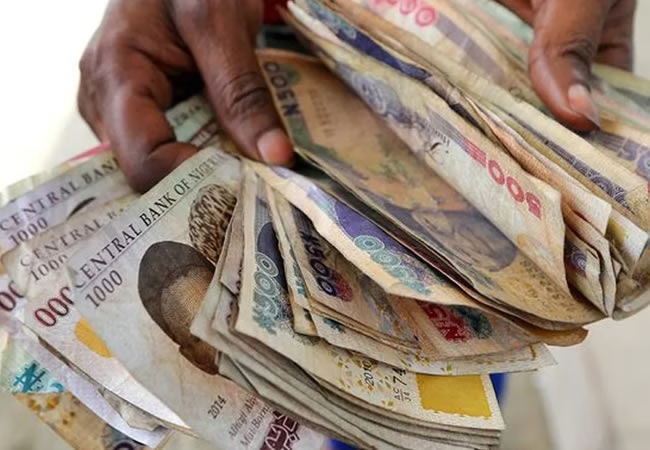
The Federal Government has commenced a revalidation exercise of the National Social Register as part of efforts to strengthen the ongoing conditional cash transfer programme aimed at cushioning the impact of economic reforms.
So far, a total of 2.3 million households have been confirmed and cleared for payment under the renewed scheme.
The Director General of the National Identity Management Commission, Abisoye Coker-Odusote, disclosed this at a recent press briefing held at the agency’s headquarters in Abuja.
The revalidation exercise comes amid concerns raised by the World Bank over the slow implementation of the cash transfer programme, which was launched in 2023, following the removal of petrol subsidy and unification of the foreign exchange market.
In its latest Nigeria Development Update report titled “Building Momentum for Inclusive Growth”, the global financial institution noted that only 37 per cent of the intended 15 million households, approximately 5.6 million had received payments two years after the programme was launched.
The World Bank had approved a $800m loan for the initiative, out of which $530m had been disbursed as of April 30, 2025.
The World Bank said, “Only 5.6 million households—around 37 per cent—have received at least one tranche of direct transfers. Further expansion of the programme remains dependent on biometrically verifying at least one adult member of the household with a foundational digital identity. Also, efforts to urgently provide support to the poorest and most economically at-risk households should be redoubled and expanded,” the bank noted.
However, Coker-Odusote, who is a member of the inter-agency task force overseeing the identity verification process for the programme, stated that the revalidation was being carried out under the National Social Safety Nets project to ensure that only eligible Nigerians benefit from the government’s palliative initiative.
“The Federal Government is currently conducting a revalidation exercise on the national social register under the National Social Safety Net, so that they are able to carry out the payment,” she said.
Related News
“As of Tuesday, we have been able to revalidate 2.3 million persons and will soon be able to start making the necessary payments. Our job is to ensure the number of people validated, and we are doing that in conjunction with other agencies to make sure that the money goes to the right people.”
She stressed the importance of accurate identity verification in delivering targeted interventions, noting that the exercise is rigorous to avoid misallocation of funds.
“We don’t want to pay people who no longer exist in this world. So, the right thing must be done, and I want to emphasise that.
“This is the reason for identity, ensuring there is a verifiable source of truth and identity credentials that you can use to validate the identity of someone, and that person can also use it to authenticate who he or she says, they are in real time,” she added.
Also commenting on the issue, Special Adviser to President Tinubu on Economic Affairs, Tope Fasua, in an interview with Arise TV, attributed the slow progress of the programme to the need for biometric validation, a step he described as necessary to ensure transparency and prevent fraud.
“If you know how the World Bank disburses its funds, they are very careful, and indeed, some persons would even argue that it creates some sort of bottlenecks.
“The reason why only 37 per cent of households have been reached is because of the need to have biometric confirmation. The truth is, the finance ministry has records of disbursements and the indigent beneficiaries. The only issue is scaling it up, but it is better to be careful than sorry. Going forward, the process will be tidied up even better,” Fasua said.
Fasua urged patience, stating that the integrity of the process was more important than speed, particularly when dealing with public funds meant for vulnerable citizens.
Category: Politics
Atiku/Obi : Nwosu confirms PlatinumPost story, says ADC is 2027 coalition party
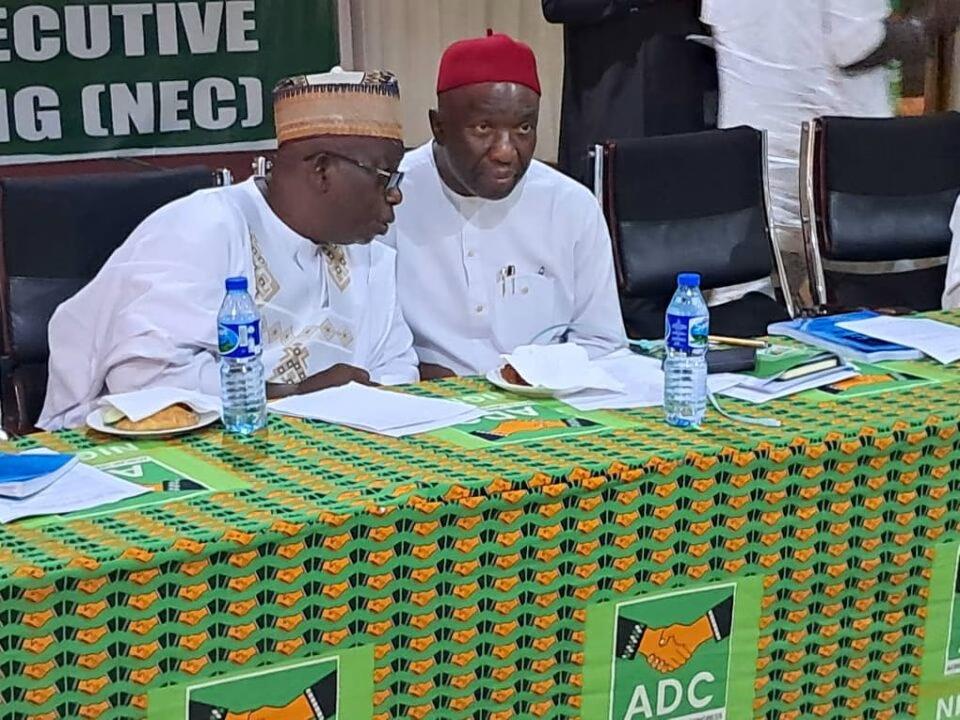
Almost two weeks after PlatinumPost exclusively reported that former Vice President Atiku Abubakar and former Labour Party presidential candidate Peter Obi were finalizing plans to contest the 2027 presidential election under the African Democratic Congress (ADC), the party’s National Chairman, Ralph Nwosu, has publicly declared the ADC as Nigeria’s coalition party.
Nwosu made the disclosure in Abuja on Thursday during the ADC’s National Executive Committee (NEC) meeting.
Speaking through the Chairman of the party’s Board of Trustees, Mani Ahmed, he addressed rising concerns over deepening poverty across the country while highlighting the role of the ADC in shaping Nigeria’s political future.
“This consensus building, though very painstaking, has taken some time in the pipeline.I can categorically today, by the grace of God, inform you that the African Democratic Congress is the coalition party in Nigeria. What remains to be done is nothing other than dotting the I’s and crossing the T’s,” Nwosu said.
“For us, this is a momentous occasion. This is a great opportunity for the party to involve and accommodate all Nigerians. And by this gesture, we are inviting every Nigerian that has the love of this country in their heart to join us in this new crusade to bring about an enduring democratic change in our country by coming into our party, the African Democratic Congress, which can easily be seen as the African Democratic Coalition,” he added.
Nwosu reaffirmed the party’s commitment to national unity, emphasizing the ADC’s vision of a Nigeria where citizens can freely reside and engage in economic activities anywhere in the country.
“We have watched over the years how things have gradually deteriorated to the extent that normal existence is becoming more and more difficult,” he said.
“There cannot be any other way to bring about change in the lives of our people that is better than providing good governance. And this governance can only happen when you have the right people playing their part in the political process. ADC has over the years remained a formidable platform in the process of re-engineering Nigeria.
“Within the past 20 years of our existence, we have shown commitment to national growth. We have exhibited the highest levels of nationalism and patriotism. And we have made several sacrifices to ensure that we bequeath to our next generation a country better than the one we have met.”
While acknowledging that the party has never had the opportunity to lead at the national level, Nwosu expressed optimism that 2027 could mark a turning point for the ADC.
PlatinumPost had earlier reported that Atiku, who has made multiple bids for the presidency, is said to have finalized plans to pursue his ambition through the ADC. Sources familiar with the developments revealed that Obi had agreed to be his running mate following months of private negotiations.
A former Nigerian president is reported to have played a key mediating role, helping to align both camps in what is being described as a strategic political alliance aimed at national stability and electoral advantage.
Negotiations reportedly reached a breakthrough after concerns from Obi’s supporters, particularly in the South-East and among the Obidient Movement, were addressed. A committee of influential Igbo elders is being assembled to manage dissent and build support in the region.
According to insiders, a proposed power-sharing arrangement involves Atiku serving a single term, after which power would shift to the South-East, with Obi receiving northern backing for the presidency—an agreement seen as a step toward realizing an Igbo presidency.
However, reacting to the report, Atiku’s spokesperson, Paul Ibe, dismissed the claims.
“These are just speculations. Is he supposed to join all the political parties? As of this morning, he remains in the PDP, and there’s nothing to suggest otherwise at the moment,” Ibe told PlatinumPost.
“These are the handiwork of certain individuals trying to cause distraction,” he added.
Similarly, Yunusa Tanko, interim national coordinator of the Obidient Movement Worldwide and spokesperson for Peter Obi’s 2023 campaign, denied knowledge of any such alliance.
“As far as I’m concerned, no such story has come to my desk. I’m not aware of it,” he said.
“Although a lot of people are making calculation on how best to save the country, Peter Obi has not make such information known. So I count it as calculation of some individuals who are working on how best to save the country,” Tanko added.
Conflict Of Role Weakens Due Process In Administration Of Criminal Justice – Argungu
INEC: The Reforms We Need
ODA, ODI RALLY AGAINST INSECURITY IN OKUNLAND
By Tunde Olusunle
A short video clip trended on the social media a few days ago. The narrator who was probably driving his automobile, drew attention to the truck ahead of him. According to his narration, he desired to commute from Egbe, the major southernmost community in Yagba West local government area in the Okun-Yoruba part of Kogi State, to the neighbouring Kwara State. Locals in Egbe, however, had warned him about the crimson activities of faceless criminals in the names of Fulani herdsmen and rampaging marauders on the highway. He thus sought help from a pin-down truck manned by uniformed and armed security personnel, to lead him to safety within the territory of Kwara State, ostensibly for a fee. The truck could be seen in the video, piloting his car. This 50-second video clip summarises the security situation in Okunland today.
Hitherto, Okunland across its several hamlets, communities and towns, was an idyllic island of serenity, calm and civility. Farmers, hunters, teachers, civil servants in the employ of the state and local government authorities, as well as retirees, peopled the villages and homesteads. After a hard day’s work, home folks congregated beneath wide-spread leafy canopies of abutting trees. They played ayo olopon, known by the name “mancala,” and draught, awon oro-oro games, as they wound down from the day’s preoccupations. Liquid soothers included emu fun fun and oguro, both variants of palmwine. But for the mischief of headstrong goats, people harboured no fears about possible trespassing of their abodes. While conducting his doctoral thesis at the University of Ilorin which birthed the facekuerade performance theory, my friend and brother, Sunnie Ododo, relocated from his cosy home in Ilorin, to Kabba, and stayed for weeks. Such was the allure of Okunland.
Sadly, at no point in the history of the Okun-Yoruba people of Kogi State has the question of security been as worrying as it has been in recent weeks and months. Call it “one day, one disaster” and you will not be wrong. From the hitherto innocuous Oyo Iwa community in the northernmost extremes of Okunland, in Lokoja local government area, to Egbe in Yagba West, the southernmost community in the zone, Okunland has been encircled and buffeted by faceless marauders. There are unsavoury narratives from across the six Okun local government areas, namely: Lokoja, Kabba-Bunu; Ijumu; Mopamuro; Yagba East and Yagba West. Forests and woodlands in the area which share similar vegetation with Yorubaland in the South West, have been infiltrated by Fulani herdsmen, deadly bandits and cold-blooded kidnappers. These days, they have become as emboldened as to venture into communities fully armed with weapons, roam around and take with them their preferred victims, including the vulnerable and elderly.
Okunland has been flung into perpetual fear and gripping despair. The local economy of the people predominantly powered by subsistence agriculture, petty trading, returns on artisanal preoccupations, and so on, has been paralysed. Armed gangs stipulate impossible ransoms on families and communities, which in turn are forced to dispose of prized assets, notably livestock, parcels of land and residential homes, to meet up with ransom deadlines. Callously, certain cells of outlaws receive sweatily-sourced ransoms some enabled by crowd-funding, and still proceed to annihilate their victims. They unwittingly plunge families and communities into double agony.
Disturbed by these developments, Okun people on different platforms are galvanising panaceas to address this scourge. The Okun Development Association, (ODA) which is the umbrella body of all Okun bodies and groups had a one-day Security Summit in Kabba, Friday March 28, 2025. President of the ODA, Ambassador Rotimi Akenson, convened the summit which was robustly attended by respected technocrats, royals and government appointees at the state and local levels, from across all six Okun-speaking LGAs. These included serving Commissioners; the State Security Adviser and prominent traditional rulers. Proceedings were moderated by no less a professional than former Director-General of the National Institute for Security Studies, Abuja, (NISS), William Toyin Akanle, PhD, mni.
The summit resolved among others, that: A well-funded community policing structure is a panacea for addressing security challenges in Okunland; and that the establishment of community-based Security Trust Fund, (STF) in Okunland is inevitable. It noted that sharing credible information with security operatives is key, since security is everyone’s business. The Summit also suggested that proper profiling of settlers in our communities is important, just as it posited the adoption of technology-driven security models. The congregation recommended that job creation, economic empowerment, and social interventions are essential in reducing the proclivity of our youths towards crime, while asserting the need for incentives, motivation and morale-boosting for Okun vigilantes and hunters. A high-powered implementation committee to facilitate the actualization of these proposals has been emplaced. Akanle is the Chairman, while Femi Oloruntoba, who retired as a Director from the National Drug Law Enforcement Agency, (NDLEA) is the Secretary. Ambassador Sola Enikanolaiye, in the Presidency; Attorney Tunde Irukera, immediate past Executive Chairman of the Federal Competition and Consumer Protection Commission, (FCCPC) and the multitasking Okun businessman, Yinka Braimoh are on board.
Equally agonised by the relentless rampaging of nondescript outlaws across Okunland, is the Okun Development Initiative, (ODI), a strident advocacy group. The organisation has scheduled a pan-Okun Unity Summit, for Friday May 30 and Saturday May 31, 2025. ODI which is altruistically complementing the precedence of ODA, has as National Coordinator, Olusuyi Otitoju, a former Commissioner representating Kogi State in the Federal Public Complaints Commission, (PCC). The theme of the forthcoming summit is: Okun Unity: The Power of One Voice, the Strength of Many Hands. The converge aims to bring together Okun sons and daughters, who have been torn apart by the acidity which has tinctured Okun politics in recent times. This fact is captured by the overarching focus of the forthcoming event, which aims to engage with Okun brothers and sisters to band together as one, since disparate broomsticks, cannot be deployed for sweeping.
Instructively, the forthcoming ODI Summit will be the second time the group is rallying Okun people together to deliberate on issues germane to the wellbeing of the people and the area. Between November 24 and November 26, 2016, ODI staged its premiere Okun-centred public event with the theme: Breaking the Bonds of Underdevelopment in Okunland. It focused on the security, unity and development of Okunland and was richly graced by the cream of Okun elite in business, bureaucracy, academia, media, politics, industry, not forgetting elder statesmen from the area. As far back as its 2016, ODI had drawn attention to the imperative for the security of lives and property in the sub-zone, which has transmogrified into a veritable hydra. Despite the near 10-year lacuna between its premiere and the proposed coming together, it is noteworthy that the ODI recognises the importance of constant engagement in the march towards the fruition of the dreams and aspirations of the Okun nation.
The second edition of the ODI Summit which will be chaired by General Funso Owonibi, (rtd), will have Kogi State Governor, Ahmed Usman Ododo, as Special Guest of Honour. Serving federal parliamentarians from Okunland, notably Sunday Karimi, Senator Representing Kogi West; Leke Abejide, Member Representing Yagba federal constituency, and his counterpart, Idris Salman, Representing Kabba-Bunu/Ijumu, are expected at the programme. Vice Chancellor of the Federal University Lokoja, (FUL), Professor Yemi Akinwumi will be the Guest Speaker, while the Obaro of Kabba who chairs the Okun Traditional Council, Oba Solomon Dele Owoniyi is the Royal Father of the event. To underscore the harmonious relationship between the ODA and the ODI, President of the ODA, Ambassador Rotimi Akenson will be Father of the Day at the ODI Summit. Long-serving Kogi State Commissioner for Finance, Ashiru Idris, FCA, chairs the planning committee.
It is noteworthy that the people of Okunland across associations and groups are propelling action concurrently and simultaneously on the insecurity plague in the area. This clearly attests to the severity of the security situation in that part of Nigeria. Equally worthy of note is the fact that irrespective of political inclination, leaders and representatives of the zone appreciate the imperative for coordinated action to stem the current tide and potential slide into chaos. To this end, they are supporting and featuring prominently in the activities and programmes of various Okun groupings, for the collective good of an erstwhile oasis of therapeutic peace and quiet.
Tunde Olusunle, PhD, Fellow of the Association of Nigerian Authors, (FANA), is an Adjunct Professor of Creative Writing at the University of Abuja
JUST IN : Former military governor slumps, dies while playing tennis
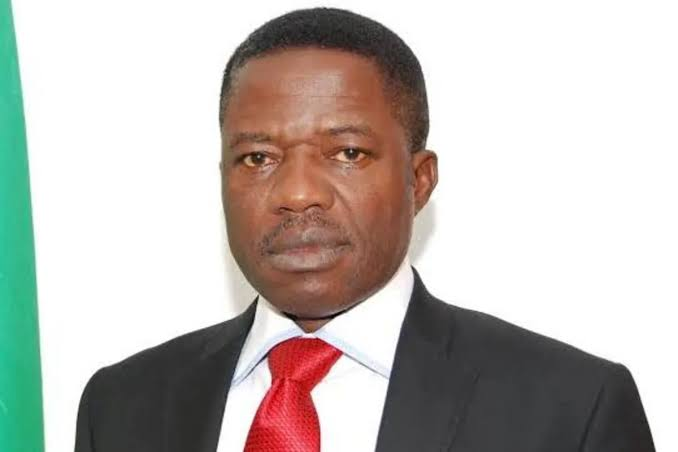
Former Military governor of Bayelsa State, Caleb Omoniyi Olubolade, has passed away at the age of 70.
Olubolade, who also served as federal minister in various ministerial roles including Police Affairs and Special Duties, reportedly collapsed on Sunday evening while playing lawn tennis in Apapa, Lagos.
According to a family statement signed by his daughter, Mrs. Oluwayemisi Akinadewo, and son, Mr. Dayo Olubolade, the late Olubolade had driven himself to a nearby facility to play tennis when he slumped during the game.
“Efforts were made by medical personnel present to resuscitate him, but they were unsuccessful,” the statement read. He was subsequently taken to the Obisesan Naval Medical Centre in Apapa, where he was confirmed dead.
Captain Olubolade, a native of Ipoti-Ekiti in Ekiti State, marked his 70th birthday on November 30, 2024.
Funeral arrangements will be announced by the family in due course.
CELEBRATING “BRO EHIGIE” AT 70
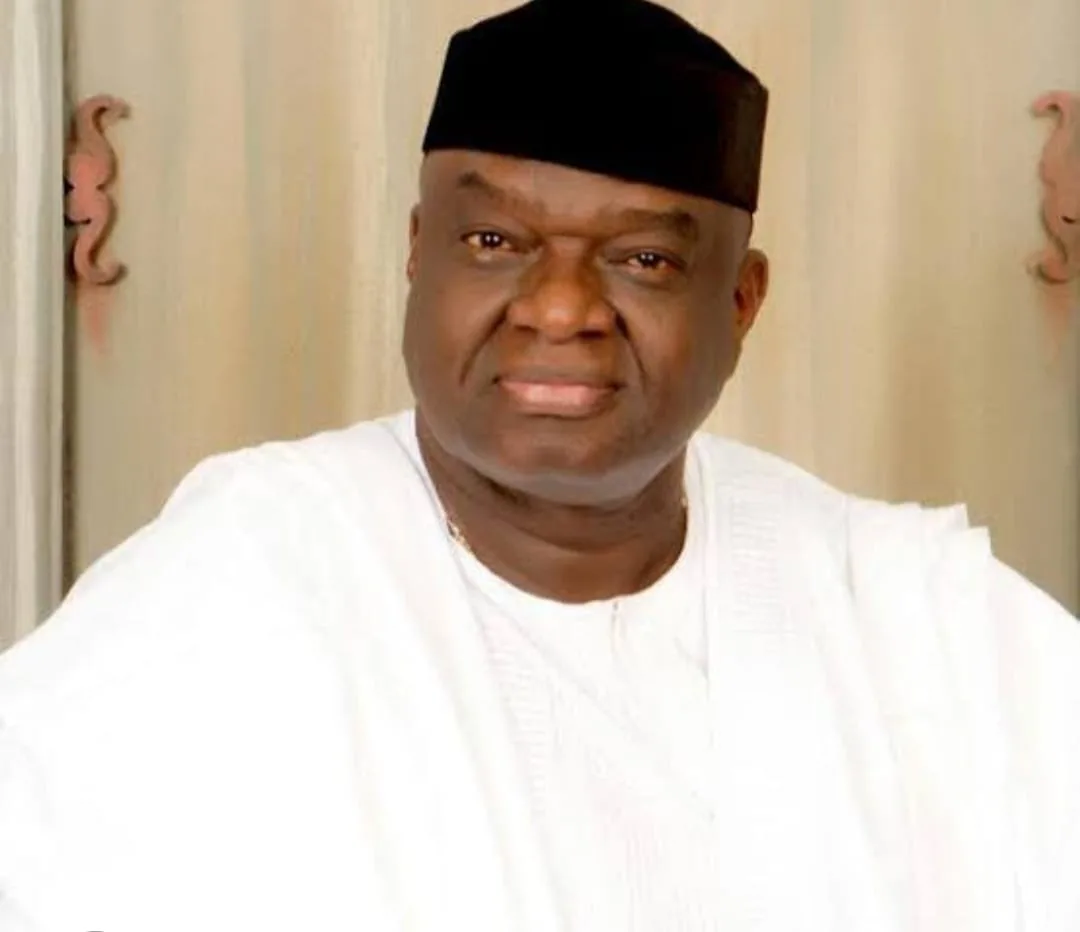
By Tunde Olusunle
He turned 70 on Monday May 5, 2025. A thanksgiving service and celebration of the landmark, however, have been scheduled for early June 2025, in Benin City, capital of Edo State, his birthplace. The city is a peculiar cosmopolis steeped in very rich history, confounding myth, even curious mysticism. For those of us who come several decades down the calendar of time with him, his latter day appellations and honorifics are novel to us. The job mobility of my parents precipitated the relocation of our family from Kaduna, capital of the primordial “North Central State,” to Benin City, capitol of the old “Midwestern State,” back in 1972. My father headed the Kaduna branch of “Livestock Feeds Ltd,” which was then a subsidiary of the primordial “Pfizer Nigeria Ltd.” My mother was a nurse and midwife in the employ of the “North Central State Health Management Board.” Our first address was at “Second East Circular Road,” Benin City.As our family grew, we sought bigger residential facility in the “New Benin District” at the time. Mid-1975, we moved over to “Eresoyen Street,” adjoining “Oziegbe Street” into a property owned by the Uzamere family. The world was a much better place, the Uzameres received us not as lessees of their property, but as extensions of the clan. For *Iye,* Madam Izegbuwa Lucy Uzamere, matriarch of their dynasty, my siblings and I, were as well her children. *Iye’s* eldest child, Osaheni Uzamere, seasoned administrator and subsequently attorney was the head of the family. He took to me specifically because he was an alumnus of the revered Immaculate Conception College, (ICC), Benin City, where I also had my secondary school education. The Uzamere family was predominantly populated by boys. Albert, the youngest of *Iye’s* children was my direct contemporary. We proceeded apace in our various secondary schools. Immediately above Albert was George, who was next to Ehigie. L
ong settled out there in the United States of America, (USA), was Ehigie’s immediate elder brother, John, (now of blessed memory). Humphrey and Wellington, half brothers to Ehigie were regularly around. Ehigie was something like the unofficial “head boy” within that space. We all deferred to him which culminated in our christening him *Bro Ehigie.* Despite our sociocultural diversities, Ehigie Uzamere showed leadership amongst us the boys in the house. He was interested in our academic performances and regularly sought updates about our tests and examinations. He would usually call for our answer sheets and report cards. He spotted my proficiency in English language and Literature-in-English and would admonish us on knowledge-sharing. Bro Ehigie soon joined John Uzamere in the US and swore to convince my parents to allow me join him once he was settled. To be sure, he secured admission for me at the State University of New York, (SUNY), not too long after, on the strength of my academic transcripts. I later posted a Division One performance with distinctions in the West African School Certificate Examination, (WASCE) O’Level which I wrote at age 15. My parents feared I was too young to live out of their sight, all by myself at that age, if I was allowed to go abroad. Ehigie Uzamere visited home fairly often. From his luggage whenever he came, we gleaned the albums of new and current foreign musical releases. My first physical and auditory encounters with the works of many foreign artists those good old days were from Bro Ehigie’s collections.
These include releases by *Ray Parker Jnr;* *Diana Ross; Al Hudson and One Way;* *Sugarhill Gang;* *Bill Summers and Summers Heat;* *Brothers Johnson,* “Stomp;” *Prince,* “I Wanna Be Your Lover,” *Michael Jackson’s* “Off the Wall” and so on. Usually when he holidayed in Benin City, he was hosted to a few gigs by his friends. We the younger troupe would dress our best and tag along with him. My parents were ultra-strict with the rules, especially those years when one was still a precocious early teen. Bro Ehigie’s name, however, could avail you some latitude. In 1980, my family relocated to Ilorin in Kwara State. After several years in the “diaspora” within the Nigerian context, my parents thought we should gravitate homewards. Telephony was not anywhere as sophisticated as it is today, but somehow, I kept in touch with Benin City. Across the road from the Uzamere’s, were the Ehigators, a family very close to ours. Osabuohien Ehigiator, (may his soul rest in peace) was my very good friend and schoolmate. Through him and members of his family, I was able to stay in touch with our mutual friends in Benin City. After qualifying as an architect in the US, Ehigie Uzamere went against the grain. Whereas many Nigerians who had the opportunity of foreign sojourn opted to stay back in the countries where they schooled, Uzamere returned home. He believed he could contribute to the development of his home country, despite the privilege of dual citizenship. He underwent the mandatory one-year National Youth Service Corps, (NYSC) with the Bendel Development and Property Authority, (BPDA), which retained his services upon the completion of the exercise.

Not too long after, he opted for self-employment and established a chain of private firms with interests in architecture and building; procurement; medical and pharmaceutical hardware; water processing and broadcasting. He ventured into politics and was elected Senator representing Edo South in 2007, and reelected for a second term in 2011. He made history as the first parliamentarian to be elected on the platforms of two different political parties, the Peoples Democratic Party, (PDP) and the Action Congress of Nigeria, (ACN), in Edo State. During his stint in the federal parliament, he helped reposition his senatorial district at the core of national politics. No more the sidelining, the intentional marginalisation of Edo South in the national scheme. Working with amenable political leaders from his catchment, he galvanised support for the appointment of one of his constituents as Vice Chancellor of the University of Benin. It was the very first time in the life of the institution. He equally anchored the recognition of one of his own as Chief Executive of the Nigerian Institute for Oil Palm Research, (NIFOR), which is domiciled in his senatorial district. In all of these, Uzamere remains renowned for his politics of civility. Not for him the lawlessness, thuggery and violence which typify our politics in parts. You needed to experience his connectedness with the grassroots, the way he was adulated one of those days he picked me up from the airport in Benin City. He is known by a large percentage of the commuter operators in the place and seamlessly code-switched to *Bini* language as he engaged with them.
Don’t be surprised when Ehigie Uzamere and I converse in particular ways in pidgin English. We have peculiar expressions understood only by initiates.Uzamere’s greatest source of joy, happiness and fulfilment is his beautiful family. He has been married to his very homely wife, Iriagbonse Irowa, for 43 years. The union has been blessed by God with many children and grandchildren. He has a pet name for each of his children even as he eternally dotes on his grandchildren. He never misses any opportunity to have his family congregate under one roof, in his homes, in Benin City, Abuja or Atlanta, especially during festivities. He would spontaneously set up photo shoots for his grandchildren. Contentment and gratitude are typically writ large on his visage. You get the feeling that he would most happily build an expansive palace, bordered by the same perimeters so he could wake up each morning and tour each family unit to see just how everyone is faring.Uzamere’s loyalty to friendship is phenomenal. In rain or sunshine, he sticks with you.
Despite suspicions of the serial subversions of popular will by the nation’s foremost electoral midwife in the 2019 and 2023 presidential elections, he has stuck with his preferred candidate, former Vice President Atiku Abubakar, through thick and thin. When he is not on Atiku’s entourage, Uzamere would be on the delegation to receive Atiku at the airport, irrespective of the time of the day. He is not given to prevarication, he’s never on the fence on issues. He takes a position and stays with it. He will remind you that at his age and stature as an elder statesman, it is far too late for him to play the chameleon. I savoured a meal of home-made rice for dinner with him on one of my visits. It came, wrapped in green leaves, restating Uzamere’s uncommon earthiness, despite his established cosmopolitanism. As I ran out of stew for my meal, he simply picked up my serving of the rice and moved the content into the stew. He remarked in pidgin English: *When soup no plenty again, just transfer the food inside the soup bowl,* he lectured me with an accompanying smile. Uzamere is in the constant business of self-development. He once told me, not too long ago, that he had registered for a masters degree in business administration. I asked why he went back to school. He reminded that former President Olusegun Obasanjo who I worked with, returned to the classroom after being the nation’s leader for two terms, in his 70s.This is celebrating with a longstanding brother, Ehigie Edobor Uzamere, as he joins the privileged ranks of septuagenarians and wishing him many more years in good health.
*Tunde Olusunle, PhD, Fellow of the Association of Nigerian Authors, (FANA), is an Adjunct Professor of Creative Writing at the University of Abuja*
Let the Poor Breathe

By Halima Abdulazeez
It’s heart-wrenching to witness the disdain with which some political leaders view the poor, wishing they allowed the poor to breathe in reality. This narrative that people are poor because they are lazy is not only false but dangerously misleading. It serves as a convenient tool for those who benefit from the current system, allowing them to justify inequality and deflect attention from the true roots of poverty: systemic exploitation and the deliberate creation of economic hardship.
In Nigeria, poverty isn’t a reflection of individual shortcomings; it’s the direct consequence of a system designed to favour the wealthy elite at the expense of the working class. The accusation of “laziness” is a smokescreen, obscuring the stark reality that millions are trapped in a relentless cycle of survival, constantly struggling to meet their most basic needs.
As Abayomi Odunowo eloquently stated in an article for African Baobab 2024, the urgency of this situation is underscored by the fact that a significant portion of the population now lives on the precipice of despair, going through tonnes of challenges that relentlessly push them further into the abyss of poverty. This crisis is only exacerbated by the disturbing trend of ignoring the legitimate cries for help from fellow citizens. Such indifference breeds mistrust and cultivates hostility among communities. When pleas for assistance go unanswered, the vulnerable are labelled as needy and beggarly, further complicating their already dire circumstances. This cruel cycle of victimisation not only discredits those who genuinely wish to lend a helping hand but also perpetuates the deep-seated inequality that defines Nigerian society.
Too often, palliatives are touted as solutions. They are, in reality, mere political theatre, a cynical charade that mocks the average Nigerian and portrays their desperation as a thirst for handouts rather than a fundamental hunger for opportunity. We see men and women contorting themselves, risking their lives, to board crowded buses, grown men and women lapping themselves to reduce the excessive transport fares. A poignant message of resilience in the face of adversity. If the system were truly working, wouldn’t these individuals have better options, more dignified paths to pursue?
It’s easy to level accusations of a lack of dignity among the underprivileged. But where is the corresponding outrage over the unconscionably low wages that fall far below the standard cost of living? Where is the collective demand for policies that empower business owners to provide a real-time, living wage, supported by adequate funding and robust oversight?
Countless Nigerians grapple with stagnant salaries that fail to keep pace with the ever-rising cost of inflation. This cruel reality leaves families struggling to afford even the most basic necessities: a safe place to live, nutritious food on the table, and reliable transportation to work. The crushing weight of this constant financial insecurity takes an immense mental and physical toll, contributing to soaring rates of mental illness and debilitating physical ailments. This is not simply hardship; it’s a calculated assault on the well-being of a nation.
At its core, human dignity is rooted in the ability to provide a stable home, nutritious food, and decent clothing for one’s family, and to ensure personal well-being. When a system actively prevents individuals in weaponised poverty, transforming it into a tool for suppression against those who dissent or simply belong to marginalised communities. This abhorrent strategy is evident in the divide-and-rule tactics employed against labour unions and civil society organisations, silencing voices of dissent and hindering collective action. Even more egregious is the systemic refusal to pay wages that support a dignified, real-time minimum cost of living, effectively trapping millions in a cycle of perpetual deprivation.
The truth is undeniable, the system is rigged. Those at the top are actively benefiting from our collective hardship, perpetuating a cycle of inequality that undermines society. We seek more than fleeting handouts; we demand the opportunity to thrive, to build a better future for ourselves and our children.
It’s time we unite to address the roots of this crisis and work collectively towards solutions. The time for complacency is over. We must demand accountability from our leaders, challenge the narratives that perpetuate inequality, and work together to create a Nigeria where everyone has the opportunity to live a life of dignity, purpose, and prosperity. The choice is ours: continue down the path of escalating inequality, or forge a new path towards a just and equitable society for all.
For real this time, let the Poor Breathe
Halima Abdulazeez is a poet and the author of the poetry collection “Soul Rants: A Journey from Within.” She is the Communication Officer at the Caprecon Foundation, the Treasurer of PEN International, the Nigerian Centre, and she resides in Lagos.
Contact: +234-8034816865 (mailt.
OF ROYALS AND UNROYAL ENTANGLEMENTS
By Tunde Olusunle
Royalty enjoyed tremendous reverence when my generation was growing up. As a schoolboy in Benin City those days, the Oba savoured profound reverence and conjured trepidation amongst his subjects. He was and still is introduced with the prefix Omo N’Oba N’Edo Uku Akpolokpolo. Much as this simply means “His Royal Majesty, the Oba of Benin,” it is without doubt, a jarring mouthful. He is regarded as sole emissary of the supreme deity and possibly a god in his own right, most probably consecrated by cosmic consent. Oba Akenzua II was on the throne in my teenage days in Benin City. He loomed large in the public consciousness who barely caught a glimpse of him anywhere. The wholesale mythification of his office was such that his name was conjured to serve as warning and deterrent to potential rabble rousers. The now popular phrase, You go see Oba was added to day-to-day, now globalised conversational lexicon in my time. It served as deterrent to mischief and errant conduct. The lawless were thus admonished on circumspection, lest they had to go through the labyrinthine motions of seeking justice or redress before a barely ever seen Oba.
I equally keenly followed the trajectory of the immediate past Ooni of Ife, Oba Okunade Sijuwade, Olubuse II. Immensely affluent, urbane and classy, he brought elan, style and panache to bear on his office. He was famous for his striking regalia, typically complemented by corresponding accessories and adornments. He breathed style and elegance. The very popular Forbes magazine indeed once rated Ooni Olubuse as the “third richest royal in Africa” in his time. I was privileged to meet him a few times during his lifetime. I was still a student and member of one of our departmental students associations in school when I had the first encounter with him. Despite his impeccable proficiency in the English language, Oba Sijuwade elected to speak Yoruba during most of his engagements. This linguistic preference reinforced the belief that he was truly the mouthpiece of the gods and ancestors. There was always, ever a competent interpreter by his side, usually his long-serving Press Secretary, Funmilola Olorunnisola, himself a ranking Chief of Ile-Ife. The Ooni conveyed his thoughts and messages through him to his guests and audiences.
Contemporary royals have dominated the news in recent days and weeks. The manifest unseemly conduct of some of them, is totally at variance with their standings and statuses as traditional rulers. Indeed, their actions in many instances have unwittingly whittled down the historical dignity of the exalted stools they occupy, in the catacombs of otherwise revered palaces. Such custodians of tradition have unknowingly transposed their venerated seats, to the full glare of the public, the marketplace. From Ipetumodu to, Ibadan, to Oyo and to Katsina, in Osun, Oyo and Katsina states respectively, presumed royals have shown up in ways and manners which demean and diminish their offices. Such wholesome devaluation is of necessity impacting the very essence of the institution of natural rulership, passed down from ages and aeons.
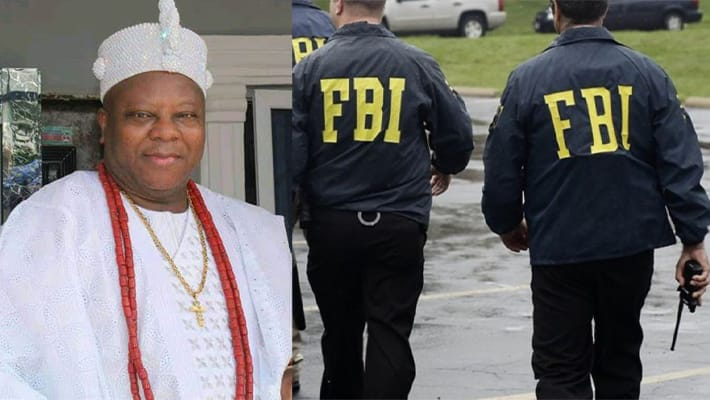
The Apetu of Ipetumodu, Oba Joseph Oloyede, was arrested by United States security early 2024 for his role in obtaining COVID-19 relief funds estimated at $4.2million, fraudulently. While his subjects anticipated the return of their king from what was supposed to be a routine visit to the US, Oloyede had been answering charges before Justice Christopher Boyko, of the US District Court of Ohio. He reportedly colluded with a certain Edward Oluwasanmi, a Nigerian-American clergyman, with whom he defrauded the US system of resources designated as buffer for US small businesses and nonprofit organisations experiencing pandemic-related revenue losses. Court documents reportedly referenced falsified applications for “Paycheck Protection Programme Loans and Economic Injury Disaster Loans, under the US Coronavirus Air, Relief and Economic Recovery Act” submitted by Oloyede and Oluwasanmi.
Both men deployed fake tax and wage documents to secure funds intended to help struggling businesses keep afloat during the COVID-19 plague. Oloyede received about half of the $4.2million, scammed by him and his compatriot, Oluwasanmi. He reportedly invested his portion of the heist in real estate in the US. Oloyede by the way, was installed the Oba of his community in 2019. His profile as a travelled and affluent person counted amongst other considerations for the 62-year old monarch. His present engagement with the US justice system may yet torchlight other probable underhand financial dealings in the course of his long sojourn in the country in which earned him a residency. This is as his subjects remain in shock and bewilderment over such unsavoury revelations concerning a leader they once exalted.
The Ooni of Ife, Oba Adeyeye Enitan Ogunwusi, the Ojaja II, recently had a spat with the Alaafin of Oyo, Oba Abimbola Owoade. at an event in Ibadan. Wife of the President, Oluremi Tinubu was guest of the Oyo State Government and both monarchs were invited to the programme. As the Ooni made his way to his seat, every traditional ruler on his route honoured him by rising to welcome him. The Alaafin, however, refused to rise up, even as he shook hands with the Ooni from his seating position. There is a long history about the rivalry for preeminence between the Alaafin and the Ooni. It was partially resolved when the administration of President Ibrahim Babangida created two states, Oyo and Osun, out of the erstwhile Oyo State. Both rulers were venerated as the Numero Uno monarchs in the various states. As the Ibadan incident revealed, however, animosity abounds between the Ooni who is 50, and the Alaafin who is 49, beyond the historical acrimony. A more recent reason has been adduced for the beef between both royals.
Decades ago, a US-based Nigerian of Yoruba descent, Efuntola Oseijeman Adelabu Adefummi, conceived of a “Yoruba village” to serve as a melting pot for Yorubas in the US. It was supposed to be a “home away from home” where the Yoruba essence will be celebrated. This vision berthed the Oyotunji African Village located in Beaufort County, South Carolina, in 1970. Efuntola Adefunmi the visioner was installed Oba of the “village.” Ooni Ojaja has in the past, been requested by the leadership of Oyotunji to mediate during disputes and conflicts plaguing the village and he had always willingly sent emissaries. It has been suggested that Alaafin Owoade has been wrongfully briefed that his rulership of Oyo, encompasses Oyotunji which in reality is an address for all Yorubas from Nigeria, Benin Republic, Togo, Brazil and so on. This has been adduced as probable reason for the grouse between both men.
A recent incident where one Chief Lukman Ojora Arounfale, the Baba Oba of Oyotunji African Village was allegedly assaulted in the Alaafin’s palace on the orders of the king, lends credence to the bile between him and the Ooni. The scenario which played out on Thursday April 17, 2025, was linked to the bitterness between the Alaafin and the Ooni. It fits the narrative that the Alaafin in reality conceives of Oyotunji as a diaspora extension of his kingdom. Chief Lukman Atounfale, we are told, died from injuries he sustained in the brutal attack on him and his wife, in the Alaafin’s abode in Oyo. Such are the dimensions of controversies which have trailed the teething weeks and months of the reign of Alaafin Owoade who was only installed in January 2025, by Governor Makinde.
Overzealous palace guards, dogarai, working for the Emir of Katsina, Abdulmumini Kabir Usman last weekend, broke the glass entrance into the Katsina home of Dikko Radda, Governor of the state. Radda had given out one of his daughters in marriage earlier that day and was hosting dignitaries including President Bola Tinubu to a reception at his address. State protocol and security regulations prescribe that once the President or guest-in-chief is already seated at a function, late comers are shut out. It was bad enough that Emir Kabir Usman came long after the nation’s chief executive was already settled. It was worse that his fatawa dared to bring down a section of the home of the chief host of the President. It was an utterly disrespectful act which underlined the operational manual in effect in the palace of the Emir. Let’s hope the Emir has sent pertinent formal apologies to Tinubu and Radda, principally.
At every opportunity, traditional rulers are known to have canvassed specific roles for themselves in the Constitution of the Federal Republic of Nigeria. This seems plausible given their proximity to the mass of Nigerians especially in the distant hinterlands and deep recesses of our vast national space. Against the backdrop of reported misuse of authority which we recently gleaned in the palace of the Alaafin, can our royals be trusted to manage gazetted authority? Two weeks after the assault and subsequent demise of Lukman Ojora Arounfale which was ascribed to Alaafin Owoade, we are yet to read a rejoinder. Wouldn’t aides of natural rulers like Dr Kabir Usman of the Katsina emirate, incorporate bulldozers in the vehicular convoy of their Principal as they journey through the emirate? The roofs of the homes of many of the Emir’s subjects who are in the quietude of their sanctuaries, may just be decapitated for not being on the streets paying obeisance to the king?
Our royals must reinvent themselves and re-perspectivise their offices. They are not “Highnesses” and “Majesties” simply for personal ennoblement. Their positions and honorifics bear immense relevance to the history and sociocultural identities of our diverse peoples. The onus is on them to restore relevance and reverence to our traditional institutions in a global sense. It is their responsibility to protect and preserve our cultures from adulteration, abuse and extinction. We should not pass down diminished and dismembered histories, narratives and beliefs, to successor generations.
Tunde Olusunle, PhD, Fellow of the Association of Nigerian Authors, (FANA), teaches Creative Writing at the University of Abuja
DANIEL BWALA Delivering Policy Communication
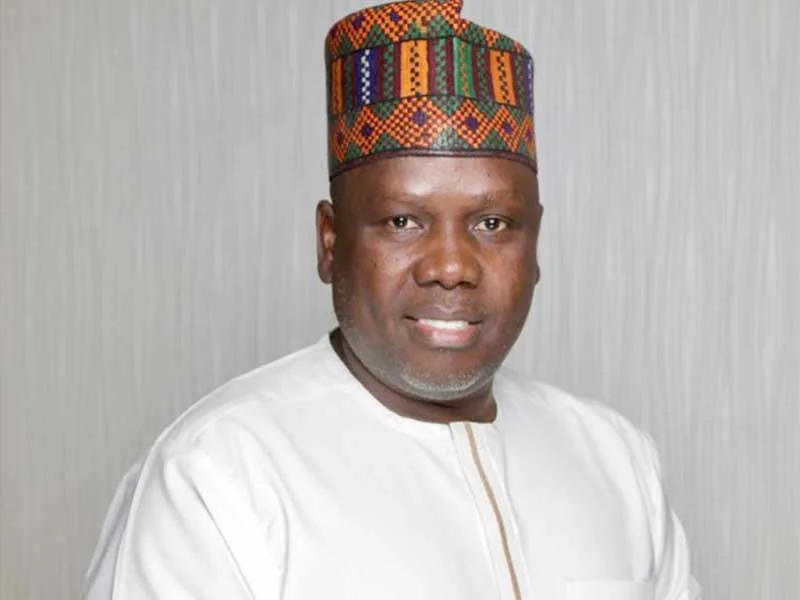
Daniel Bwala had many dreams as a young man. He once thought of playing professional football, securing a place in the national team and eventually trading tackles on foreign turfs with a football club abroad. As lofty as that ambition was, it never turned into a reality. At one point, he wanted to study medical law at the Masters level because he felt medical negligence is a pandemic in Nigeria.
Of all his aspirations, public speaking and advocacy became his reputation, earning him recognition and accolades in the legal, media and political fields. There were pointers earlier that he was going to toe this path. As a young man, Bwala rarely conceded to any allegation anytime he and his siblings got into trouble with their parents. He always insisted on explaining his conduct, which frequently led to a favourable outcome as he made himself clear. Such was the strength of his convictions and arguments that his late father once proclaimed that he, Bwala, would be useless if he didn’t become a lawyer.
“I was always an advocate of the rights of people,” he shared during a recent encounter. “Afterwards, I gave my life to Christ, became born again and later a preacher; this endeavour of preaching fine-tuned my advocacy skills and gave me the passion for studying law.”Today, Bwala is the Special Adviser to President Bola Tinubu on Media and Policy Communications. Prior to that, he was the spokesperson of the Peoples Democratic Party (PDP) 2023 presidential candidate, Atiku Abubakar.Born in Bama Local Government Area of Borno State, Bwala hails from Gwaski in Hawul LGA. His father was a retired military officer and his mother a businesswoman.
“This led me to win a national law clinic competition where selected top law clinic universities in the country and campuses of the Nigerian Law School participated,” he continued.“I led my colleague Aminu Gamawa, who is now Dr. Aminu Gamawa, Chief of Staff to the Governor of Bauchi State. In the national competition, we defeated universities and even Nigerian Law School campuses to emerge winners and went on to represent Nigeria and Africa at the International Client Counselling Competition hosted by Cardiff University, UK. On the international stage, we defeated the USA, Canada, and Scotland but fell short of New Zealand. We emerged runner-up at the international finals.”Bwala started gaining recognition for public speaking during his university days. Many instances announced him on the big stage, but one that readily came to mind as he attempted the question was when he and his team won the national competition on client counselling.
“It was aired all over the nation and abroad ahead of our participation in the international finals. I started to get invites for interviews locally and internationally, including requests from universities abroad to send articles in the related field.”Before setting up his own firm, Bwala & Co (Crystal Chambers), the international motivational speaker and author, worked for the law firm JK Gadzama LLP.“I learned the rudiments of law, research and courtroom advocacy there. I worked there for five years before setting up my law firm Bwala & Co (Crystal Chambers),” he said.
“In those days in England,” Bwala recounted, “after you are admitted to practice, you are required to spend at least five years doing pupil-age before you can set up your law firm. Even though that is not the case anymore, I, however, told myself that I would work for five years and then proceed to establish my law firm. Thankfully, I was able to do just that.”Part of this decision may have stemmed from the influential figures in his life. They include Bishop David Oyedepo, founder of Living Faith Church, better known as Winners Chapel, whom he said influenced his life to a large extent. “I listened to his teachings, which were basically spiritual, but also had a lot of motivation around career, knowledge, self-esteem, etc.”
In his legal profession, he learnt discipline and diligence from his former employer Chief JK Gadzama, SAN.“I learned the business of law, diligence and timing,” he said. “I recall when I started work with his law firm, we reported at 8am and closed at 11pm daily; at weekends, we reported at 4pm and closed at 10pm. I developed my research skills working with Chief Gadzama, SAN. During my first month at his chambers, fresh off of a call to the bar, he ensured I appeared in all the superior courts of record. This meant that in the first month, I appeared in the High Court, Court of Appeal and Supreme Court. As Principal of the chambers, he personally ensured the allocation of counsel in chambers to the cause list. God bless Gadzama, SAN.”