www.newstower.ng

What President Tinubu discussed with Gov Fubara, Wike, others in Abuja

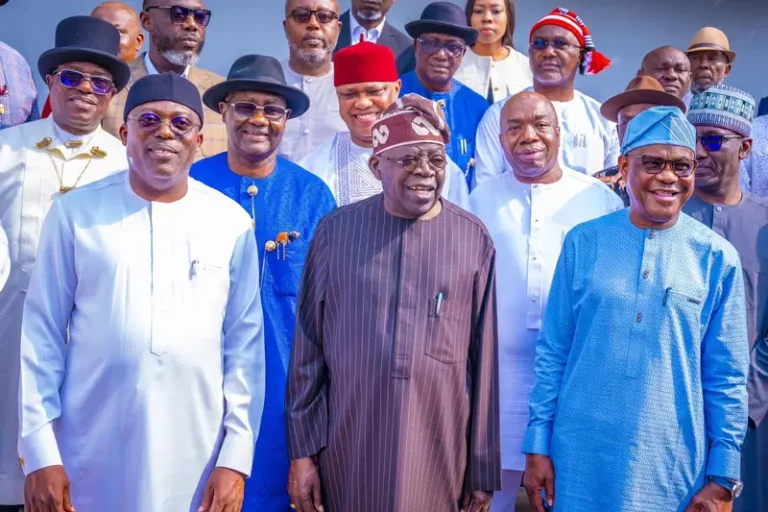
Details of the meeting between President Bola Ahmed Tinubu and leaders from Ogoniland have emerged, with the President committing to fostering peace, justice, and sustainable development in the region.The meeting, held on Tuesday at the State House in Abuja, was attended by notable figures, including Governor Siminalayi Fubara, Minister of the Federal Capital Territory Nyesom Wike, and other prominent leaders from Ogoni communities.According to a statement by presidential spokesperson Bayo Onanuga, President Tinubu assured the delegation that his administration would work to address the longstanding challenges faced by the Ogoni people.

He emphasized his commitment to resolving issues related to environmental degradation, economic empowerment, and infrastructural development in the region.The Ogoni leaders presented their concerns, urging the federal government to expedite the cleanup of Ogoniland, address security challenges, and implement sustainable economic programs to benefit local communities.

We cannot in any way rewrite history, but we can correct some anomalies of the past going forward. We cannot heal the wounds if we continue to be angry,” he was quoted to have said.President Tinubu directed the National Security Adviser, Mallam Nuhu Ribadu, to coordinate the negotiations, calling for inclusive consultation and mutual understanding.The President commended the delegation for embracing the Federal Government-led dialogue. The president also directed ministers, the NNPCL, and the Rivers State Government to cooperate with the Office of the National Security Adviser (ONSA) to achieve this mandate.He said, “We must work together with mutual trust. Go back home, do more consultations, and embrace others. We must make this trip worthwhile by bringing peace, development.

President Tinubu said.“It is a great honour for me to have this meeting, which is an opportunity to dialogue with the people of Ogoniland.“It has been many years since your children and myself partnered to resist military dictatorship in this country. No one dreamt I would be in this chair as President, but we thank God.“Many of your sons present here were my friends and co-travellers in the streets of Nigeria, Europe, and America.“I know what to do in memory of our beloved ones so that their sacrifices will not be in vain,” the President said.On his part, Governor Fubara thanked the President for his support of the Ogoni people and for welcoming an all-inclusive representation of the people to the Presidential Villa.

He said the meeting was a follow-up to an assignment the President gave him through the National Security Adviser.“What we are doing here today is to concretise the love and respect we have for the President for being behind this meeting and for him to tell us to go back and continue the consultations with a timeline so that the resumption of oil production in Ogoniland will commence,” he said.The National Security Adviser also took turns in commending the Ogoni people, especially for their trust in President Tinubu.“Guided by Mr. President’s vision that every voice is heard and every interest is considered, my office, the DSS, the government of Rivers State and the Minister of FCT embarked on a diligent and consultative process to assemble this delegation,” Mallam Ribadu said.

He

added, “The presence of this delegation is a testament to the Ogoni people’s readiness to engage constructively in the pursuit of peace, justice, and sustainable development,” he said.

The statement further disclosed that a representative of the Ogoni leadership, King Festus Babari Bagia Gberesaako XIII, the Gberemene of Gokana Kingdom, expressed the community leaders’ willingness to engage in the process of finding lasting solutions to the lingering challenges in Ogoniland.

Governor Fubara arrived at the meeting with Senator Lee Maeba, accompanied by a delegation of prominent Ogoni leaders, including Senators Magnus Abe, Olaka Nwogu, Chief Victor Giadom, and Chief Kenneth Kobani. Also present are Monsignor Pius Kii, Leedom Mitee, and Senators Bennett Birabi Barry, Mpigi, and Joe Poroma.

Other key attendees include the Group Chief Executive Officer of the Nigeria National Petroleum Company Limited, Mele Kyari; Minister of Environment, Balarabe Abba; Minister of Information and National Orientation, Idris Mohammed; Minister of Regional Development, Abubakar Momoh; and the National Security Adviser, NSA, Mallam Nuhu Ribadu.It is understood that the meeting continued at the NSA’s office after the session with Tinubu.

SERAP gives Tinubu 48-hour ultimatum to reverse 50% telecom tariff hike

The Socio-Economic Rights and Accountability Project (SERAP) has issued a 48-hour ultimatum to President Bola Ahmed Tinubu, demanding the reversal of the recent 50% increase in telecommunications tariffs.

In a statement, SERAP described the tariff hike as burdensome to Nigerians already grappling with economic challenges.

The group warned that failure to reverse the decision would prompt legal action against the Tinubu administration.

SERAP emphasized that the tariff hike violates Nigerians’ rights to access affordable communication services, calling on the government to prioritize the welfare of citizens over revenue generation.

“The Tinubu administration and telcos must immediately reverse the unlawful increase in calls and data costs. We’ll see in court if the 50% tariff hike is not reversed within 48 hours,” SERAP said.The Nigerian Communications Commission (NCC) on Monday, January 20, approved the raising of telecoms tariff by 50 per cent in what shareholders believe was approved in a bid to improve telecom services.The approved increase was disclosed in a statement signed by NCC Director of Public Affairs, Mr. Reuben Muoka.“The adjustment, capped at a maximum of 50 per cent of current tariffs, though lower than the over 100 per cent requested by some network operators, was arrived at taking into account ongoing industry reforms that will positively influence sustainability.

“The adjustment, capped at a maximum of 50 per cent of current tariffs, though lower than the over 100 per cent requested by some network operators, was arrived at taking into account ongoing industry reforms that will positively influence sustainability.“These adjustments will remain within the tariff bands stipulated in the 2013 NCC Cost Study, and requests will be reviewed on a case-by-case basis as is the commission’s standard practice for tariff reviews. It will be implemented in strict adherence to the recently issued NCC Guidance on Tariff Simplification, 2024.”NCC noted that tariff rates have remained static since 2013, despite the increasing costs of operation faced by telecom operators, adding that the approved adjustment is aimed at addressing the significant gap between operational costs and current tariffs while ensuring that the delivery of services to consumers is not compromised.

“These adjustments will support the ability of operators to continue investing in infrastructure and innovation, ultimately benefiting consumers through improved services and connectivity, including better network quality, enhanced customer service, and greater coverage.”

Did Yagba Federal Constituency Rotation Arrangement End in 2011?

By Debo Alabi

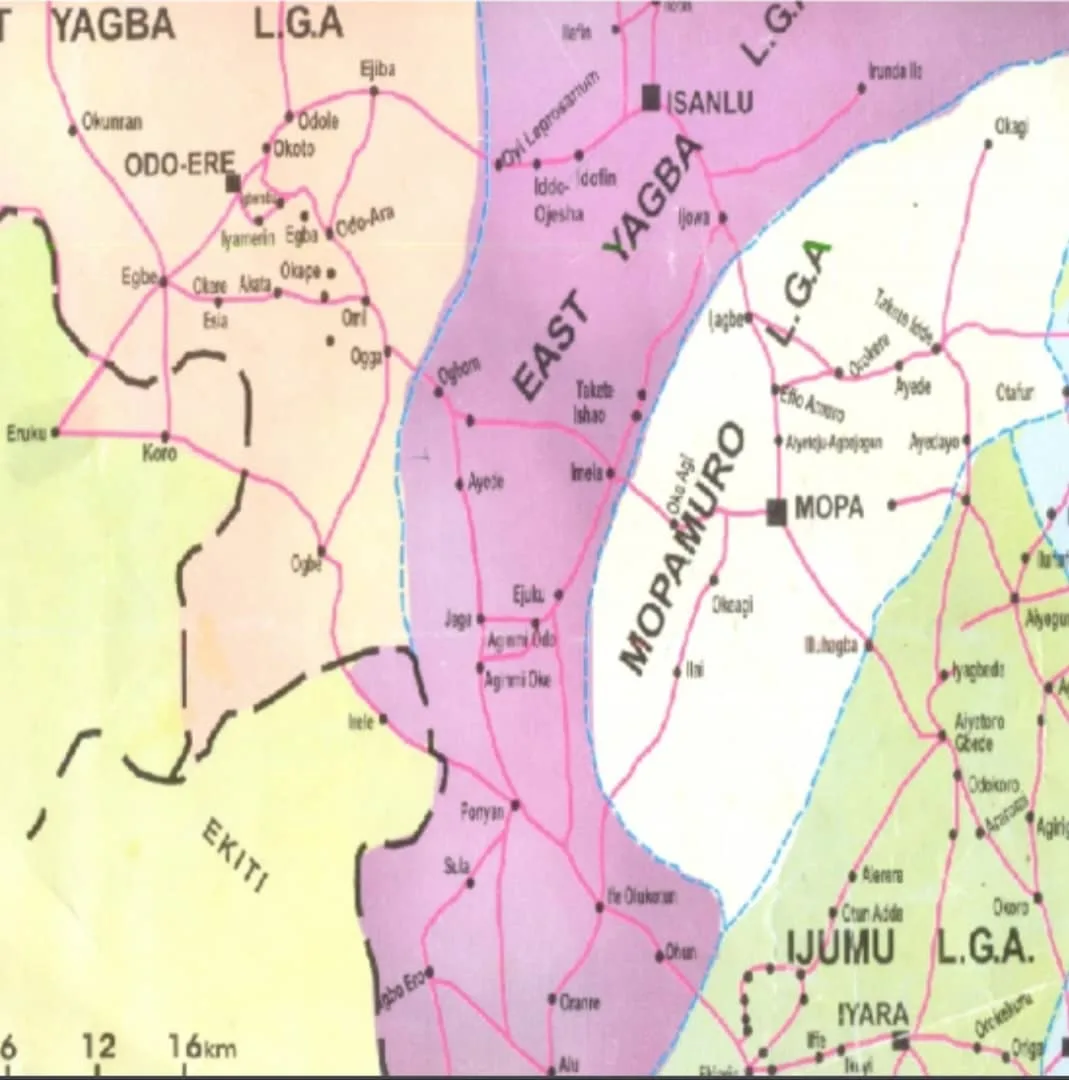
Yagba Federal Constituency in the western Kogi senatorial zone, consists of three local councils, namely Mopamuro, Yagba East and Yagba West. In 1999, at the outset of the Fourth Republic political dispensation in Nigeria, each of the three local government areas fielded aspirants for the seat. The Peoples Democratic Party, (PDP), the dominant political association at the time, guaranteed success for its flagbearers. In the run-up to the 1999 polls, all eyes were on the PDP primaries. Shola Ojo, (Mopamuro); Tolorunjuwon Joseph Faniyi (Yagba East), Engr Sunday Karimi and Mrs Margret Orebiyi, (Yagba West) were the frontrunning aspirants. Orebiyi would later step down for Karimi. Despite the superior strength of Yagba West, which consists of 14 electoral wards, four more than Mopamuro and Yagba East with 10 electoral wards apiece, the PDP ticket was eventually decided in favour of Ojo (Mopamuro).

Ojo’s emegence was more of a consensus in an arrangement superintended by party elders under the leadership of the respected patriarch and one of the founding fathers of PDP in Nigeria, the late Chief Sunday Awoniyi. Aspirants from the two other local government areas were prevailed upon by the elders to await their turns in subsequent electoral cycles. Meanwhile, Yagba West fielded a candidate for the 1999 election in the late legal icon, Chief Tunji Arosanyin who was the flagbearer of the defunct All Peoples Party (APP). Ojo, also an attorney, hitherto domiciled in Kano, the formidable hub of commerce in northern Nigeria, went on to win the general election of that year.

Ojo served in the “Green Chamber” from 1999 to 2003. At that time, PDP’s internal, mutual understanding based on the rotation principle expressly asserted that each LGA would serve just one term, after which the position would rotate to another. Contestants for the 2003 PDP ticket included Karimi, Faniyi, Mrs Funmi Abiodun, a lawyer; the Port Harcourt based quantity surveyor and expert in the Marine sector, Bode Olorunsola and J.K Odeyemi, an engineer. The primary election was headed for a runoff between Faniyi and Karimi, but, again, the elders in their wisdom settled for a simple majority. Faniyi picked PDP ticket and he went on to defeat his opponent in the reconfigured APP, which had then become the All Nigeria People’s Party, (ANPP), Mrs Justina Abanida. Abanida, a one time Commissioner for Justice and Attorney General. Abanida, a lawyer, hails from Egbe, Yagba West Council.

For Karimi, the waiting game continued even when the seat berthed in Yagba West. Karimi lost PDP’s ticket to a fellow Yagba West opponent, Samuel Bamidele Aro.. Aro, a successful oil marketer, won the 2007 election into the House of Representatives, which took place on April 21, 2007. He defeated Bolaji Oluwafemi of the defunct Action Congress (AC) and served in the lower parliament until 2011.

The extant rotational arrangement forbade Mopamuro and Yagba East from fielding candidates for the 2007 election. In fairness to the past occupants of the seat, performance was not a yardstick for continuity. Based on the extant zoning template of the PDP, the baton was expected to be passed back to Mopamuro in 2011. However, at the conclusion of his first term in 2011, Aro, the incumbent declared his intention for a second term. Backed by the Kogi State governor at the time, Ibrahim Idris and machinery of the ruling party at the state level, Aro defeated his lone challenger for the PDP ticket, Chief Folorunsho Daniyan, (from Mopamuro). However, the outcome of 2011 primary election that threw up Aro did not sit well with the factional PDP who beckoned on Karimi to step forward in another political party.

Karimi’s name was a last-minute inclusion in the portal of the Independent National Electoral Commission (INEC) as the candidate of Action Congress of Nigeria (ACN). In what turned out a historic protest vote, Karimi defeated PDP’s Aro in the general election held on April 9th, 2011. The strength of the PDP had been further decimated in the aftermath of the controversies that trailed its primaries. Daniyan left PDP and flew the flag of the ANPP. He came third in the general election. For the first time, in 2011, Mopamuro, Yagba West and Yagba East all fielded candidates for the House of Representatives.

The 2011 episode effectively marked the fatal end to one term and rotation of the seat in Yagba Federal Constituency.

Highlights

Karimi got the mandate of Yagba people to represent them in 2011 when he did not aspire for it from the start to the race and when it was supposed to be the turn of Mopamuro. He was not even on the list of aspirants jostling for the much-sought ticket of the PDP in that year’s primaries. He also became the first Yagba man to be reelected, thereby setting the precedence for continuity.

As the sitting Rep, Karimi (Yagba West) returned to his old party (PDP) and sought re-election in 2015. He picked the PDP ticket ahead of Kano based business tycoon, Leke Abejide (Yagba East) and successful civil engineer, Dele Obiniyi (Yagba East).

Karimi went on to win the parliamentary election held on March 28, 2015. He defeated Ganiyu Salaudeen of the Accord Party (AP/Yagba East), Kayode Adegbayo (APC/Yagba East), and Joseph Blessing of the Labour Party (LP/Mopamuro). Note again that all three LGAs fielded candidates in 2015.

Subsequently, Karimi’s record was equalled by Leke Abejide (Yagba East), now on his second term. His back-to-back victory in the 2019 and 2023 elections were achieved under the platform of lesser known African Democratic Congress (ADC).

Instructively, to further butress the point that rotation may have become a thing of the past, Abejide’s victories in both elections were far from a walkover, not for him, not for Yagba East. With the exception of Yagba West, the 2019 edition was keenly contested by aspirants from Mopamuro and Yagba East. A total of 15 candidates registered with the Independent National Electoral Commission (INEC) to contest in the 2019 election. ADC candidate, Abejide won the election, defeating APC’s Henry Abimbola (Mopamuro), PDP’s Fabola James (Yagba East), SDP’s Oluwafemi Iselaiye (Yagba East) and 12 other candidates from Mopamuro and Yagba East. The list of candidates and their parties for the 2019 polls are as follows: Adebayo Kenneth (PPC); Oluropo Odofin Augustine (MPN); Jonathan Ayokunle Olushola (ACCORD): Balogun Blessing Olumayowa (APM); Somidire Comfort (ACPN); Atteh Oladimeji (PPN); Yusuf Mary Oluwatoyin (DA); Isah Saidu (LP); Omowaiye Ete A. (UPP); Omole David Bolorundoro (UPC) and Abdurafiu Ismail (PT).

The all-commers scenario was again replayed in 2023 when Abejide (ADC/Yagba East) ran against Folorunsho Olafemi (APC/Mopamuro), Joseph Faniyi (PDP/Yagba East).and Jeremiah Oladokun (APGA/Yagba East). The list incuded Alonge Victor Oluwabusayo (Accord), Adekunle Komolafe (NNPP), Bamigboye Sunday (ADP), Musa Lasisi (Action Alliance), Jethro Olusegun Solomon (SDP) and Obiniyi Bamidele (YPP).

Rotation Can Only Be By Negotiation, Not Entitlement Claim

Ahead of the 2027 election, a notable Yagba political figure who preferred anonymity due to the sensitive nature of the debate on the continuity of rotation representation told our reporter that based on the foregoing, if at all there would be further adherence to rotation, “it can only be by negotiation, not by entitlement claim”.

He said: “The rotational arrangement for the HOR election in Yagbaland has been a straightforward and adaptable practice since inception. This arrangement was designed to give each local government in the federal constituency a fair opportunity. The Yagba federal constituency comprises three local government areas: Yagba West, Yagba East, and Mopamuro. Historically, Mopamuro was the first local government to benefit from this arrangement in 1999 with Hon. Sola Ojo, followed by Yagba East with Hon. T.J. Faniyi in 2003. In 2007, Hon. Sam Aro benefited from the rotation, and in 2011, it was Yagba West’s turn again with Hon. Sunday Karimi, who served two terms. This two-term pattern continued with Hon. Leke Abejide from Yagba East in 2019, who is currently serving his second term. Ideally, after Hon. Leke Abejide’s second term, Mopamuro local government should be the next to benefit from the rotation and to spend their two terms. However, Mopamuro’s inconsistent adherence to the rotation has been a significant constraint. In the last two elections, Mopamuro fielded candidates against Hon. Leke Abejide, which was unfortunate as their action demonstrated their disregard for the rotation. Mr Tuesday Abimbola and Engr Folorunsho Olafemi contested twice with Leke Abejide. If they had won, it would have also conflicted the entire process. As an experienced political figure in Yagba federal constituency, I cautioned Mopamuro aspirants to respect the rotation and not contest against Yagba East candidates. Unfortunately, my warnings were ignored, and Mopamuro’s actions have put them at a disadvantage. If Mopamuro had respected the rotation and not contested against Yagba East in the last two elections, it would have been incumbent on Yagba East not to run against them. However, since Mopamuro did contest, Yagba East’s potential third term would alter the rotation cycle, making Yagba West eligible to contest after Yagba East.
It will take a proper consultation and a United front from Mopamuro to sustain their alliance with the rotation which they had kicked against”.

As it were, from the viewpoints of public affairs analysts and political pundits, Mopamuro has held the seat one-term of four years since 1999, Yagba West had 3 terms of 12 years and Yagba East two terms of eight years. From the foregoing, Mopamuro’s agitation to have the 2027 HOR seat is not out of order. The point has also been made for the entrenchment of fairness and equity as well as the sustenance of unity within the region. One can not also rule out the fact that, with the exception of 2003 election, Mopamuro has consistently fielded candidates against candidates from Yagba West and Yagba East.
Twice in 2019 and 2023, the ruling APC conceded its tickets to Mopamuro. Both chances were lost more to internal divisions within the local government. Power is not given; it is taken. The bottomline is that 2027 election doesn’t look like one to be determined by entitlement. Rotation is achievable only by negotiation. Rotation is not a law. Mopamuro must work hard for it, speak with one voice, and present a formidable candidate, as a prerequisite for negotiation.

Effective Representation As a Factor

While the idea of rotation may seem appealing, the performance of the sitting member and the capacity to drive meaningful development and growth are key factors in effective representation, which should not be overlooked going into the 2027 election. Rotation may seem like a fair and equitable approach, but the electorate is also aware it can lead to a lack of continuity and consistency in representation. This also can result in a lack of accountability, as representatives may not feel compelled to deliver on their promises. Furthermore, rotation can lead to a focus on short-term gains rather than long-term development. Again, anyone thinking of running against an incumbent must make a careful examination of whether it can be done. In the modern-day election pattern in Nigeria, incumbents win elections about 85 percent. An entrenched incumbent is even harder to beat than a more recently elected one. Here are some factors to consider before going into the decision of whether a challenge could be successful. The first step is to consider the overall political environment and the general mood of the electorate. Generally, there are two things that should worry incumbents. One is whether the electorate perceives that things are on the right track. The other is whether the electorate thinks the incumbent care about them. For any sitting representative who receives favourable ratings from his people—based on these two factors—it will require an out-of
-this-world strategy for any successful challenge to happen.

Debo Alabi, a public affairs analyst and native of Yagba, writes from Lekki, Lagos

EFCC to auction 891 forfeited vehicles, here’s how to participate

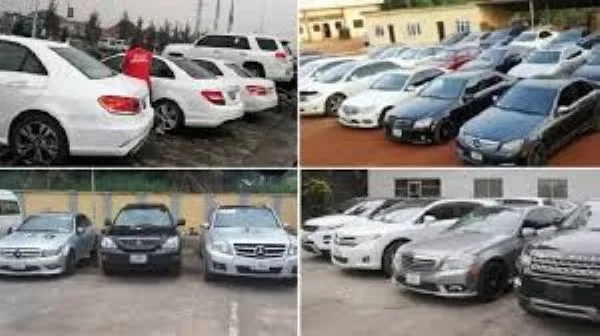
The Economic and Financial Crimes Commission (EFCC) says it will conduct an electronic auction of 891 forfeited cars between Jan. 20 and Jan. 27. The commission announced this on its social media handle on Monday.

 It stated that the vehicles were forfeited in line with the EFCC (Establishment) Act, 2004, Public Procurement Act, 2007 and the Proceeds of Crime (Recovery & Management) Act, 2022.

Some vehicles listed for auction include Lexus Panamera Porsche, Crosstour, Mercedes Benz, and Venza, among others.

 It listed locations of the vehicles to include Abuja, Benin, Sokoto, Uyo, Lagos, Kaduna, Ilorin, Port-Harcourt, Enugu, Kano, and Ibadan.

”Interested parties have been directed to the following websites: www.rihogo.com, https://biznjeg.ng, www.areogunresourcesniglid.com.ng” it stated.

(NAN)

ENTHRONING VERBAL CIVILITY IN STATECRAFT

By Tunde Olusunle

The minutes preceding the arrival of former President Olusegun Obasanjo and his deputy, Atiku Abubakar in the council chambers and convening rooms of the State House, Abuja for meetings, were very useful in our time. Those windows of opportunity were pointedly and positively deployed by presidential aides who were not authorised to attend some scheduled meetings. Those who had issues were able to thrash them out with ministers and senior government officials who participated in the meetings. Obasanjo abhorred being hemmed in, in the name of officialdom, unlike some of his successors. He had tremendous stamina, he was open and accessible in the line of duty. He refused to be garrisoned by the structures and trappings of office. He picked his phone calls, minuted on documents from his aides old and young, and even fixed appointments himself. He told a very senior official in his government at a meeting in the early months of his stewardship, that he, Obasanjo, had information to the effect that the top shot’s office was “over militarised.” It was Obasanjo’s way of describing the elaborate security cordon around the office of that senior man, which he as President considered an overkill in a democracy. By the way, the official in question was but a long-serving bureaucrat.I caught up with Nasir El Rufai, Minister of the Federal Capital Territory Administration, (FCTA), at the time, during one of those pre-meeting windows. I complained to him that a property I had somewhere in *Wuse Zone 4,* Abuja, had been marked for demolition. He studied the document I presented to him and told me that my property was not the only one so scheduled. He reminded me that the Inspector-General of Police, (IGP), at the time, Tafa Balogun, (of blessed memory), was also affected.

Yet we had valid approvals from the FCT Department of Development Control, one of the departments under El Rufai’s watch. He admonished me softly, very calmly to arrange to take down the property myself. He said that would save me from being “surcharged by his ministry for the cost of removing an obstruction on a water course!” You should have seen the way I looked at him as though to gobble his head for such cheeky, unfeeling retort to my predicament. Nasir El Rufai established a reputation as a no-nonsense restorer of the FCT, reinstating it as close as possible to the original masterplan. He was the prototype bulldozer, whose cold-blooded earthmoving equipment humbled the aesthetics and arrogance of castles and mansions in split seconds without a care. I attended a meeting in the State House chaired by Obasanjo where El Rufai told participants that the *Aso Villa* complex was at an illegal location. The area was originally a “green area” he said, speaking from documents before him. Trust Obasanjo. The old man cut in and made a joke out of El Rufai’s narrative. Said Obasanjo: “Before I appointed you, I said I was looking for a madman to clean up the FCT. I’m glad l found a good one in you. I will relocate to my farm in Otta while you demolish this place, while you provide another facility where I can do my work!” El Rufai’s style was characterised by “soundproof” practicality, eschewing insults and invectives, beyond threats, abuse and noise making. It is necessary to lay this background as a parallel to the hoopla which tinges the official rhetoric routinely deployed by some officials in the present administration. True they are in a hurry to translate the “renewed hope” mantra of the incumbent government into tangibles. True they crave back slaps and thumbs-up from their employer. The content, colour and context of their communicative register, however, is oftentimes, more suited for wartime or civil unrest, than for clement times. We sure can do with more verbal finesse, more vocalised temperance, more expressive humanness, than presently emit from the throats of some of our public officers. Nyesom Ezenwo Wike’s appointment as Minister of the FCTA, was hailed by many. President Bola Tinubu intentionally unhinged the longstanding stereotype of helmsmen of the ministry always being sourced from the same part of the country. This was in addition to being adherents of the same faith in every instance.

I confess in this wise, that Tinubu demonstrated more resolve than his respected kinsman and predecessor, Obasanjo. For context, the three gentlemen who served as FCT ministers under Obasanjo, namely Ibrahim Bunu, (an architect), Mohammed Abba Gana, (an electrical engineer) and Nasir El Rufai, (a quantity surveyor), were all from the north and are all from the same religious inclination.But here was the same Tinubu who previously ignored public outcry when he settled for a deputy of the same faith, Kashim Shettima, against popular condemnation, opting for a Christian as FCT points-man. I should hasten to express my grief at the probable present dysfunction under this administration, of the beautiful *Aso Villa Chapel,* built by Obasanjo in the present power equation. Indeed, the last and only same-faith presidential pairing in Nigeria’s contemporary history was the military duo of Muhammadu Buhari and Tunde Idiagbon which was in office between January 1, 1984 and August 27, 1985. The administration was summarily torpedoed by Ibrahim Babangida and company. Nigeria’s secularism has been consistently adhered to ever since, including under the regime of Sani Abacha, the famous *enfant terrible.*Wike came into office with a track record of commitment to the massive infrastructural makeover of Rivers State, his immediate past official address. Abuja had gone sleepy since after the activist superintendence of El Rufai. His four successors before Wike barely impacted on the capital territory, their names and regimes mostly consigned to the “spam” compartment of our collective memories. With their salaries yet unpaid right in the middle of yuletide, employees of the FCTA are nostalgic. They remember the established promptness of the payment of their emoluments by Wike’s immediate predecessor who was in office for eight years, Mohammed Musa Bello.

He ensured prompt payments of salaries if that was all he did. Abuja under Wike has re-assumed its erstwhile toga as a sprawling construction site. Projects which were uncompleted by his predecessors are being revisited. Some have been completed and indeed put to use, while work is progressing in other locations. Select rural communities abutting the city centre are also receiving attention.My interest in this piece is not about Wike’s demolitions in the FCT which has culminated in loud uproars from home owners and residents alike. Wike looks to have come to Abuja with the same jarring verbal preferences which typified his years in *Brick House, Port Harcourt,* the pseudonym of the Government House in that oil city. Wike grabs a microphone during a church service in the “Garden City” and rails at his opponents with expressions like *thunder fire you.* Such recklessness. The elegant, cultured Senator representing the FCT, Ireti Kingibe, notes at a media event that Wike had refused her requests to have a meeting with him to discuss the challenges, feelings and expectations of her constituents. This is very much in order. She got into office at the polls at their behest.Wike retorts with *she’s jealous that she has been seeing me with Philip Aduda her predecessor in office. Is it by force for me to be her friend? I won’t see her and I cannot see her.* This is plain uncharitable and unnecessary. Ireti Kingibe should be able, seamlessly, to request for a meeting with the minister overseeing the senatorial territory she was elected to represent, by just a telephone call. While addressing communities and residential estates impacted by the ongoing demolition exercise, Wike on national television tells those who try to engage him to *shut up* their mouths. Reaffirming his obstinacy about proceeding with the “clean up” of Abuja, Wike rails, *let the heavens fall.* Haba. I’ve heard Dave Umahi, Wike’s colleague in the Works ministry on television, address contractors, telling them that successive governments had taken a lot of *shit* from them. He boasted that he was aware he was on camera and was cognisant of his choices of lexicon.

At another engagement, he ordered contractors at a particular project site, to disembark from the location forthwith. If they delayed or attempted to restart the road project, he assured that he would invite the landowners to *beat them up, inflict them with bruises and chase them away.* These are hallmarks of a loose canon. Instructively, very much like Wike and within the same time frame, 2015 to 2023, Umahi was governor in Ebonyi State. That should represent sufficient grooming period, preparatory to mainstream national service.I have, in a previous essay titled *Fela, Basket mouth and Godswill Akpabio* published back in March 2024, drawn attention to some avoidable slips and slurs by the President of the Senate, Godswill Akpabio. Let’s hope he has rejigged the indiscretions characteristic of his public engagements, the most recent being his admonition that the poor should *eat wherever they find food!* He was practically recommending dumpsters and dunghills for our kinsmen and country folk. We are referring to our comrades who are the butt of state-orchestrated weaponisation of poverty. We are alluding to our fellow citizens pauperised and condemned to the vagaries of life in the face of diminished socio-economic opportunities.

We are talking about hordes of despairing literate and skilled, some of them possessors of well-earned first class degrees, vegetating across the land.As we round up the tumultuous year 2024 and look forward with subdued optimism to better days ahead, our leaders and representatives must adopt new, more temperate registers of public expression. The “renewed hope agenda” which is serially sloganeered and referenced at every opportunity must be concretised as real evidence of irrepressible commitment to this credo. It must move beyond being just a vacuous rant, and must tangibly reassure and pacify of our people. Evidence of this must begin from the lips of those who lead us. This is the basic minimum, this is the littlest expectation as we step into year 2025.

Tunde Olusunle, PhD, Fellow of the Association of Nigerian Authors, (FANA), is an Adjunct Professor of Creative Writing at the University of Abuja

2.1 tons cocaine seizure: 4 drug lords get 28yrs in jail, forfeit VGC houses, N67m, $50,000

Their conviction and forfeiture of their assets a historical blow to illicit drug trade, says Marwa

By Ebinum Samuel

Four drug kingpins arrested in connection with the historic seizure of 2,139.55 kilograms of cocaine at an Ikorodu residential estate in 2022 have been convicted by a Federal High Court, Lagos, presided over by Justice Yellim Bogoro who sentenced them to various jail terms totaling twenty-eight (28) years with hard labour. The convicts: Soji Jubril Oke, 71; Wasiu Akinade, 55; Emmanuel Arinze Chukwu, 67; and Kelvin Christopher Smith, 44, a Jamaican, were charged with six counts in charge number: FHC/L/607C/2022 in October and December 2022, while the trial of the fifth suspect, Oguntolure Sunday arraigned along with them is still ongoing in court.

The charges border on conspiracy to form and operate a drug trafficking organization (DTO); management and financing of a DTO; importation and possession of 2,139.55 kilograms of cocaine, among others. Operatives of a special operations unit of NDLEA had in a well-coordinated and intelligence-led operation on Sunday 18th September, 2022 raided a house located at 6 Olukuola crescent, Solebo estate, Ikorodu, Lagos where the over 2.1 tons of cocaine were seized, the largest singular cocaine seizure in the history of Nigeria’s anti-narcotic operations.

The drug kingpins were picked from hotels and their hideouts in different parts of Lagos between the night of Sunday 18th and Monday 19th September, 2022. After over two years of diligent prosecution, the trial judge handed the Jamaican, Kelvin Christopher Smith four years imprisonment with hard labour; Emmanuel Arinze Chukwu got a total of 16 years; Soji Jubril Oke got five years with hard labour and Wasiu Akinade three years with hard labour. The trial judge however gave the convicts varying options of fine with the exception of one of them who will serve his full jail term without an option of fine.

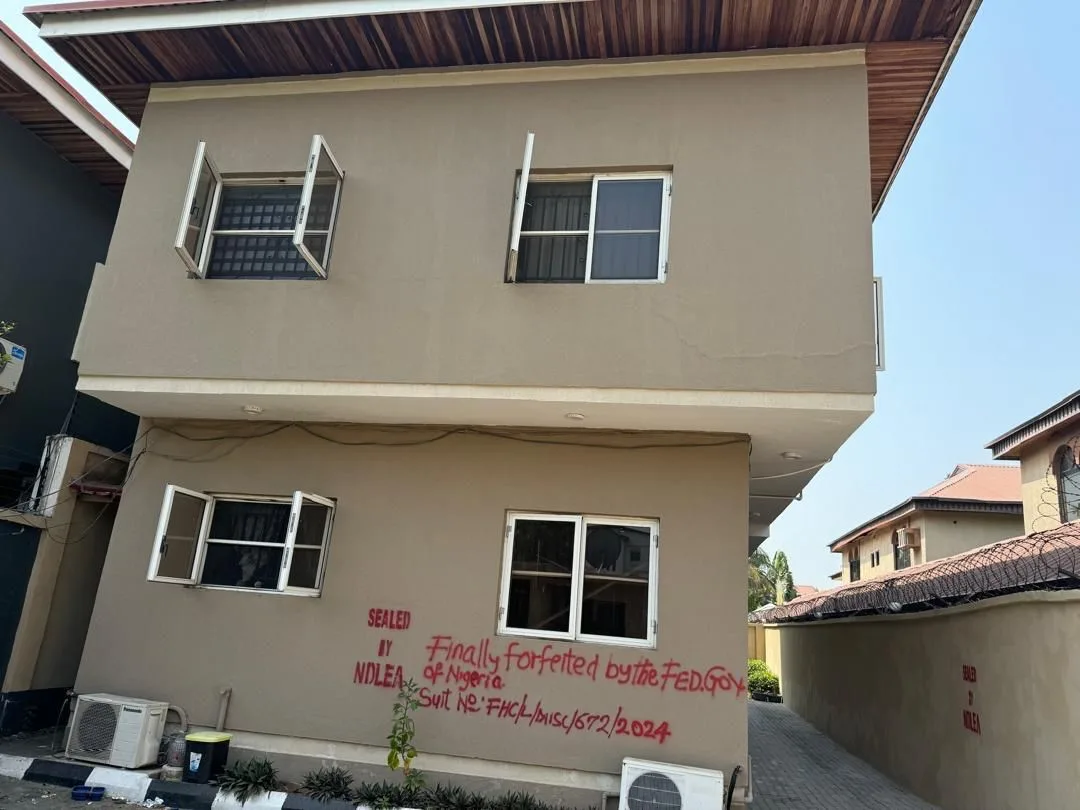
They were also to forfeit a grey colour Toyota Tacoma SUV marked AAA-734HT registered in the name of Emmanuel Chukwu; $50,000:00 USD (Fifty Thousand US Dollars) belonging to Chukwu; N55,099,509.50 (Fifty-Five Million, Ninety-Nine Thousand, Five Hundred and Nine Naira, Fifty Kobo only) also belonging to Chukwu; the sum of N9,003,168.06 (Nine Million Three Thousand, One Hundred and Sixty Eight Naira Six Kobo only) belonging to Wasiu Akinade and N3,052,295.20 (Three Million, Fifty Two Thousand, Two Hundred and Ninety Five Naira Twenty Kobo only), also belonging to Akinade. The Agency also in another suit marked FHC/L/MISC/672/2024 and filed before Justice Bogoro on 9th December 2024 after an initial interim forfeiture order, secured the final forfeiture of two houses linked to members of the drug cartel.

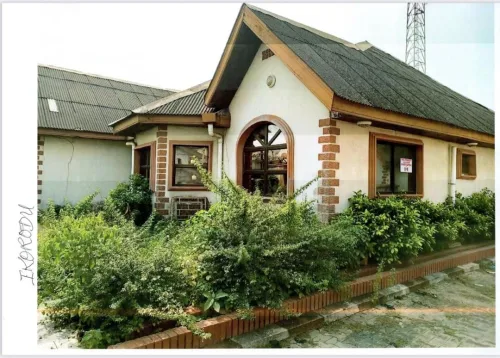
According to the trial court: “That an Order of final forfeiture and confiscation is granted in favour of the Federal Government of Nigeria, Landed Property/House Number 6 Olokunola Street, Sholebo Estate, Ikorodu Lagos, Lagos State, as contained in Exhibit NDLEA 2A, 2B, and 2C attached to this application used for the storage and concealment of 2,139.55kg (More Than Two Tons) Cocaine, an illicit substance similar to Heroin and LSD. “That an Order of final forfeiture and confiscation is granted in favour of the Federal Government of Nigeria, Landed Property/House Number J9, Road 3, Close 1, Victoria Garden City (VGC) Estate, Lagos, Lagos State, as contained in Exhibit NDLEA 3 attached to this application reasonably believed to be bought with proceeds derived from trafficking in illicit drug substances (proceeds of crime) as in relief 1 of this Motion.

“That an Order is granted directing the sale or disposal by any other means provided by law of the forfeited House/Landed Property by the Applicant and the payment of the proceeds therefrom to the Federal Government of Nigeria.” While commending all the officers and men of the Agency involved in the extensive investigation and prosecution of members of the drug cartel, Chairman/Chief Executive of NDLEA, Brig. Gen. Mohamed Buba Marwa (Rtd) said the case is a historical blow to the drug cartels and a strong warning that they’ll not only go to jail but will equally lose all their investments in illicit drug consignments including all the properties and wealth acquired through the criminal trade.

PSC CHAIR FELICITATES WITH CHRISTIANS AT CHRISTMAS, SAYS THIS IS TIME FOR RENEWAL OF FAITH IN OUR GREAT NATION

By Ebinum Samuel

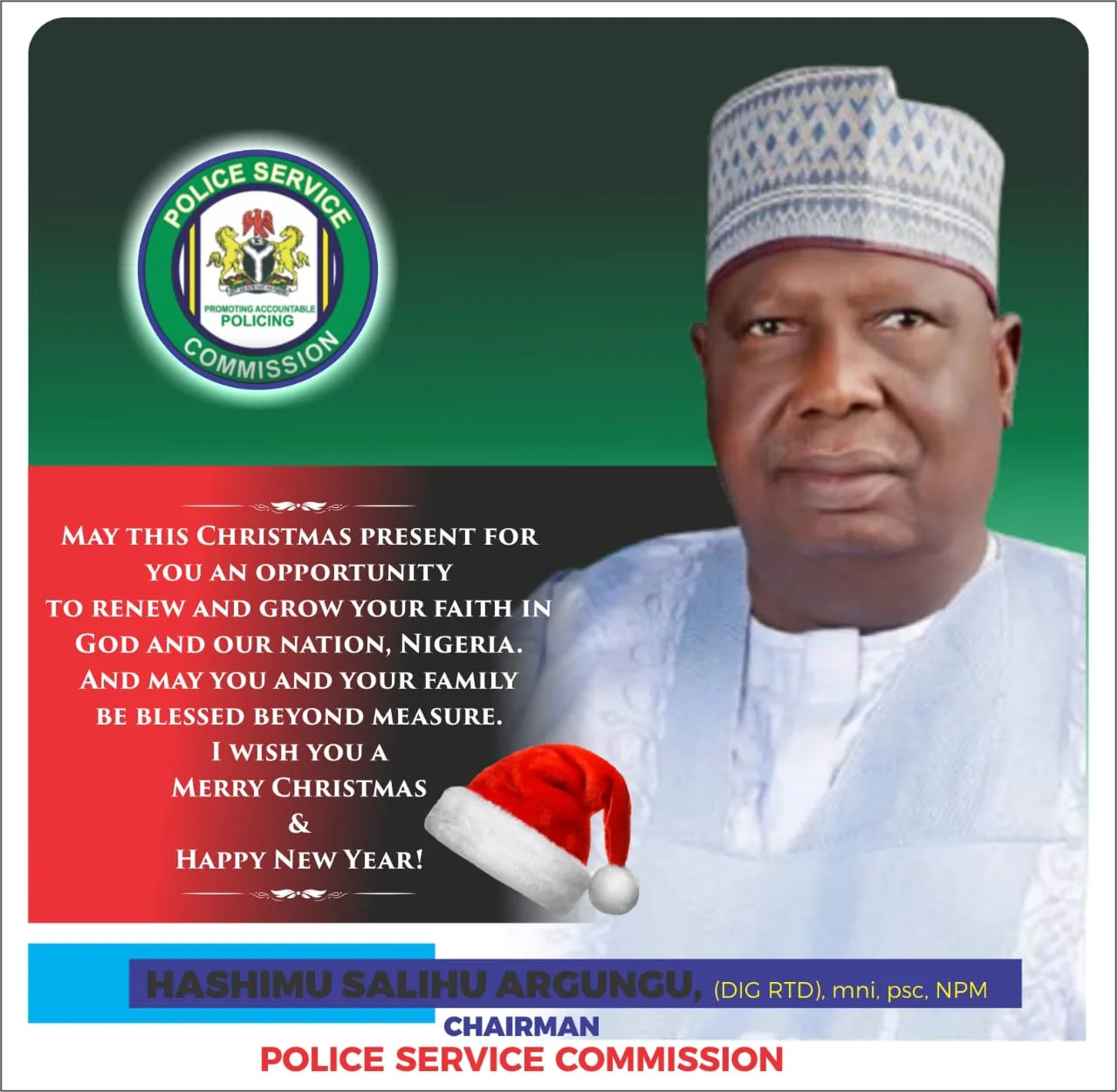
As Christians across the globe celebrate the birth of Jesus Christ, the Foundation of christianity tomorrow, the Chairman of the Police Service Commission, DIG Hashimu Argungu rtd, mni has called on Nigerians to renew their faith in our country, insisting that our nation must be great again.DIG Argungu noted that Nigeria is blessed with enormous material and human resources which the present Administration is currently harnessing for optimal functionality. He said Nigerians should believe in the greatness of our nation and support the Government to achieve the required dividends.

He called on Christians to use the occasion of the birth of Jesus Christ to rededicate themselves to the advancement of the ideals of nation building. He also called for prayers against societal ills such as terrorism, banditry and kidnapping. DIG Argungu said Nigeria and its leaders need all the prayers and support at this time to positively change the fortunes of our fatherland.”May this Christmas present for you an opportunity to renew and grow your faith in God and our nation, Nigeria.

And may you and your family be blessed beyond measure”, he prayed.

IBADAN, OKIJA, ABUJA AND THE DEATHLY FATE OF MEKUNUS

By Tunde Olusunle

Our ambassadors in the national parliament on Wednesday December 18, 2024, spontaneously broke into a chant, serenading Bola Tinubu Nigeria’s President when he presented the 2025 draft budget to the bicameral body. *On your mandate we shall stand* gained ascendancy ahead of the 2022 presidential primary of the All Progressives Congress, (APC). Today, it is probably at par with Nigeria’s national anthem in the circuit of the ruling political party. Recall the viral video of the Minister for the Federal Capital Territory, (FCT), when he performed to the rhythm on one occasion of his visit to the office of the Chief of Staff to the President, Femi Gbajabiamila a few months ago. The reflex resort of the congressmen to the “mandate” tune on that occasion was in reaction to Tinubu’s joke at the presentation of the budget for 2025. The President had erroneously announced that he was presenting a draft expenditure proposal to the “11th” assembly! He was promptly reminded that we are still in the 10th assembly, in 2024.

Tinubu quickly humoured that it could just as well mean that the entire parliament had been reelected for the 11th assembly which begins in 2027. Tinubu’s budgetary presentation had to be staggered by 24 hours for undisclosed reasons. Reports after the Wednesday December 18 eventual outing, however, suggested that the executive arm of government needed the 24 hours between Tuesday December 17 and the eventual presentation, for very robust, backstage engagements with the legislature. There were feelers to the effect that Tinubu’s budget would be expressly shut down because of his recent propositions on tax reforms which has not gone down well with sections of the country and their representatives. There are purported reports to the effect that while Members of the House of Representatives were advanced one billion naira each to augment the budgets for their “constituency projects,” Senators allegedly received a minimum of over 100 per cent more under the same nebulous heading. Such largesse should of necessity merit some singing.

While our parliamentarians decked in billowing robes and skyscraping headgears were clapping and caterwauling, giggling and guffawing that Wednesday December 18, 2024, deathly disaster struck in Ibadan, capital of Oyo State. The plan by a nongovernmental organisation led by Naomi Silekunola, a former wife of the Ooni of Ife, Adeyeye Enitan Ogunwusi which proposed to put smiles on the faces of a number of people this yuletide season, had gone awry. Silekunola and her team intended to gift 5000 children below 13 years of age with a cash gift of N5000 each and offer each of them a food pack. There was a stampede at venue of the programme at Islamic High School, Bashorun District, Ibadan. Poor planning which precluded adequate security cordon, the absence of a standby medical team, among others, precipitated the death of 40 children. Many injured people are still hospitalised. As though an angel of death was on a yuletide prowl, Okija in Anambra State was its next destination. A magnanimous well-to-do, Ernest Obiejesi, under the auspices of his *Obi Jackson Foundation,* availed the community of a rice consignment to be shared amongst the womenfolk in the morning of Saturday December 21, 2024, for the commemoration of Christmas. The raw ration came in 10 kilogramme bags of rice, out of which many people received just handfuls in bowls and cups. In the ensuing melee, 36 lives were lost, bodies littering the scene. Many limbs were bruised and broken, they are being patched up in various hospitals. Despite popular assumptions that the streets of Abuja are paved with gold, the Okija tragedy was replicated, real-time, right at the very heart of Maitama, abode of the *nouveau riche.* Still in the spirit of the season, the Holy Trinity Catholic Church arranged to distribute food items to the less privileged as Christmas knocks on doors.

The Abuja Command of the Nigeria Police confirms that 13 people including four children died from the surging and trampling at the scene. Over a thousand people have been evacuated from the church, many of the wounded receiving medical attention at the proximal Maitama Hospital, just metres away from the church. Hunger for sure is a deconstructor of geography. Within four days in Nigeria this harmattan season, over 89 lives have lost while foraging for what to eat. Instructively, a day before the Ibadan tragedy, loyalists and former aides of former President Muhammadu Buhari, flew to his hometown in Daura, to accord him an 82nd birthday surprise. Former Ogun State Governor, Ibikunle Amosun; Secretary to the Government of the Federation, (SGF), in Buhari’s regime, Mustapha Boss; Africa’s richest man, Aliko Dangote, all visited a man largely credited with plunging Nigeria into its seemingly irrecoverable abyss. Femi Adesina, Buhari’s media minder also sang his boss’ praises on the occasion. He described him as *ore mekunu,* a friend of the poor, an ascription I found totally out of sync with the realities of his boss’s stewardship. Let’s hope Adesina is seeing on the streets, the hordes of Nigerians, instalmentally transmogrified into pitiable sub- *mekunus* by Buhari’s eight-year dysfunctional leadership. About 100 Nigerians perished in four day not because of a natural disaster, nor at the theatres of insurgency and military curtailment. They died looking for just that measure of rice to placate their growling stomachs.

They died just hours and days after Buhari’s beatification by beneficiaries of his prodigal rulership.Nigeria has been plunged into the worst economic situation in a whole generation, since the advent of the All Progressives Congress, (APC) at the centre. Poverty has never been as grim and piercing as we’ve witnessed beginning from Buhari’s coming in 2015. Poverty has been ruthlessly weaponised, the poor ready to dance to the drum of a currency note, even a scoop of peanuts. The indicators have determinedly and consistently pointed southwards these past decade. Inflation is spiralling towards the 35 per cent mark, the unaffordability of basic food items driving *mekunus* to assured Golgotha in cross-country scrounging, scrambles and stampedes. The same way Nigerians hustle to scoop petroleum products when a tanker falls to the ground, is the same way they throw decorum through perimeters when they are being insulted with sachets of pasta in the name of “palliatives” and “stomach infrastructure.”

The Nigerian Bureau of Statistics, (NBS), is allegedly being bullied by the state to recant on its former announcement that *N2.3 Trillion* was paid out as ransom to bandits, criminals and kidnappers in the first 10 months of this year. The NBS which has belatedly announced that its systems were hacked, is in good company with the Independent National Electoral Commission, (INEC). INEC’s servers and terrestrial equipment are perennially compromised when election figures tend towards victory for the opposition. The President recently hailed the peaceful and transparent conduct of the presidential election in Ghana, recommending it as a model for Nigeria. Sadly, it should be the other way round. Other countries should take inspiration from the way we conduct our affairs in Nigeria.Nigeria prides itself as the giant of Africa. Many African countries look up to Nigeria for guidance, for leadership. Our exploits in the liberation of countries like South Africa from apartheid, and the restoration of peace and democracy to neighbouring Gambia, Guinea, Liberia and Sierra Leone, are well documented. We recently offset our outstanding dues to the Economic Community of West African States, (ECOWAS), totalling over N150Billion. We do well at bragging and flexing our muscles, but fail where it matters the most. An essential characteristic of Ghanaian elections over the years, is the fact that the ruling party can be displaced by the opposition today.

This allows the party so ousted to go re-strategise for the future. What do we do in Nigeria where election results are predetermined, where the electoral process is wholly corrupted, where true winners are intentionally dispossessed of their mandates and encouraged to seek redress in the judiciary? Didn’t a senior government official say in relation to Ghana’s exemplary election that a sitting government cannot be unseated in Nigeria? The stories of the backstage electoral thieveries anchored by INEC over the years will be told someday.President Tinubu cancelled his official engagements for Saturday December 21, 2024, in honour of victims of the Ibadan, Okija and Abuja tragedies. Nigeria’s leadership must transcend the culinary indulgence and the merry-making occasioned by the yuletide to undertake very imperative introspection. There must be less dangerous, less dehumanising and less deathly avenues for lifting up the poor and indigent in our ranks. The President is celebrated as some economic whiz kid.

Enough of the demeaning, insulting and dubious handouts always purportedly passed on to the less-endowed by ways of very opaque “cash transfers” and the “lorry loads of palliatives.” Can someone please show me a register of transfers to my constituents back home in my community? That scheme is wholly and totally a scam. Nigeria is not Somalia or Chad and similar countries ravaged by war and hunger, where the United Nations, (UN) and the Red Cross, drop dry rations from hovering helicopters into the hands of starving populations. Nigerians deserve a much, much better deal away from the most despairing *status quo.* Nigeria is too endowed to wilfully preside over the sustained pauperisation of its people.

Tunde Olusunle, PhD, Fellow of the Association of Nigerian Authors, (FANA), teaches Creative Writing at the University of Abuja

Farooq Kperogi : Kemi Badenoch’s Yoruba identity meets inconvenient truths

Kemi Badenoch, current leader of the UK’s Conservative Party, recently disavowed her Nigerian identity because of her resentment at being associated with northern Nigeria. “Being Yoruba is my true identity,” she said, “and I refuse to be lumped with northern people of Nigeria, who ‘were our ethnic enemies,’ all in the name of being called Nigerian.”I can bet my bottom dollar that most northern Nigerians are uninterested in any claim to kinship with her, either.Well, since Ms. Badenoch hates northern Nigeria that much, she might also consider rejecting even the term Yoruba, as it originates from—of all places—northern Nigeria!.

Yoruba” is, after all, an exonym first bestowed upon the Oyo people by their northern neighbors, the Baatonu (Bariba) of Borgu, before it was shared with the Songhai (whose scholar by the name of Ahmad Baba has the distinction of being the first person to mention the name in print as “Yariba” in his 1613 essay titled “Al-kashf wa-l-bayān li-aṣnāfmajlūb al-Sūdān”).Usman Dan Fodio’s son, Muhammad Bello, wrote Infaq al-mansur in 1813, which responded to Ahmad Baba’s 1613 essay. In it, he had cause to also mention “Yariba.”The name’s embrace as a collective identifier owes debts to these historical facts. In other words, Yoruba is not a Yoruba word. It traces etymological descent from northern Nigerians, Badenoch’s “ethnic enemies.”Perhaps Badenoch would prefer to invent an ethnic moniker akin to Professor Wole Soyinka’s deftly coined Ijegba (a seamless blend of Ijebu and Egba identities). She might consider Ijendo, an elegant portmanteau uniting her maternal Ijebu roots with her paternal Ondo lineage.It would, at least, shield her from the burden of bearing an identity whose label comes from her “enemies.”Yet even with this rhetorical sleight of hand, Badenoch cannot outrun the stubborn truth that the historical, cultural, and sociolinguistic ties between northern Nigerians and Yoruba people are irrefutable. These connections run deep and are impervious to political grandstanding or identity cherry-picking.In a column I wrote on October 9, 2021, titled “Arewa and Oduduwa: More Alike Than Unlike,” I explored this shared legacy. I reproduce some of that original column below as a reminder.

Centuries before colonialism and the British-supervised formation of Nigeria, much of what we know today as northern and western Nigeria have had robust relational and cultural encounters, evidence of which still endures in the contemporary linguistic and cultural artifacts of the people.The centuries-long Trans-Saharan Trade between the Arab world and so-called Sub-Saharan Africa, which passed through much of what is now northern and western Nigeria between the eight and the seventeenth centuries, brought traces of Islam and cultural interchanges in both places.Thereafter, both regions witnessed massive migrations of the Mande people from the Mali empire who brought more concentrated expressions of Islam—and monarchies. That is why much of what used to be the Oyo empire was actually ethnically syncretic.Historians have shown that people that are today known as northern Nigerians played central roles in precolonial Yoruba history. For example, the Bashorun (whom many people equate to the Prime Minister and de facto power behind the throne) was often of Borgu descent, and the Alapinni, another high-ranking official, traced his origins to the Nupe people.Well-regarded bashoruns like Magaji, Worudua, Biri, Yamba, Jambu, and Gaa who helped extend Oyo’s frontiers were of Borgu origin.More than that, several towns and villages in Oyo were founded by Borgu people. For instance, Ogbomoso, a major Oyo town, was founded by a Baatonu (Bariba) prince. The title of the town’s monarch, “Soun,” is a corruption of “Suno,” the Baatonu word for king.Yoruba sometimes swallows middle consonants over time, which explains why “olorun” sometimes becomes “olo’un,” why even “Yoruba” (itself a foreign word derived from the Baatonu) becomes “Yo’oba” in everyday speech, etc. On this model, the “n” in “suno” was swallowed to produce “suon,” which later became “soun” after the transposition of the “o” and “u” vowels in the word.Kishi, another major town in Oyo State, was founded by a Borgu prince by the name of Kilishi Yeruma. Kilishi is the Hausa word for rug (which symbolizes the throne) and Yeruma is the corruption of the Kanuri “yerima,” which means prince. But “Kilishi Yeruma” is a fossilized, time-honored title in all of Borgu, which is a cultural melting pot, for the heir apparent to the throne.In fact, I was shocked to read recently that even Ibadan, the administrative capital of Western Nigeria, was founded by a northern Nigerian of Borgu origins.

Oluyole, the founder of modern Ibadan, was the scion of Bashorun Yau Yamba, who was of Borgu ancestry.As a matter of fact, the town of Igboho whose son, Sunday Igboho, has become the symbol of “Yoruba nation” and who has thrown his weight behind Badenoch’s claim of being Yoruba who has no connection to northern Nigeria, is ethnically syncretic.Apart from the large number of Fulani people in and around the town who have lived there for centuries, some of whom have become culturally and linguistically Yoruba, there is a major neighborhood there called Boni. Boni is the generic Borgu birth-order name for the fourth son.Historical accounts also reveal that during the Trans-Saharan Trade, many Hausa people worked as intermediaries between Arab traders and the Alaafin of Oyo. Most didn’t return to their places of birth, and their descendants are now Yoruba people.Similarly, we read from the late Professor Abdullahi Smith’s account of the tiff between Afonja and the Alaafin of Oyo that a large chunk of Afonja’s army, called the Jama’a, was drawn from Hausa slaves who escaped from the Alaafin’s palace.And the Fulani presence in Yoruba land preceded the coming of Mu’alim “Alimi” Salihu to Ilorin by several decades, perhaps centuries. As I pointed out in a past column titled “Ilorin is an Ethnogenesis: Response to Kawu’s Anti-Saraki Ilorin Purism,” some of Afonja’s followers, with whom he fought the Alaafin, according to Abdullahi Smith who quoted the Ta’alif, a pamphlet written in Arabic by an Ilorin Yoruba Muslim cleric about the events of the time shortly after they occurred, were Fulani pastoralists who were never Muslims.The pastoralists had lost their cattle to tsetse fly bites and “had nothing to lose,” according to Smith, so they became Afonja’s mercenaries.One of the Fulani pastoralists whom Alimi couldn’t convert to Islam, was a man named Ibrahim Olufade who spoke perfect Yoruba and Fulfulde and acted as the interpreter for Afonja in his initial interactions with Alimi.In other words, Fulani people had been bearing Yoruba names in Yorubaland at least a century before Nigeria was formed. I won’t be surprised if descendants of Ibrahim Olufade are now Yoruba (nationalists)— if they are in western Nigeria.My hunch has some basis in real-life examples.

One of northern Nigeria’s most celebrated journalists, the late Hajia Bilikisu Yusuf, was descended from Yoruba people who migrated to Kano generations ago. She was one of the most passionate defenders of Arewa that I know.When the late Mohammed Sule, author of the famous The Undesirable Element in the Pacesetter Series, told me of Hajia Bilikisu’s Yoruba background in Kaduna in the late 1990s, I was incredulous. But he said they were neighbors in Kano and swore that Hajia Bilikisu’s grandfather still spoke Yoruba.The ancestors of the late Professor Ibrahim Ayagi of Kano were Yoruba. As he himself told the Daily Trust on September 2, 2018, “Unguwar Ayagi was initially inhabited by the Yoruba and Nupawa, who came from outside and settled here. That’s how the place became known as Ayagi. So most of the people in Ayagi are Yoruba, Nupe and, of course, Hausa.”Given this depth and breadth of relational interconnectedness, it is no surprise that northern and western Nigeria share an extensive repertoire of cultural vocabularies that are derived from Arabic, Songhai (because the Malians who brought Islam to Hausa land, Borgu, and Yorubaland abandoned their language and spoke a dialect of Songhai called Dendi), and mutual borrowings.I will give a few examples. In both Yoruba land and Borgu, the term from an unmarried girl is some version of the word “wondia.” That’s a Songhai word for an unmarried girl.“Bere,” a title of respect prefixed to the names of older people in Borgu and parts of Yoruba land, is a Songhai word.

The word “karambani,” which I was shocked to find out occurs in Yoruba, is a Songhai word that is now integral to the lexis of many languages in Borgu.Asiri, the word for secret in Hausa, Yoruba, Kanuri, Baatonu, and many other languages in Muslim northern Nigeria, is derived from the Arabic “as-sirr” where it also means “secret.”Wahala, which used to be limited to Yoruba and languages in Muslim northern Nigeria, but which is now widely used all over Nigeria, is derived from the Arabic “wahla,” which means “fright,” “terror.”Yoruba and most languages in Muslim northern Nigeria also use “talaka” (talika in Yoruba) to refer to the poor. The word also appears in Mandinka, Songhai languages, Teda, and in other West African polities where Islam is predominant.History is rarely as malleable as we would like, and identity, once examined, often reveals far more connection than division.If Badenoch truly fancies herself as Yoruba, she’d be wise not to rattle the ancestral tree; she might be startled by just how much Northern Nigeria comes tumbling out of its branches.

Farooq Kperogi is a renowned columnist and United States-based Professor of Journalism.

SONNY ECHONO AT 63: BIRTHDAYS NOT REST DAYS

By Tunde Olusunle

Call him a double-barrelled personality and you will not be wrong. He is both an accomplished technocrat and a distinguished bureaucrat to wit. How else would one describe a professional architect of four full decades, who has also spent his entire working life in the public service? He rose to the very top of the leadership of the national umbrella body of his primary profession, and his occupation, respectively. He was national President of the Nigerian Institute of Architects, (NIA). He equally coursed all the way in the civil service to become a Permanent Secretary and a long-serving one. These attainments were bagged strictly on merit. His enterprise has not gone unnoticed as he has been deservedly decorated by the highest honours of his professional calling where he is a Fellow. He has also received national garlands in recognition of his good work, notably that of the Officer of the Order of the Niger, (OON). He retired upon grossing 35 memorable years in service, back in 2021. He was barely catching his breath when duty beckoned for him to return to avail the nation his variegated experiences in yet another capacity. This has been the story of his life.

Several decades in the ovens and furnaces of the public service have invested him with the archetypal reticence of a prototype bureaucrat. They are not given to much talk, the essential credo of his lifelong profession requiring public officers like him being “to be seen and not to be heard.” He is exceptionally, comprehensively grounded as a public servant who traversed nearly a dozen ministries, departments and agencies, (MDAs), in a most eventful and insightful career. What can be more all-encompassing and enriching with regards to cognate working experience than when an individual straddles the ministries of: Works and Housing; Defence; Water Resources; Agriculture; Power; Communications and Education, at the highest levels?

With the bifurcation of the erstwhile Ministry of Works and Housing, and the excavation of a “Ministry of Livestock” out of the extant Ministry of Agriculture, he can fittingly be credited with many more service addresses. And all of these preclude the lengthy list of national and international ad hoc responsibilities which garnish his cumulative experiential scope. He was in the earliest generation of civil servants who, with the return of democracy in 1999, was groomed in “Budget Monitoring and Price Intelligence.” This derived from the determination of the new regime to introduce more transparency in public procurement processes. He “evangelised” this credo in all his official bus stops.

It is Sonny Togo Echono’s birthday Monday December 16, 2024. When he’s addressed by the combination of the initials from his first two names, ST, he knows you come from years and decades back with him. It is supposedly a special day in the eyes of his family, colleagues, subordinates and friends. Customised greeting cards arrogate a section of his office at the Tertiary Education Trust Fund, (TETFUND) headquarters in Abuja, to themselves. For the Executive Secretary of the organisation, however, the day is a regular working day like every other. And there was plenty of work to be done. He prefers to operate from the conference table in a corner of his office which enables him ease of access to files and documents placed before him. He’s also able, with despatch, to attend to staff who desire his official guidance, as he looks up from papers placed before him from time to time. There’s no time for a meal as yet but he tosses a few nuts in his mouth from time to time.

TETFUND was established in 1993, and was initially christened the Education Trust Fund, (ETF). It is funded majorly from a two per cent tax on the assessable profits of companies registered in Nigeria. It was at inception, targeted to arrest the rot and degeneration in educational infrastructure, arising from long periods of neglect and miserly resource allocation. It was rechristened to its present nomenclature during the administration of President Goodluck Jonathan in 2011. TETFUND administers, appropriates and oversees resources so aggregated for the rehabilitation, restoration and consolidation of tertiary education in the country. It avails capital for educational facilities and infrastructure, including essential physical infrastructure for instruction and learning. TETFUND also supports research and development as well as the training and advancement of academics, among other segments of its responsibilities.

In a little over two years at the helm, Echono has striven to institute a new work ethic in TETFUND to ensure that it achieves its foundation mandate, especially against the backdrop of challenging economic headwinds. He has introduced sweeping reforms which has upset the preexisting apple cart in several ways. Echono has been very fastidious on issues of due process and effective service delivery. The system he inherited was fraught with entrenched power blocs which determined the running of the organisation to the detriment of its core vision. Echono has been uncompromising in his insistence that the institution must be run strictly according to the books. This is one resolve which was bound to unsettle the “indigenes and landlords” within, and their external allies, who hitherto, construed the organisation as a potential “automated teller machine,” (ATM).

Echono clarifies: “There were cartels in charge of TETFUND projects. They collaborated with all manner of political leaders to come to the organisation to collect ”special intervention projects,” as it is referred to. “There were no defined modalities in place which enhanced operational opacity.” Speaking further, Echono notes: “When I was asked to come here, I was given a very clear mandate to clean up this place and I’m doing just that. The system is the better for it because we have substantially minimised waste and our stakeholders acknowledge this much.” A confident Echono said he had indeed invited the Independent Corrupt Practices and Related Offences Commission, (ICPC), to check through the operations of the organisation: “I invited the ICPC to come and inspect our systems. They’ve visited us twice and are satisfied with how we are straightening up the system.”

Echono is aware that he has stepped on toes while trying to do the right thing. He insists there is no backing down on his mission. His words: “I’ve made enemies on this job. But we have a duty as people privileged to serve, to help in salvaging our country.” Discreet findings indeed reveal that there are internal mumblers and external discontents on his case. There are those who supposedly feel entitled to a perpetuation of their term in office. There are also as those who fancy being gifted the leadership of the organisation as political gratification. Some of them reportedly, had begun to make reassuring commitments to friends and associates, thereby preempting their consideration for the job and the express approval of the President. There are also suggestions about internal saboteurs who are in the habit of trading in classified information concerning the organisation. Some of them are indeed said to be politically exposed persons, fantasising about deploying the organisation for the advancement of their vaunting political aspirations.

While Echono is contending with this hydra, a certain Emeka Marcel Nweke has created a Facebook page with Echono’s name to defraud members of the public. Benneth Igwe, the Assistant Inspector General of Police, (AIG) in-charge of Zone 7 Police Command Headquarters on Tuesday December 17, 2024, disclosed this to newsmen. Echono it was who wrote a petition to the police about “criminal conspiracy, impersonation, fraud, false representation, cyberstalking, obtaining money by false pretence and threat to life,” upon which the police acted. Nweke was reportedly tracked to Awada, Anambra State and was found to have fleeced unsuspecting members of the public of over N10 million in the month of August 2024, alone. Such are the issues he’s multitasking to address.

Echono’s enterprise thus far, has accorded renewed respect and visibility to TETFUND. More and more high profile institutions and individuals, home-based and from the diaspora, regularly engage with the organisation in recent times to discuss partnerships. These include even the military establishment which is in the business of revolving tune-ups for its human capacity, consistent with global dynamics. The multidimensional Echono is equally very busy on lecture circuits these days, regularly called upon to chair, speak or to deliver papers at various events. His trophy-chest brims with glittering medals, gleaming plaques, glossy trophies and beaming mementos, awarded to him by several groups and associations, through the years. These acknowledgements are for inimitable altruism, selfless leadership and exemplary corporate governance, despite the odds.

Tunde Olusunle, PhD, Fellow of the Association of Nigerian Authors, (FANA), is an Adjunct Professor of Creative Writing at the University of Abuja